1. Interior dry walls and ceilings
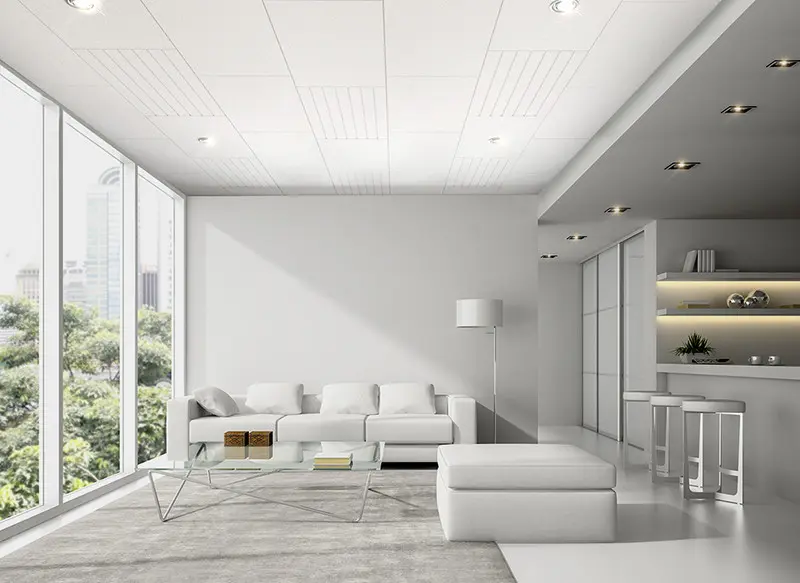
For dry internal areas, plasterboard is usually the fastest and most cost-effective option. It is easy for Australian trades to cut, fix, flush, sand, and paint. If the job is a standard residential wall or ceiling, plasterboard often wins on labour efficiency and finish familiarity.
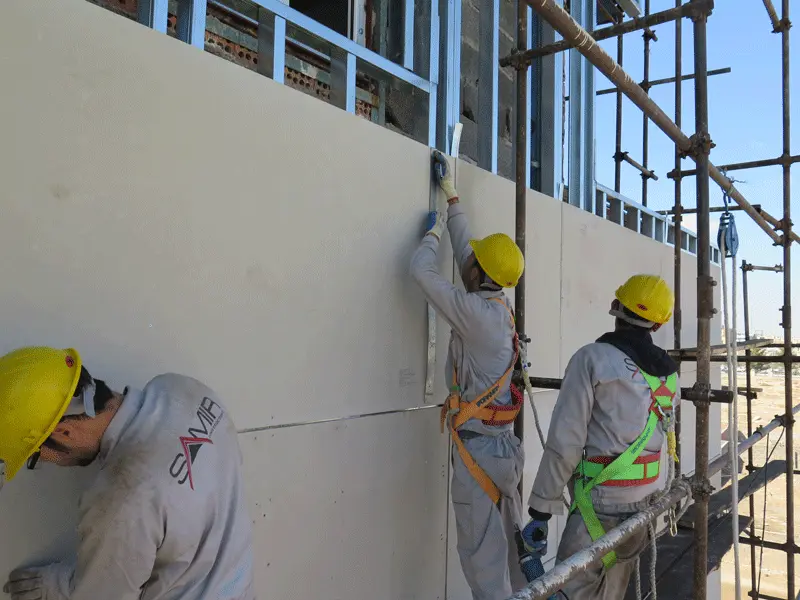
SCG Fiber cement sheet is better suited where the internal area needs more durability, moisture tolerance, impact resistance, termite resistance, or a tougher substrate. That may include service corridors, garages, semi-exposed ceilings, plant areas, high-traffic zones, retail back-of-house areas, and coastal or tropical builds.
MgO board can be considered for specialist internal walls where the system has documented performance, but it should not be selected solely because a brochure claims it is fireproof or waterproof.
2. Wet areas and moisture-prone zones
Moisture is where the differences become clearer.
SCG Fiber cement sheet has a strong position because SCG lists water resistance as a special property and promotes the product for internal and external use. For bathrooms, laundries, commercial amenities, soffits, and semi-exposed zones, cement-based sheets are often preferred because they are less vulnerable to swelling and paper-face deterioration than standard plasterboard.
Plasterboard can still be used in wet areas when the correct water-resistant grade and waterproofing system are specified. NCC Housing Provisions list water-resistant plasterboard sheeting and compressed fibre-cement sheeting manufactured in accordance with AS/NZS 2908.2 as deemed water-resistant substrates for walls.
MgO board requires extra scrutiny in moisture-prone zones. The major concern is not casual splash exposure but long-term humidity, facade cavities, condensation, and the possibility of chloride-based formulations causing corrosion.
3. Exterior walls, eaves, soffits, and cladding
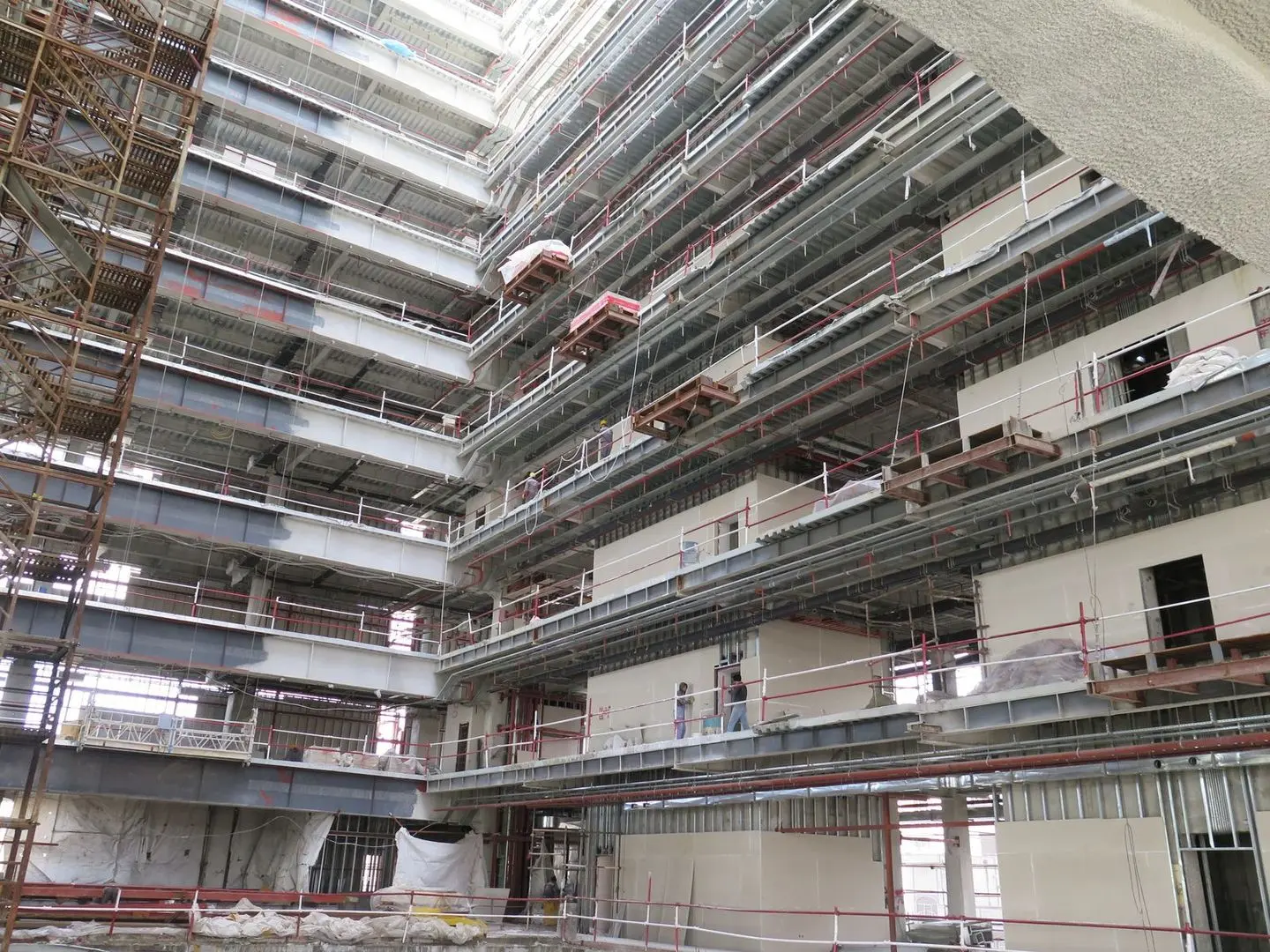
For exterior and semi-exterior use, SCG Fiber cement sheet is generally the more practical choice among the three. SCG specifically positions its board for internal and external walls and partitions, and also offers ceiling and ventilated ceiling products that may suit eaves, soffits, and external ceiling conditions when installed to the correct system requirements.
Plasterboard is not an exterior cladding product. Even where plasterboard is permitted in certain non-combustibility pathways, that does not make it suitable for weather-exposed external wall cladding.
MgO board can be used externally only if the specific product, fixing system, coating, weather barrier, cavity design, and compliance documents support that use. Builders should be particularly cautious in humid, coastal, subtropical, or condensation-prone environments.
For Australian commercial projects, external wall cladding also needs a clear NCC weatherproofing and fire-performance pathway. NCC Volume One requires external wall cladding to comply with relevant Deemed-to-Satisfy pathways or another accepted compliance route, and its fire provisions require external walls in Type A and Type B construction to be non-combustible, subject to listed concessions and conditions.
4. Fire performance and compliance
All three materials are often discussed in fire-related specifications, but the compliance pathway is not the same.
SCG Fiber cement sheet has an advantage where fibre-reinforced cement sheeting is an accepted category. NCC 2022 Volume One lists fibre-reinforced cement sheeting among materials that may be used wherever a non-combustible material is required, and SCG describes its Smartboard as non-combustible in its product FAQ. Builders should still verify the exact product, thickness, system build-up, penetrations, framing, insulation, cavity barriers, and project classification.
Plasterboard also has recognised fire pathways and is widely used in fire-rated wall and ceiling systems. The key is to specify the correct grade and tested system, not simply “standard plasterboard”.
MgO board may offer strong fire performance, but Australian builders should insist on local test reports, certification, installation manuals, fastener schedules, and evidence that the complete wall or ceiling assembly meets the project requirement.
5. Impact resistance and durability
SCG Fiber cement sheet is the strongest fit where impact, knocks, abrasion, and service-life durability are major concerns. SCG highlights high impact strength and lasting durability as core benefits.
Plasterboard can be upgraded to high-density or impact-resistant variants. Gyprock HD, for example, uses a high-density core and heavy-duty liner paper and is described as having up to 75% more impact resistance than Gyprock Plus 10mm.
MgO board can also perform well in impact applications depending on formulation and reinforcement, but the risk profile shifts toward product verification. Ask for tested impact results, edge performance, screw pull-out data, and compatibility with the rest of the wall system.
6. Installation and finishing
Plasterboard is the easiest for a standard Level 4 or Level 5 painted finish because most Australian plastering trades know the process. It is efficient for straight internal walls and ceilings.
SCG Fiber cement sheet is still designed for easy installation, but it behaves like a tougher cement-based panel rather than gypsum plasterboard. Builders should allow for correct cutting tools, dust control, corrosion-resistant fixings where required, movement joints, sealants, jointing method, coating system, and manufacturer installation guidance.
MgO board may be easy to cut and fix, depending on brand, but finishing methods vary. Some boards can be brittle at edges, some require specific screws, and some coating systems are mandatory for warranty.
7. Fiber cement sheet price and whole-of-project cost
When comparing fiber cement sheet price against plasterboard or MgO board, do not compare only the sheet rate.
A more realistic cost check includes:
– Sheet thickness and edge profile
– Waste factor and cutting time
– Fixing type and spacing
– Framing requirements
– Jointing, sealing, and finishing system
– Waterproofing or coating requirements
– Fire and acoustic system costs
– Freight, lead time, and minimum order quantity
– Warranty and compliance documentation
– Risk of callbacks, swelling, cracking, corrosion, or replacement
Plasterboard often has the lowest installed cost in dry internal spaces. SCG Fiber cement sheet may have a higher material cost than standard plasterboard, but it can deliver better value in areas where moisture resistance, termite resistance, impact resistance, and external suitability reduce lifecycle risk. MgO board pricing can look attractive or premium depending on the supplier, but builders should price the due diligence as well as the board.