Search

How Saudi Arabia is Driving Greener, More Sustainable Construction

Share this post :

Facebook
LinkedIn
How Saudi Arabia is making the construction industry greener and more sustainable

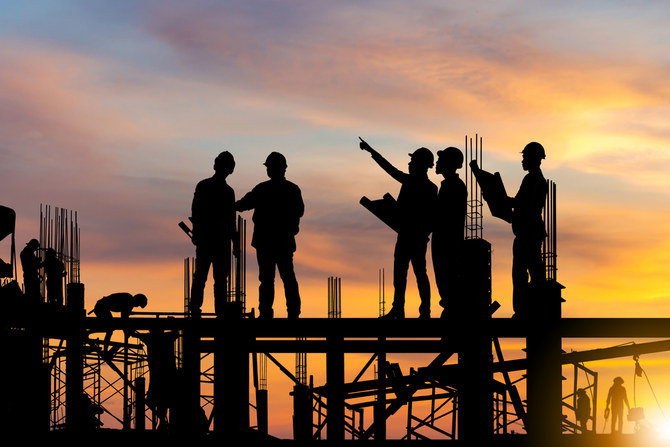
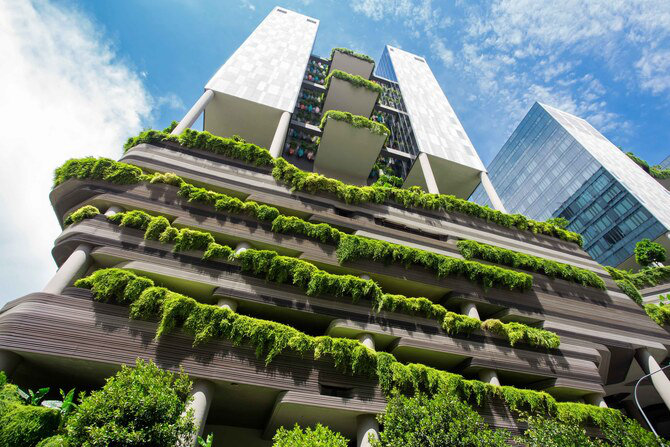
RIYADH: Saudi Arabia is embracing sustainability as a core element of its Vision 2030 economic reform agenda, driving transformative practices across whole industries. Nowhere is this more evident than in the Kingdom’s construction sector, where innovative solutions and eco-conscious strategies are reshaping the urban landscape. Through cutting-edge technologies, collaborative efforts and the adoption of environmentally responsible materials, companies like Red Sea Global, SCG International, VEKR Environmental Services and SABIC are setting a high standard for sustainable development.

how-saudi-arabia-is-driving-greener-more-sustainable-construction

Red Sea Global has made environmental stewardship a priority across its mega-projects, ensuring that development enhances rather than disrupts the delicate ecosystem.

“At Red Sea Global, we have initiated several critical programs to safeguard endangered species such as the hawksbill turtles and sooty falcons,” Raed Al-Basseet, RSG’s group chief environment and sustainability officer, told Arab News.

“These efforts include habitat conservation, the protection of turtles’ nesting sites, and tagging programs to monitor their behaviors. On birds, we’ve established artificial nesting sites for the sooty falcon and implemented preventive measures to mitigate bird collisions.”

The organization has also embraced advanced technologies to protect marine ecosystems.

“RSG is leveraging state-of-the-art technologies, including drone surveys equipped with multispectral cameras and satellite imagery for coral reef mapping,” Al-Basseet said. These tools ensure the real-time monitoring of coral reefs, mangroves and seagrasses, while helping respond swiftly to environmental changes.

How Saudi Arabia is making the construction industry greener and more sustainable

RSG’s achievements extend beyond conservation. The company’s renewable energy initiatives have resulted in the installation of more than 760,500 solar panels, reducing CO2 emissions by 46,350 tonnes annually. Additionally, its mangrove nursery produced more than 1 million seedlings in 2024, with a target of reaching 3 million this year.

“Our commitment to achieving a net conservation benefit of 30 percent by 2040 is integral to our vision of creating harmonious development,” Al-Basseet added.

Another key player in Saudi Arabia’s sustainability journey is SABIC, a global leader in materials innovation and environmental solutions.

SABIC’s Jubail headquarters, which has been certified with LEED Gold, stands as a symbol of green construction.

The building incorporates solar energy systems, wind turbines and electric vehicle charging stations, while also utilizing water recycling systems and low-energy lighting controls.

Beyond infrastructure, SABIC is pioneering efforts in carbon capture and utilization. The company operates the world’s largest CO2 purification and liquefaction plant, capturing 500,000 tonnes annually to convert into valuable products such as methanol and ammonia.

These initiatives reflect SABIC’s broader goal of achieving carbon neutrality by 2050, with an interim target of reducing greenhouse gas emissions by 20 percent by 2030.

In addition to these efforts, SABIC has launched a circular carbon economy model, promoting renewable energy, chemical recycling and afforestation projects.

The company’s recent exports of low-carbon ammonia to global markets, including Japan and South Korea, highlight its leadership in sustainable industrial practices.

Sustainability in construction is not just about preserving nature but also about adopting technologies that redefine how buildings are constructed. SCG International, a global leader in green building solutions, is paving the way for technological innovation in the Kingdom.

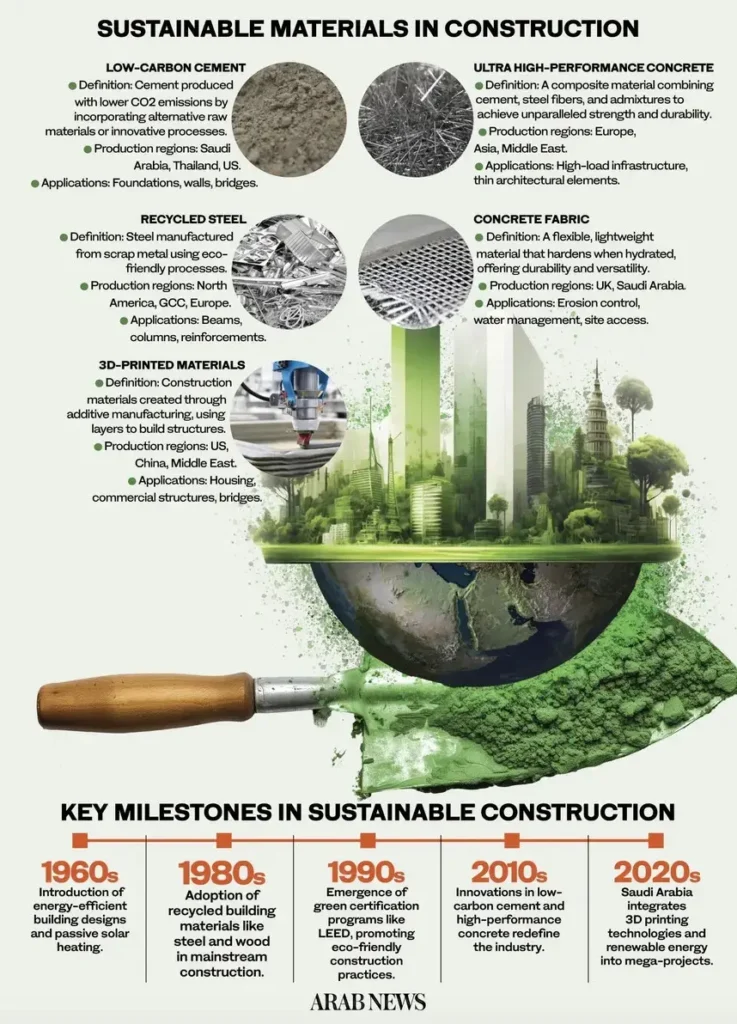
“3D printing technology enables accelerated construction timelines, reducing time by up to 30 to 50 percent and labor requirements by 50 percent,” Abhijit Datta, managing director of SCG International, told Arab News.

“It significantly reduces material waste and ensures no leftover raw materials, contributing to a cleaner and safer working environment, by lowering dust and noise levels.” Among its innovations, SCG’s concrete fabric offers a sustainable solution for erosion control and water management.

“This flexible material conforms to various shapes, reducing logistics costs and emissions while ensuring durability,” Datta said.
How Saudi Arabia is making the construction industry greener and more sustainable

The company’s commitment to local empowerment is equally noteworthy. SCG actively collaborates with Saudi firms to train teams in low-carbon cement and ready-mix consultancy services. Despite recent progress, the adoption of sustainable construction technologies has faced difficulties.

“One of the primary challenges is the high upfront cost of sustainable building practices, which can be a concern for clients,” Dana Al-Damegh, an environmental consultant at VEKR Environmental Services, told Arab News.

“Many are not fully aware of the long-term benefits, including cost savings and enhanced efficiency, that sustainable materials can offer.” Another pressing issue is the scarcity of resources.

“There is currently a shortage of locally sourced materials, which poses a challenge to sustainable construction efforts,” Al-Damegh said.

“This scarcity extends to skilled manpower as well, which further impacts the ability to fully leverage local resources. Addressing these gaps is crucial for achieving greater sustainability in the sector.”

Nonetheless, Al-Damegh is optimistic about the future. “The collaboration between environmental services companies and regulatory bodies has been instrumental in driving progress,” she said.

As the Kingdom advances its Vision 2030 reform agenda, the focus on green construction continues to grow. The integration of advanced technologies, development of local supply chains and investments in education as well as training will be critical to scaling sustainable practices.

“The successful implementation of sustainable methods requires collaboration, commitment and the right resources,” said Al-Damegh. “All of which are becoming increasingly accessible in Saudi Arabia’s evolving environmental landscape.”

Related Posts

expand Thai food brand overseas by Siam Signature

How to Expand Your Thai Food Brand Overseas : A Step-by-Step Guide

To expand a Thai food brand overseas, a producer needs export-ready certifications, a partner who can validate factory standards, compliant packaging and labeling for the destination market, consolidated logistics, and an in-market distribution network. Siam Signature by SCG International provides all of this as one connected process — turning a local Thai product into an internationally distributed brand without managing a dozen separate vendors.

Thai food sourcing partner for Saudi Arabia Siam Signature

Thai Food Sourcing Partner for Saudi Arabia: How Siam Signature Delivers End-to-End F&B Supply from ASEAN to KSA

Saudi Arabia’s food and beverage import market is expanding quickly, driven by a young, diverse population, a fast-growing modern retail sector, and the broader economic diversification goals of Vision 2030. Demand for imported Asian flavors — from instant noodles and curry pastes to coconut-based beverages and premium snacks — has grown alongside a maturing foodservice and hospitality sector that increasingly looks beyond traditional suppliers for variety and quality.

EPD SCG White Portland Cement

Introducing SCG White Portland Cement, Strength Class 42.5

As an industry leader, SCG proudly reflects Global Excellence through SCG White Portland Cement (Strength Class 42.5), manufactured to international standards. Certified with an Environmental Product Declaration (EPD) through a comprehensive Life Cycle Assessment (LCA), we are trusted by customers across the globe, including in Australia, New Zealand, Hong Kong, Philippines, Cambodia, Malaysia, and Myanmar. Our dedication to innovation and sustainability at every stage reinforces our commitment to developing high-quality products that align with environmental responsibility, empowering green construction for a sustainable future.

How Mega-Projects Reshape Sustainable Construction

How Cities and Mega-Projects Are Reshaping Sustainable Construction Materials

The world is changing fast. Australia is in the middle of its largest-ever infrastructure cycle. Saudi Arabia is building trillion-dollar cities from scratch. Singapore wants 80 percent of its buildings certified green by 2030. The common thread? How construction materials are selected is being rewritten, and sustainable construction is no longer a choice. It is the price of entry.

I’m Here To Assist You

Contact us today

Please read Terms and Conditions, Privacy Notice, Cookies Notice, and I
I acknowledge that I can withdraw the given consent at any time, and I have understood the terms and conditions and how my personal data is processed.
SCG Top Dealer Event 2026