Key takeaways
Choosing a concrete roof tiles supplier in Sydney is about more than finding a product that looks right on the sample board. Builders need tiles that fit the brief, arrive when the crew is ready, and work across sites from the Northern Beaches to Western Sydney. This guide shows what Sydney builders should look for when choosing a concrete roof tiles supplier (Northern Beaches to Western Sydney).
What should Sydney builders look for in a concrete roof tiles supplier?
Sydney builders should look for steady stock, solid product quality, practical delivery help, clear updates, and a tile range that suits coastal, suburban, and inland sites. In simple terms, the right supplier should understand build times, site access, colour and profile choices, and the need for matching roof parts from the start.
Concrete roof tiles are a visible and useful part of the building shell. If the supplier cannot give clear details on profiles, colours, quantities, lead times, and accessories, the builder carries the risk on site. A good supplier helps prevent delays, mixed materials, and last-minute swaps that can frustrate owners, supervisors, and trades.
Product range needs to match Sydney's varied builds
A builder working across Sydney may handle coastal homes, knockdown rebuilds, duplexes, townhouses, custom homes, and volume builds. The right supplier should offer enough choice to suit different roof pitches, facade styles, council rules, and client preferences without making selection overly complicated.
When builders buy concrete roof tiles, they should be able to compare profiles, colours, and matching parts with ease. Concrete roof tiles are often chosen for their mix of good looks, durability, and design flexibility. But not every profile suits every roof. Some projects call for a flat, modern look, while others suit a more classic wave or textured profile. Colour also matters because the roof affects street appeal and must work with brick, render, cladding, fascia, gutters, and driveway finishes.
A useful supplier will help builders compare options clearly. Instead of just handing over a catalogue, they should make it easier to see which profiles fit, which colours are in stock, and which accessories are needed to finish the roof properly.
A practical product checklist should include:
– A clear range of profiles for modern and classic home designs
– Colour options that suit common Sydney exterior palettes
– Matching ridge, hip, barge, and accessory pieces where needed
– Guidance on tile counts, waste allowance, and order stages
– Stock information before the builder promises a finish to the client
– Support for both custom and repeat project work
Supply reliability matters as much as tile style
A roof tile only helps if it arrives in the right count, at the right time, and in good condition. Builders already juggle framers, scaffolders, roofers, plumbers, electricians, certifiers, and clients. A roofing delay can ripple through the program and put extra pressure on the site team.
When assessing a supplier, builders should ask how orders are confirmed, how lead times are shared, and what happens if a product is out of stock. The best supplier relationships are built on early warnings and practical options, not vague promises. If a supplier can flag stock issues before install week, the builder has choices. If the problem appears when the roofing crew is booked, the cost is harder to absorb.
It also helps when the supplier understands staged construction. Some builders may need tiles delivered after framing and sarking are complete, while others may need accessories or extras at different points. Flexible, well-managed supply cuts the need for crews to wait, return, or improvise.
Delivery support must match real Sydney sites
Sydney sites are not all easy to access. A Northern Beaches job may involve sloping blocks, narrow streets, limited parking, or sea air. A Western Sydney job may have larger estates, hotter inland conditions, more jobs at once, or a faster build pace. Supplier logistics should reflect those differences.
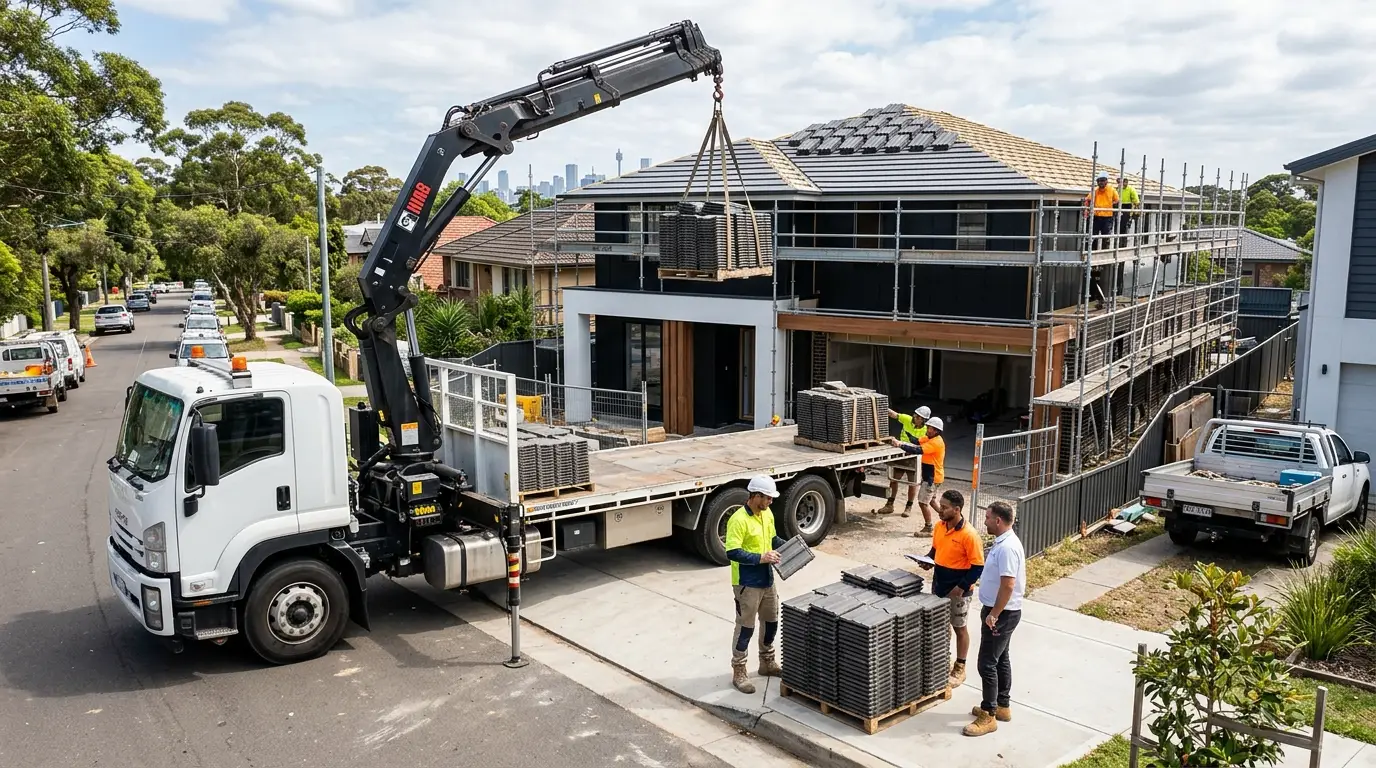
Good delivery is not just about dropping pallets at an address. It means confirming site readiness, understanding unloading needs, giving clear delivery windows, and lowering the chance of damaged or misplaced materials. For builders managing several jobs at once, strong delivery coordination can save hours of follow-up.
Before choosing a supplier, it is worth asking simple questions: Can deliveries be timed around site access? How are shortages or breakages handled? Who confirms the order before dispatch? What details does the supplier need from the builder to avoid delivery problems? Clear answers show whether the supplier understands real construction work.
Can one supplier serve coastal and inland jobs?
Yes. One supplier can support projects from the Northern Beaches to Western Sydney if they offer the right product knowledge, dependable logistics, and clear communication. The point is not just geography. It is knowing that coastal and inland jobs create different demands on selection, timing, handling, and client expectations.
For coastal builds, builders often pay close attention to exterior finishes, weather exposure, and design presentation. For Western Sydney work, the focus may be subdivision schedules, repeat selections, heat-aware colour choices, and steady stock across many lots. A capable supplier helps builders manage those differences without turning every order into a fresh problem.
This is where local building experience matters. Builders should not have to explain basic site realities every time they place an order. A supplier who already understands Sydney’s spread can make the path from selection to delivery much smoother.
Communication separates a supplier from a product seller
Many suppliers can provide concrete roof tiles. Fewer can provide the level of communication builders need when a project is moving fast. The difference shows up in prompt quotes, correct order confirmations, clear product details, and fast replies when the site team needs an answer.
Builders should look for practical communication rather than a sales pitch. The supplier should explain product options, point out risks, and confirm what is included in the order. If a selection needs special timing, that should be said early. If a colour or profile may not suit the program, the builder should know before the client signs off.
A search for ‘concrete roof tiles near me’ may help you find a local building materials supplier, but the best choice still needs strong stock, clear quotes, and good dispatch support.
A simple supplier check can help:
- Review the range to make sure profiles and colours suit your usual jobs.
- Ask about stock before you show final options to clients.
- Confirm accessory needs so the roof system is complete.
- Discuss delivery access for tight, sloped, or high-volume sites.
- Check communication during quoting, ordering, and dispatch.
- Test problem solving by asking how shortages, changes, or breakages are handled.
Builders should choose for the whole project, not just the tile
The cheapest or fastest option is not always the best once site coordination is added in. A supplier who lowers uncertainty can be more useful than one who simply gives a tile price. Builders need confidence that the chosen tile suits the home, the order is complete, and the delivery plan fits the build program.
For repeat builders, a reliable supplier relationship can make choices easier, improve estimates, and cut time spent chasing updates. For custom builders, strong supplier support can help clients make confident choices without feeling overwhelmed.
The main point is simple: when you think about what Sydney builders should look for when choosing a concrete roof tiles supplier (Northern Beaches to Western Sydney), focus on range, reliability, logistics, and communication together. Concrete roof tiles are only one part of the job, but the right supplier can make that part smoother, clearer, and easier to manage from selection to install.