Search

Plastic Resin Sourcing Guide: What Industrial Buyers Should Check Before Choosing a Supplier

Share this post :

Facebook
LinkedIn
Grid of glasses filled with blue plastic polypropylene granules, masterbatch polymer grain, with shallow DOF. HDPE or PVC resin pellets. 3d render illustration

Key takeaways

The correct resin grade is only the starting point.

A viable sourcing option must also meet technical, documentation, commercial, logistics, and supply requirements.

Supplier qualification should go beyond price and availability.

Buyers should verify grade alignment, documentation, MOQ, origin, lead time, and delivery conditions before making a sourcing decision.

Alternative grades require structured evaluation.

Specification fit, processing impact, documentation, approvals, commercial impact, and continuity should all be reviewed before substitution.

A better sourcing request leads to a better supplier response.

Providing the grade or specification, application, volume, destination, documentation needs, and delivery timing makes it easier to identify practical sourcing options.

Plastic resin sourcing is not just a search for a matching material code. Industrial buyers need to decide if a supplier can meet the required quality, provide the right documents, deliver on time, agree on terms, and ensure a steady supply without risking production. If you already know the resin family, grade, or specification you need, the next step is to qualify the supplier behind the offer.

What should buyers check before choosing a plastic resin supplier?

Buyers should check whether the supplier can match the exact resin grade or approved specification, provide complete technical documentation, confirm available volume and MOQ, support the destination and logistics route, and offer a credible plan for supply continuity. The correct grade matters, but finding the right material alone is insufficient if the supplier cannot meet your technical, documentation, commercial, and supply chain requirements.

In practice, many resin sourcing issues happen after the apparent match is found. A supplier may quote the requested grade but be unable to provide a recent COA. Another may have stock available, but only at a minimum order quantity that does not fit the buyer’s forecast. A third may offer attractive pricing, while origin, lead time, or import requirements create delays that erase the savings.

That is why experienced procurement and technical teams evaluate plastic suppliers as operating partners, not just product sources.

Start with exact grade and specification alignment

For buyers who already know their target plastic materials, sourcing should begin with precision. A close commercial name, similar family, or “equivalent” grade is not enough unless it has been reviewed against the application, processing conditions, regulatory needs, and end-use performance requirements.

The supplier should be able to confirm the exact/current grade, producer, origin, packaging form, and specification basis. If the buyer sources against an internal spec rather than a named grade, the supplier should understand which properties are mandatory and which may have an acceptable tolerance range. This distinction matters when evaluating alternatives, because two materials may appear similar on a data sheet but behave differently in processing or final performance.

Useful grade-matching checks include:

The goal is to avoid substitutions that look acceptable in procurement records but create issues at production trial, customer validation, or audit stage.

Documentation is part of the product

In industrial resin sourcing, documents are not administrative extras. They are part of supplier qualification and risk control. Before placing an order, buyers should confirm which documents are available, when they will be provided, and whether they match the shipment lot.

A Technical Data Sheet, or TDS, helps the buyer compare typical material properties against the required specification. It is useful for screening, but it should not be treated as shipment-specific proof. A Safety Data Sheet, or SDS, supports safe handling, storage, transport, and internal compliance review. A Certificate of Analysis, or COA, is typically used to confirm lot-level test results or quality information for the supplied batch.

Depending on the application, buyers may also need declarations related to food contact, restricted substances, recycled content, RoHS, REACH, or customer-specific compliance requirements. The important point is to define these requirements before sourcing is finalized, not after goods are ready to ship.

A supplier that can quote quickly but cannot support documentation consistently may create delays for receiving, quality release, or customer approval. For many manufacturers, that delay can be as disruptive as not having material at all.

How Should Buyers Evaluate Alternative Grades?

Alternative grades should be evaluated through a controlled technical and commercial review, not accepted only because they are available. The buyer should compare the alternative against the current grade, required specification, processing window, documentation requirements, approval pathway, and total sourcing cost before authorizing use.

This is especially important when the current grade has limited availability, long lead time, allocation risk, or exposure to regional disruption. A qualified alternative can improve resilience, but only if it is properly vetted. Procurement, engineering, quality, and production teams should agree on what level of equivalence is required and what testing is needed before commercial use.

A practical alternative-grade review should consider:

  1. Specification fit : Which properties must match exactly, and which can vary within an approved range?
  2. Processing impact : Will melt flow, additives, moisture sensitivity, drying conditions, or cycle behavior require process changes?
  3. Documentation : Can the supplier provide TDS, SDS, COA, and any required compliance declarations?
  4. Approval path : Is customer, regulatory, or internal engineering approval required before use?
  5. Commercial impact : Does the alternative improve availability but increase cost, MOQ, freight, or inventory burden?
  6. Continuity : Is the alternative a one-time emergency option or a reliable second source?

This approach turns alternative sourcing from a reactive scramble into a managed supply strategy.

Commercial terms must fit real production demand

Availability is only meaningful when it aligns with the buyer’s volume, timing, and cost structure. A supplier may have stock, but the MOQ may exceed current demand. Another may support small trial orders but lack the capacity for recurring production. Buyers should clarify both immediate needs and longer-term forecasts so the supplier can propose a realistic sourcing plan.

Key commercial points include MOQ, order multiple, price validity, payment terms, packaging quantity, lead time, and forecast flexibility. Buyers should also ask whether volume commitments can improve supply priority or pricing stability. For high-consumption materials, the conversation may extend to blanket orders, scheduled releases, consignment, or regional warehousing support.

Total cost should be viewed beyond unit price. Freight, duties, inland transport, storage, financing, demurrage risk, and production downtime exposure can change the real economics. A lower resin price from a distant origin may not be competitive if transit time is unpredictable or if the destination requires more complex import handling.

Logistics and origin shape sourcing risk

Origin, destination, and logistics route can determine whether a sourcing plan works in practice. Buyers should know where the material is produced or stocked, how it will move, what shipping terms apply, and whether the route supports the required delivery timing.

Local or regional sourcing may reduce exposure to long transit times, port congestion, tariff changes, and geopolitical uncertainty. Global sourcing may still be the right choice when the grade, cost, or volume requirement demands it, but it should be evaluated with a realistic view of lead time and disruption risk. The best choice depends on the buyer’s inventory strategy, production criticality, and tolerance for variability.

For recurring demand, buyers should discuss safety stock, delivery cadence, warehouse location, and emergency replenishment options. Supply continuity is not only about having a supplier today; it is about knowing what happens when allocation, force majeure, logistics disruption, or demand spikes affect the normal plan.

Checklist: information to prepare before requesting plastic resin sourcing

plastic resin grades by scg international

A complete sourcing request helps suppliers respond faster and reduces back-and-forth. Before contacting plastic suppliers, prepare the following:

  • 1) Resin type or family already approved for the application
  • 2) Exact/current grade, producer, and any approved equivalent grades
  • 3) Specification sheet, internal material code, or required property limits
  • 4) Application and critical performance requirements
  • 5) Manufacturing process and relevant processing constraints
  • 6) Required volume, annual forecast, and first-order quantity
  • 7) MOQ flexibility or maximum acceptable order size
  • 8) Destination, delivery address, and preferred incoterms or shipping terms
  • 9) Required documentation, such as TDS, SDS, COA, compliance declarations, or origin documents
  • 10) Required delivery timing, target arrival date, and recurring delivery schedule
  • 11) Packaging format and labeling requirements
  • 12) Any customer approval, regulatory, or audit requirements

The more complete the request, the easier it is to separate a workable supply option from a quote that only looks good on paper.

Strong suppliers add value beyond availability

A capable resin supplier does more than confirm stock and send a price. The right partner can help identify sourcing risk, compare approved options, coordinate documentation, support logistics planning, and flag issues before they reach production. For buyers managing multiple plants, grades, or destinations, that support can reduce internal workload and improve decision quality.

This is where supplier communication matters. Buyers should look for clear answers, transparent constraints, and a willingness to discuss technical and commercial trade-offs. If a supplier avoids questions about documentation, origin, MOQ, or continuity planning, that is a warning sign.

Plastic resin sourcing works best when the buyer and supplier define success the same way: correct material, complete documents, acceptable commercial terms, reliable delivery, and a plan for what comes next.

A sourcing decision should reduce risk, not create it

Selecting the correct resin grade is only one part of the decision. The supplier must also fit the buyer’s technical, documentation, commercial, logistics, and continuity requirements. When those elements are reviewed together, procurement teams can make better decisions and avoid hidden risks that appear after the purchase order is issued.

If you have an existing resin grade or specification and want to explore practical sourcing options, SCG International can discuss available pathways based on your material requirements, documentation needs, destination, volume, and delivery timing.

Frequently Asked Questions About OEM Procurement (FAQs)

Industrial buyers should evaluate whether the supplier can meet the required resin grade or specification, provide the necessary technical documentation, support the required volume and MOQ, and meet origin, logistics, delivery, and commercial requirements. The best sourcing option is not simply the one with the right material or lowest price, but the one that fits the buyer’s overall production and supply requirements.

To start a sourcing discussion with SCG International, buyers should prepare the resin family, exact or current grade, producer if known, technical specification, application, manufacturing process, required volume, destination, documentation requirements, packaging needs, and expected delivery timing. Providing complete information helps the sourcing requirement be evaluated more effectively.

Yes. If you already have an existing resin grade, approved specification, or material requirement, you can share those details with SCG International together with the required volume, destination, documentation, and delivery timing to discuss relevant sourcing options.

Buyers should consider total sourcing fit, including resin specification, MOQ, lead time, freight, duties, storage, origin, delivery requirements, documentation, and the potential impact of supply disruption. A lower unit price does not necessarily result in a better sourcing decision if other supply-chain costs or risks increase.

Origin and destination affect freight, transit time, import requirements, logistics routes, inventory planning, and potential exposure to disruption. Buyers should consider where the material is produced or stocked, how it will be transported, and whether the proposed supply route fits the required delivery schedule.

SCG International can support buyers by connecting plastic resin requirements with relevant sourcing options and coordinating considerations such as specifications, documentation, volume, destination, and supply arrangements. Its cross-border business experience and international network can be particularly useful when buyers need to evaluate sourcing options across different markets or supply origins.

Related Posts

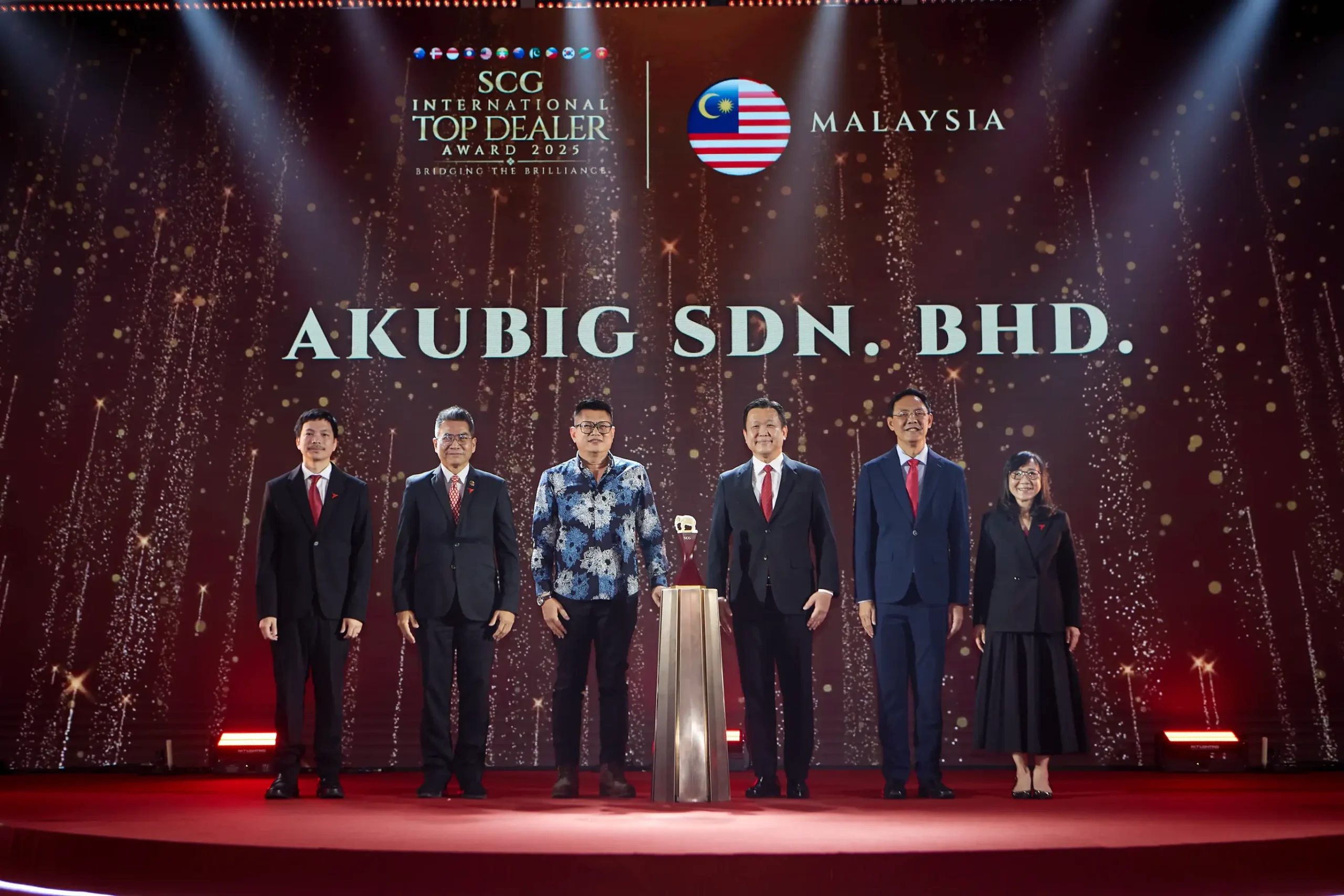
AKUBIG SDN. BHD. receives the SCG International Top Dealer Award 2025 in Malaysia

AKUBIG and SCG International: Celebrating a Trusted Partnership in Malaysia

Strong business partnerships are built over time — through trust, collaboration, and a shared commitment to creating value.
At the SCG INTERNATIONAL TOP DEALER AWARD 2025, held from 7–9 August 2026 in Bangkok, Thailand, SCG celebrated the achievements of its international dealer partners and recognized the strong relationships that continue to drive mutual growth across global markets.
Among the recognized partners was AKUBIG SDN. BHD. from Malaysia, represented by Mr. Lam Kian Guan, Managing Director. The recognition marks an important milestone in the long-standing partnership between AKUBIG and SCG, reflecting years of trust, collaboration, and a shared commitment to delivering value.

An asian supplier helping check a Thai food manufacturing quality inspection checklist

A Buyer’s Guide To Thailand’s Food Manufacturing Sector

Thailand’s food export sector generated $43.5 billion in 2025, placing the country among the world’s most productive food sourcing origins. Thailand’s food manufacturing sector exports large quantities of rice, processed chicken, canned tuna, coconut products, tropical fruits, sauces, and ready-to-eat meals, all adhering to internationally recognized safety standards.

For international buyers across retail, distribution, and food service, the opportunity is clear. The real question for procurement teams is how to move from knowing Thailand is a strong sourcing origin to identifying the right top Thai food exporter that aligns with specific category, volume, and compliance needs. 

This guide maps the exporter landscape, walks through the supplier evaluation process, and explains how a trusted food supply partner can make the process of finding a Thailand food supplier faster and more reliable.

I’m Here To Assist You

Contact us today

Please read Terms and Conditions, Privacy Notice, Cookies Notice, and I
I acknowledge that I can withdraw the given consent at any time, and I have understood the terms and conditions and how my personal data is processed.