Search

SCG Smartboard ULTRA: What Importers Should Know About Thailand’s Premium Fiber Cement Board

Share this post :

Facebook
LinkedIn
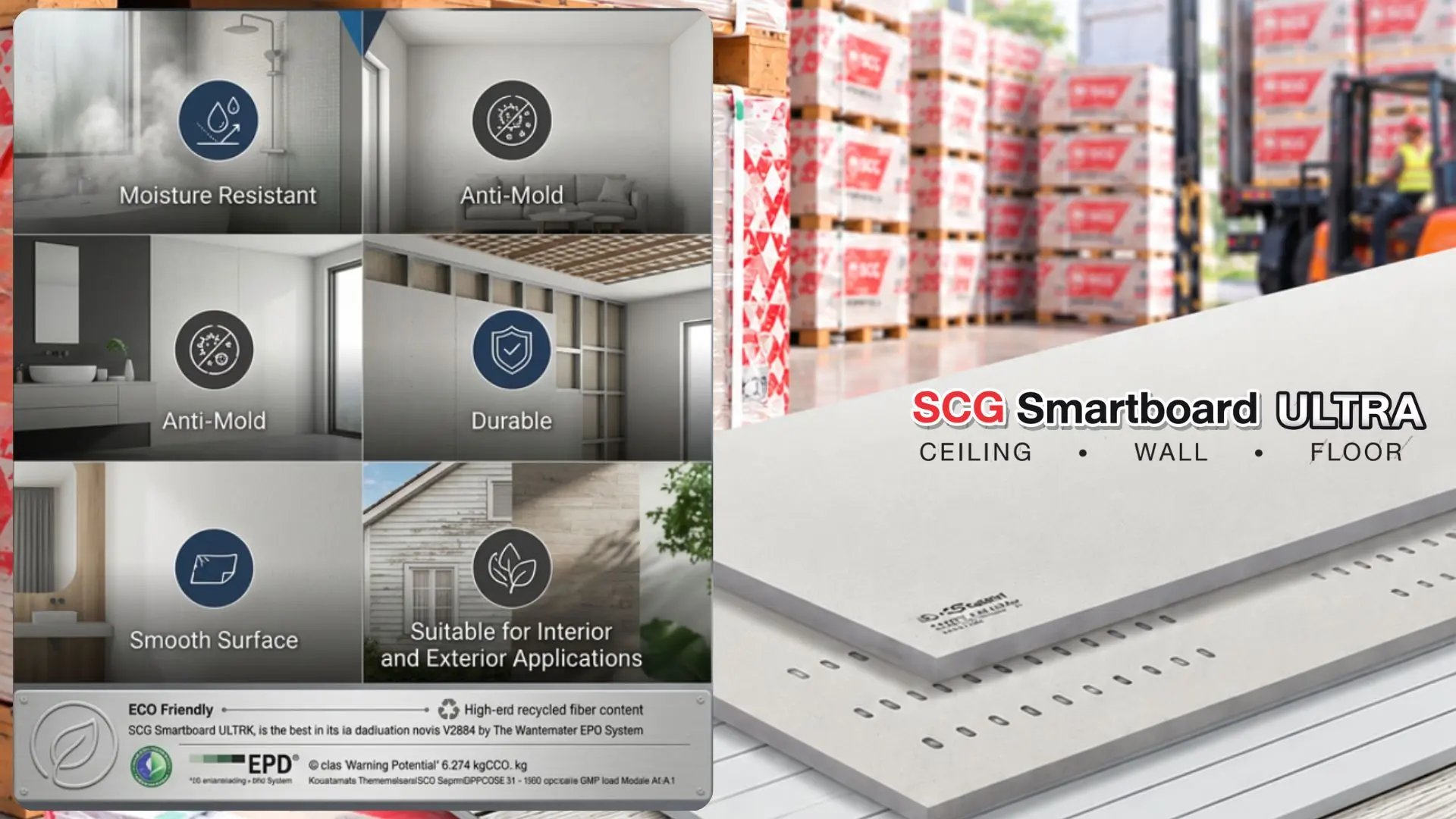
SCG Smartboard ULTRA fiber cement boards for exterior cladding, interior walls, ceilings, and raised flooring in a modern home, alongside securely packaged SCG products on wooden pallets being prepared for international export from Thailand.

For building material importers, choosing a fiber cement board involves more than comparing prices. Product durability, moisture resistance, environmental documentation, manufacturing consistency, and export capabilities all influence purchasing decisions.

SCG Smartboard ULTRA is a fiber cement board designed for interior and exterior ceiling, wall, and flooring applications. Its documented product features include enhanced durability, anti-mold technology, and environmental performance information. However, importers should verify the exact specifications and intended applications before placing an order. Explore >> SCG Fiber Cement Board product page

This guide explains what international buyers should know about SCG Smartboard ULTRA, how to evaluate its technical characteristics, and what to check when sourcing fiber cement board from Thailand.

Key takeaways

Enhanced durability :

SCG Smartboard ULTRA's product catalog reports up to 20% greater durability for its new formula.

Moisture resistance :

Fiber cement boards can support construction in humid environments when correctly specified and installed.

Anti-mold technology :

Product documentation reports resistance to three tested fungal species under ASTM D3273-16 over four weeks.

Environmental performance :

The catalog reports a Global Warming Potential (GWP) of 0.374 kg CO₂e/kg for life-cycle modules A1–A3.

Procurement matters :

Importers should verify technical specifications, environmental documentation, destination-market requirements, and export arrangements before ordering.

What Is SCG Smartboard ULTRA ?

SCG Smartboard ULTRA is a fiber cement board made from SCG Portland cement, silica, and cellulose fibers using Firm & Flex technology. The product is designed for ceiling, wall, and flooring applications, subject to the specifications of the selected board. Explore >> SCG Smartboard ULTRA Catalog

Fiber cement board combines a cement-based matrix with reinforcing fibers to create a sheet material for construction. Its suitability for a particular project depends on the board’s thickness, installation system, exposure conditions, and applicable technical requirements.

For importers, SCG Smartboard ULTRA offers a product to evaluate when developing a portfolio of construction materials from Thailand. The most important step is to match the documented product characteristics to the requirements of the destination market.

What distinguishes SCG Smartboard ULTRA?

Three product characteristics deserve particular attention:   

        1.  Enhanced durability : 20% greater durability with the ULTRA formula.

        2. Anti-mold technology : resistance to specified fungal species.

        3. Environmental data: The catalog reports GWP information and a Best in Class Declaration Value for 2024.

       These characteristics provide a starting point for technical evaluation, rather than a substitute for reviewing the full product documentation.

SCG Smartboard ULTRA fiber cement board features graphic visualization showing moisture resistance and anti-mold properties in construction applications like walls and ceilings

Why SCG Smartboard ULTRA Matters to Building Material Importers

Importers need materials that meet customer requirements while supporting predictable procurement, installation, and inventory planning. Four considerations help explain the relevance of SCG Smartboard ULTRA.

1.Durability and long-term use

Durability affects the performance and maintenance requirements of building materials. SCG Smartboard ULTRA’s catalog reports up to 20% greater durability for its new formula.

Importers should review the underlying comparison, test conditions, and applicable product specifications before translating this figure into a marketing claim. Actual performance also depends on installation quality and exposure conditions.

2.Moisture resistance for demanding environments

A moisture resistant cement board can be relevant in markets where humidity and seasonal rainfall influence material selection.

However, moisture resistance does not automatically mean waterproofing. Wet-area applications may require additional waterproofing systems, suitable coatings, effective drainage, and correct joint detailing.

Buyers should confirm that the selected board is suitable for its intended environment.

3.Anti-mold performance

Mold prevention is an important consideration in humid buildings. According to the SCG Smartboard ULTRA, the product’s anti-mold technology was evaluated against Aureobasidium pullulans, Aspergillus niger, and Penicillium citrinum under ASTM D3273-16 over four weeks, with no mold-related defacement reported in the stated test.

This evidence is more useful than an unqualified anti-mold claim because it identifies the test method, organisms, and evaluation period.

Nevertheless, resistance under specified test conditions does not guarantee that mold will never develop in an installed building. Moisture control, ventilation, and maintenance remain essential. read more >>  SCG Smartboard ULTRA Catalog


4.Environmental performance documentation

Environmental information can help importers respond to procurement requirements from developers, architects, and contractors.

The catalog reports a GWP of 0.374 kg CO₂e/kg for modules A1–A3 and identifies a Best in Class Declaration Value for 2024.

Importers should review the applicable environmental declaration to understand the assessed product, declared unit, life-cycle boundaries, verification status, and comparison basis before using these figures in bids or sustainability claims.

How to Evaluate SCG Smartboard ULTRA: Seven Checks for Importers

Before sourcing a fiber cement board from Thailand, use these seven checks to assess whether the product meets your commercial and technical requirements.

1. Confirm the intended application

Determine whether the board will be used for interior walls, exterior walls, ceilings, flooring, or another application. Different uses may require different thicknesses, support systems, and installation methods.

2. Review durability specifications

Request the current catalog and relevant technical documentation. For the reported durability improvement, verify the comparison baseline and test conditions before using the percentage in procurement decisions.

3. Verify moisture resistance

Review documented moisture-related performance and confirm whether the intended installation requires additional waterproofing, protective finishes, or other measures.

4. Check anti-mold evidence

Review the applicable test report and its scope. Confirm which product was tested, which organisms were evaluated, and what the results establish.

5. Examine environmental documentation

For an EPD fiber cement board, check the declared unit, GWP results, life-cycle modules, applicable product category rules, verification details, and validity period.

6. Confirm destination-market compliance

Check local building codes, relevant product standards, labeling requirements, and any testing or documentation required for importation.

The applicable requirements depend on the destination country and intended building application.

7. Assess export and commercial arrangements

Before ordering, clarify minimum order quantities, lead times, packaging, shipping terms, product availability, and procedures for handling damaged goods or quality claims.

A clear quotation should identify the costs and responsibilities included in the proposed transaction.

Environmental Performance and Product Quality: Both Matter

Environmental performance is only one part of product selection. Importers must also establish whether the board meets the technical requirements of the intended application.

An Environmental Product Declaration (EPD) is a standardized document that reports environmental impacts over defined life-cycle stages. It supports transparency, but it does not independently establish structural performance, moisture resistance, or anti-mold effectiveness.

The International EPD System’s SCG Smartboard listing identifies an EPD for SCG Smartboard, with a listed validity date of June 4, 2029. Its published product coverage includes specified ceiling, wall, and decorative board products. Importers should confirm directly with SCG whether the declaration covers the exact SCG Smartboard ULTRA product and configuration being purchased.

Frequently Asked Questions About SCG Smartboard ULTRA

SCG Smartboard ULTRA is a fiber cement board designed for interior and exterior ceiling, wall, and flooring applications. Buyers should consult the official catalog to confirm the specifications and suitability of the selected product.

Its catalog reports up to 20% greater durability for the new formula, anti-mold technology tested against three fungal species, and environmental performance information. Buyers should review the relevant documentation to understand the conditions and scope of these claims. SCG Smartboard ULTRA Catalog

The product is presented within SCG's fiber cement board portfolio, which describes moisture resistance as a product characteristic.

Its catalog reports testing against Aureobasidium pullulans, Aspergillus niger, and Penicillium citrinum under ASTM D3273-16 over four weeks. This supports a specific resistance claim under the stated test conditions, not a guarantee against all mold growth in every environment.

Evaluate technical specifications, manufacturing quality controls, relevant test reports, product consistency, environmental documentation, export capabilities, and compliance with destination-market requirements. Compare suppliers using equivalent product specifications and commercial terms.

Start by identifying the intended application, required specifications, destination country, estimated order quantity, and documentation requirements. Then contact a supplier such as SCG International to discuss product suitability, availability, quotation, and export arrangements.

Related Posts

Industrial bag applications for cement, chemicals, food ingredients, fertilizer and minerals packaging

Industrial Bag Applications: Cement, Chemicals, Food Ingredients, Fertilizer and Minerals Packaging

Packing dry materials sounds simple until a sack splits on the conveyor, cement dust coats the filling line, or fertilizer arrives caked and damp. The right bag is rarely the one with the biggest load rating. It is the one that fits your product, your filling equipment, your route and your customer’s emptying process.
This guide explains industrial bag applications across five sectors: cement, chemicals, food ingredients, fertilizer and minerals. You will learn how to compare paper sacks, PP woven bags and bulk bags, what each sector must get right first, and how to brief industrial bulk bag suppliers so the quotes you receive can be compared fairly.

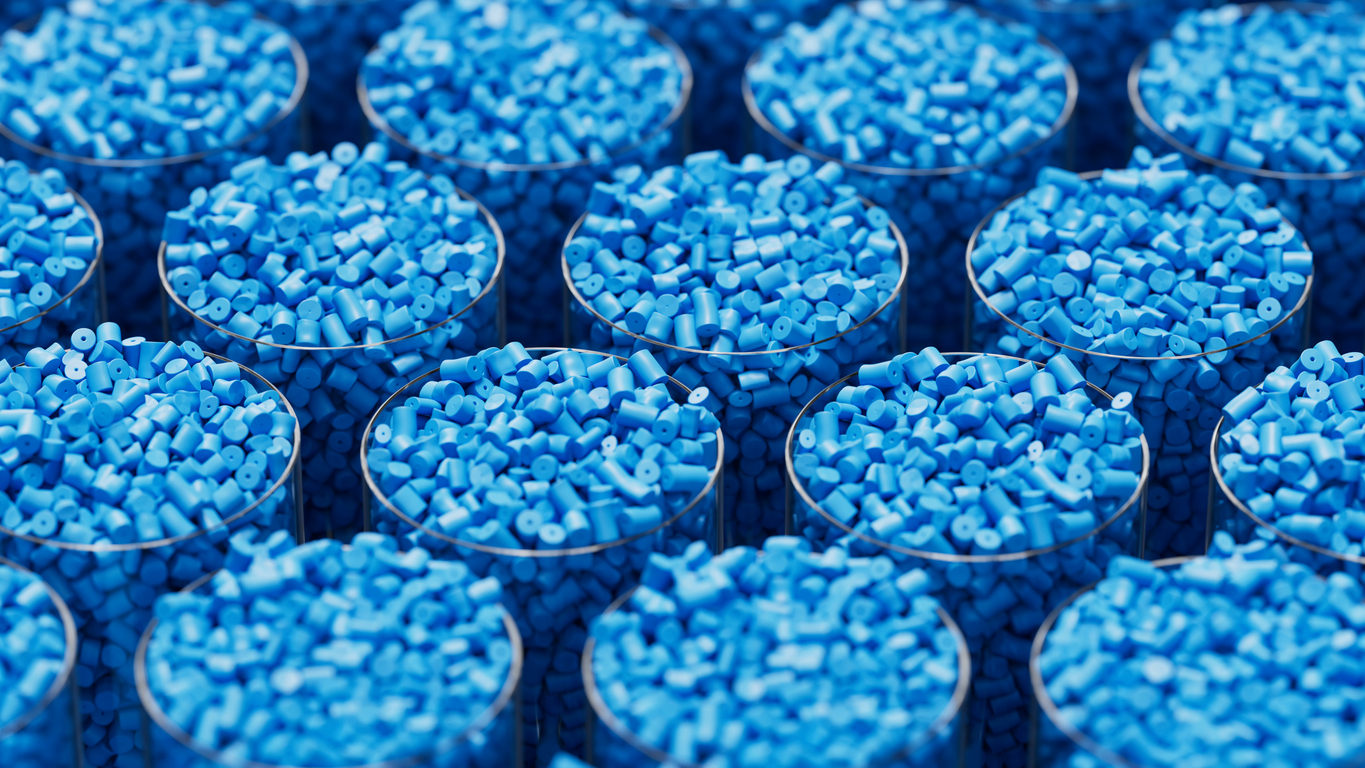
Grid of glasses filled with blue plastic polypropylene granules, masterbatch polymer grain, with shallow DOF. HDPE or PVC resin pellets. 3d render illustration

Plastic Resin Sourcing Guide: What Industrial Buyers Should Check Before Choosing a Supplier

Plastic resin sourcing is not just a search for a matching material code. Industrial buyers need to decide if a supplier can meet the required quality, provide the right documents, deliver on time, agree on terms, and ensure a steady supply without risking production. If you already know the resin family, grade, or specification you need, the next step is to qualify the supplier behind the offer.

I’m Here To Assist You

Contact us today

Please read Terms and Conditions, Privacy Notice, Cookies Notice, and I
I acknowledge that I can withdraw the given consent at any time, and I have understood the terms and conditions and how my personal data is processed.