B2B businesses are catalyzing a global shift towards sustainability and circular economies. SCG International, as a Trusted International Supply Chain Partner, we not only provide end-to-end supply chain solutions, from sourcing products to identifying distribution channels across various industries. But our commitment to sustainability is evident in our dedication to green solutions and minimizing our carbon footprint throughout our supply chain process strategies, while also supporting our partners in achieving their sustainability goals.
Every year, millions of tons of used liners from pressure-sensitive labels are sent to landfills and incinerators, despite the fact that all liners are recyclable. Avery Dennison, a global materials science and manufacturing company specializing in the design and manufacture of a wide variety of labeling and functional materials, is committed to attaining sustainability goals, which include reducing landfill waste, greenhouse gas emissions and foster a circular economy in the country. To assist Avery Dennison in reaching its goals, SCG International has entered into a collaboration for the recycling process.
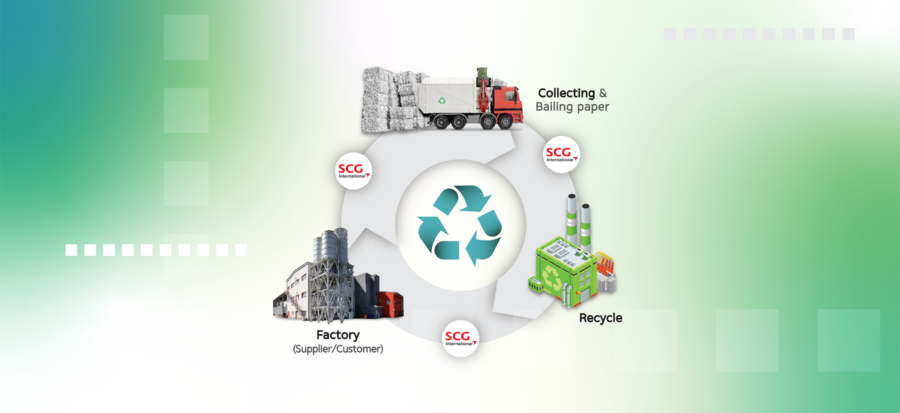
With 40+ years of supply chain management experience, SCG International will assist Avery Dennison in reducing landfill waste, greenhouse gas emissions and foster a circular economy in the country. In our mission to bridge the gap between visionary initiatives and practical implementation, we leverage our extensive network and connections to identify a specialized recycling partner to contribute to the project. Each month, the recycling process begins when SCG International picks up used liners from the plant. The liner, often composed of various materials including silicon, goes through a rigorous de-siliconization process to remove any impurities. Once this step is completed, the purified material is then transformed into pulp. This transformation is crucial as it allows the materials to be reshaped and reformed. Rather than being disposed of, the pulp is given a new lease on life. It is used to manufacture two primary products: A4 paper, art paper and carton board. Through this efficient and sustainable cycle, SCG International not only contributes to waste reduction but also creates valuable and eco-friendly products, setting a precedent in the industry for waste management and recycling.
The collaboration between Avery Dennison and SCG International exemplifies how B2B partnerships can promote sustainable achievements. Every step in the right direction matters. Whether it’s incorporating recycled materials into your product line, implementing a strategic waste management plan, or redefining your supply chain processes to reduce carbon emissions. In a world where every decision can make a significant impact. Together, we can create a sustainable legacy for future generations. Let’s turn our shared sustainability goals into tangible, industry-wide changes. Embrace the green business solutions and begin your journey towards a more sustainable and profitable future.