

Search

Biomass Fuel : The Future Energy for Industry

Share this post :

Facebook
LinkedIn
Variety of biomass fuel from SCG International

Key takeaways

Table of Contents

Transitioning to clean, sustainable energy isn’t just a trend but a necessity for today’s industrial sector. As fossil fuel costs rise and environmental regulations tighten, reducing carbon footprints is a top priority. That’s why biomass fuel, also known as biomass energy or alternative fuel, is emerging as a cost-effective, eco-friendly solution. However, a successful shift requires a reliable, high-quality, and cost-efficient partner like SCG International, a trusted alternative fuel supplier.

What is Biomass Energy and Why is It Important Today?

Biomass energy refers to energy derived from organic materials like agricultural residues, forestry by-products, and industrial scraps. These are converted into biofuels used for heat or electricity. 

Examples of biomass energy include a wide range of organic materials such as fast-growing energy crops, wood industry residues, palm kernel shells, and agricultural waste like rice husks and straw.  

Benefits of Biomass Energy

  • 1) Renewable and Sustainable: Converts natural waste materials into energy, reducing dependence on finite fossil fuels.
  • 2) Lower Greenhouse Gas Emissions: Biomass generally releases fewer emissions than fossil fuels and doesn’t increase atmospheric CO₂.
  • 3) Waste Utilization: Turns agri-waste like husks and sawdust into valuable energy, reducing landfill and incineration.
  • 4) Long-term Cost Savings: Initial setup may be costly, but long-term energy costs decline with biomass.
  • 5) Regulatory Readiness: Many countries incentivize the use of renewable energy. Switching to biomass supports strategic compliance.
What types of biomass fuel are used in industry

Types of Biomass Fuel Used in Industry

In the industrial sector, choosing the right biomass fuel not only cuts energy and carbon costs but also plays a key role in heat generation efficiency, combustion stability, and enhancing the company’s sustainability image. For those in need of reliable solutions, SCG International offers a wide range of biomass fuels designed to meet the needs of both small and large-scale industries, including the following:

FuelCalorific value (kcal/kg)Typical moistureBest suited toMain drawback
Wood chips2,400–3,50015–40%Medium-to-large boilers: food processing, rice mills, wood factories, biomass powerVariable moisture; needs good storage
Wood pellets / briquettes3,800–4,800Reduced (not stated)*Facilities needing consistent heat; limited storage spaceNeeds compatible feeders; costs more than chips
Black pellet4,300–5,260LowIndustrial power plants needing high, coal-like heatHigh cost; often imported
Palm kernel shell (PKS)3,800–4,400Low (dry)Palm oil mills and industry in Southern Thailand; compact boilersEmission risk if incompletely burned; variable local supply
Agricultural wasteNot stated*HighRural biomass plants and renewable projectsInconsistent seasonal quality; high moisture

Shredded Wood Biofuel / Wood Chips

Commonly known as Wood Chips, it is made from wood scraps or softwood like eucalyptus that are chopped into small pieces. It can be used directly as fuel without further processing, making it ideal for medium-to-large boilers in food processing plants, rice mills, wood processing factories, or biomass power plants.

Pros

  • Low, stable cost compared to fossil fuels
  • Easily sourced domestically from eucalyptus, rubberwood, fruit trees, and other economic timber.
  • Delivers high and clean heat with a calorific value of 2,400–3,500 kcal/kg.
  • Supports local economies through job creation

Cons

    • High moisture content: Shredded Wood Biofuel /Wood Chip typically contains 15%–40% moisture. Without proper drying, combustion efficiency drops significantly. Additionally, sourcing wood from various origins can result in inconsistent heating values.
    Requires high-quality storage: To prevent mold and degradation, shredded wood needs a proper storage system, which may lead to higher handling and storage costs.

Wood Pellet Biomass / Biomass Briquettes

Made from agricultural residues such as rice husks, sawdust, and bark, these materials are compressed into briquettes or pellets to reduce moisture and increase energy density. They are ideal for facilities that require consistent thermal energy, such as animal feed factories, ceramic manufacturers, or businesses with limited storage space.

Pros

  • 1) Provides consistent and efficient heat output when used in the right system, thanks to its uniform shape and high density. The calorific value ranges from 3,800 to 4,800 kcal/kg.
  • 2) Maximizes agri-waste value and boosts farmer income

Cons

      • Requires compatible feeders or furnaces designed for the specific pellet/stick size.
      • Slightly more expensive than shredded wood biofuel

Black Pellet

Black pellet is a torrefied wood briquette produced by heating wood in low-oxygen conditions, resulting in a water-resistant, high-energy biofuel. Its heat value is comparable to coal but with lower carbon emissions, making it ideal for industrial power plants requiring high thermal energy.

Pros

    • High heat value close to coal : Black pellet biofuel offers a calorific value of approximately 4,300–5,260 kcal/kg, making it an efficient alternative to coal in various industrial applications.
    • Low moisture and volatiles : With minimal moisture content and low volatile matter, black pellets are easy to store and safe to handle.
    • Reduces CO₂ emissions : Compared to coal, black pellets emit significantly less carbon dioxide, contributing to better air quality and reduced environmental impact.

Cons

  • High cost due to advanced processing
  • Often requires importation or specialized tech

Palm Kernel Shell Biofuel (PKS)

Palm kernel shells are small, coal-like, dry shells from oil palm seeds. They are a suitable biofuel for palm oil mills, oil production plants, and general industries in Southern Thailand, as well as for compact boiler systems designed for small-sized pellet fuels.

Pros

  • High heat value: Palm kernel shell biofuel provides a calorific value of around 3,800–4,400 kcal/kg, which is comparable to coal.
  • Easy to transport: Its small, dry form makes it simple to handle, with low ash content (less than 3–4%).
  • Efficient use of resources: As a by-product of the palm oil industry, it helps reduce waste and dependence on fossil fuels.

Cons

  • Potential for emissions: Incomplete combustion may lead to soot or air pollution, which can affect health and the environment.
  • Unstable domestic supply: Local production volumes fluctuate and may not meet demand, requiring imports from external sources to ensure availability.

Agricultural Waste

Includes rice husks, corn stalks, sugarcane leaves, etc. Burned directly in rural biomass plants or renewable energy projects.

Pros

  • Local feedstock: promotes the circular economy
  • Reduces open-air burning: lowering air pollution
  • Low cost and widely available: Agricultural waste is abundant in farming areas, with Thailand alone generating tens of millions of tons of such residues each year.

Cons

  • Inconsistent quality: Agricultural waste quality varies by season and growing region, leading to interruptions in fuel production due to an unstable feedstock supply.
  • High moisture content: Excess moisture reduces combustion efficiency, necessitating the use of proper drying systems or high-quality storage facilities.

How to Choose the Right Biomass Fuel for Your Boiler

1.Start with boiler compatibility. The feeder and grate decide which fuel sizes and shapes will run at all. A system built for uniform pellets will jam on irregular wood chips, and a chip grate will not hold fine agricultural residues. Confirm what your boiler can physically handle before anything else.

2.A cheaper tonne can cost more per unit of heat. Take the calorific values for these fuels: wood chips at roughly 3,000 kcal/kg deliver about 3 million kcal per tonne, while wood pellets at roughly 4,300 kcal/kg deliver about 4.3 million. If chips landed at, say, $70 a tonne and pellets at $130, the chips cost about $23 per million kcal against about $30 for pellets, so the pellet costs more per unit of energy here despite its higher density. (Prices are illustrative; use your own quotes.)

3.Weigh moisture carefully. Moisture is burned off as wasted heat before useful energy is released, so a high-moisture fuel delivers less usable energy than its headline calorific value suggests. Wood chips at 15–40% moisture can lose a meaningful share of efficiency without drying.

4.Plan for supply continuity across shipments. A fuel that performs well once is only useful if the next delivery matches it. Consistent grade and moisture avoid constant re-tuning. Our guide to protecting biomass fuel supply continuity, when one biomass source runs short, covers this in depth.

SCG International : A Trusted Alternative Fuel Supplier

Confidently make the shift to clean energy with SCG International, your reliable alternative fuel supplier. We offer high-quality biomass fuel solutions, from Shredded Wood biofuel, wood pellet biomass, to black pellet biofuel and palm kernel shell biofuel—customized to your industrial needs.

We provide alternative fuels that are certified by global standards such as FSC and GGL, with full traceability and ethical sourcing. Our products are suitable for various industrial applications, including cement, packaging, power generation, and industrial boilers. We also offer comprehensive combustion performance testing services.

With over 45 years of experience in supply chain solutions, SCG International has deep expertise in sourcing biomass fuel from reliable sources across the globe. We help clients access cost-effective, high-quality biomass energy, while reducing complexity in procurement and logistics.

Our internationally certified supplier network is supported by on-the-ground teams who conduct rigorous quality inspections, ensuring every stage of the supply chain meets strict standards for product quality, sustainability, and reliability.

End-to-end supply chain management, from sourcing to final delivery, through a smooth, flexible system that adapts to changing business needs with speed and efficiency.

From sourcing to final delivery, we manage the entire end-to-end biomass fuel supply chain with a smooth and flexible system, ensuring timely delivery and responsiveness to your changing business needs, while maintaining convenience and operational efficiency. Explore how we can help you transition to cleaner, sustainable energy. Visit us at SCG International to speak with our energy experts today.

Frequently Asked Questions About Biomass Fuel

It depends on local prices, but the method is fixed: divide the delivered price per tonne by the usable energy per tonne, which comes from calorific value adjusted for moisture. A low-priced, high-moisture fuel like wet wood chips can lose its advantage once drying losses are counted, so always compare cost per unit of energy.

Specify a minimum calorific value with its moisture basis, a maximum moisture content, and a maximum ash content, since these three drive heat output and maintenance. Add particle size and a fines limit so the fuel suits your feeder. Agree these in writing with a test certificate per shipment. For the fuels on this page, calorific values range from about 2,400 kcal/kg for wood chips to 3,800 kcal/kg for wood pellets; confirm the moisture basis with your supplier.

Often yes, but rarely without changes. Biomass has lower energy density, higher moisture, and different ash behavior than coal, so a plant usually needs adjusted fuel handling and feeding, burner or grate changes, and sometimes emissions and ash-handling upgrades. The scope depends on the boiler and the biomass grade, so a combustion assessment comes first.

Moisture carries no energy and absorbs heat as it evaporates, so part of the fuel’s energy is spent drying it rather than producing useful heat. The wetter the fuel, the lower its effective calorific value and boiler efficiency. This is why a wood chip at 40% moisture underperforms the same chip dried to a lower level, even at the same weight.

Boiler tuning adjusts combustion settings to match a specific fuel. Between biomass grades, the properties that change are moisture content, calorific value, ash content, and particle size, and each one alters how the fuel ignites and burns. A plant re-tunes whenever it changes grade or supplier, or when moisture shifts seasonally. Our cement plant guide covers what the tuning adjusts inside the boiler, which is why boiler tuning services for different biomass fuel grades are part of a clean fuel switch.

Consistency comes from specification and inspection. A supplier should hold every shipment to the same written specification for calorific value, moisture, ash, and size, inspect at origin, and provide a test certificate per batch. A broad, qualified supplier network also lets a buyer hold the grade steady when one source runs short.

Related Posts

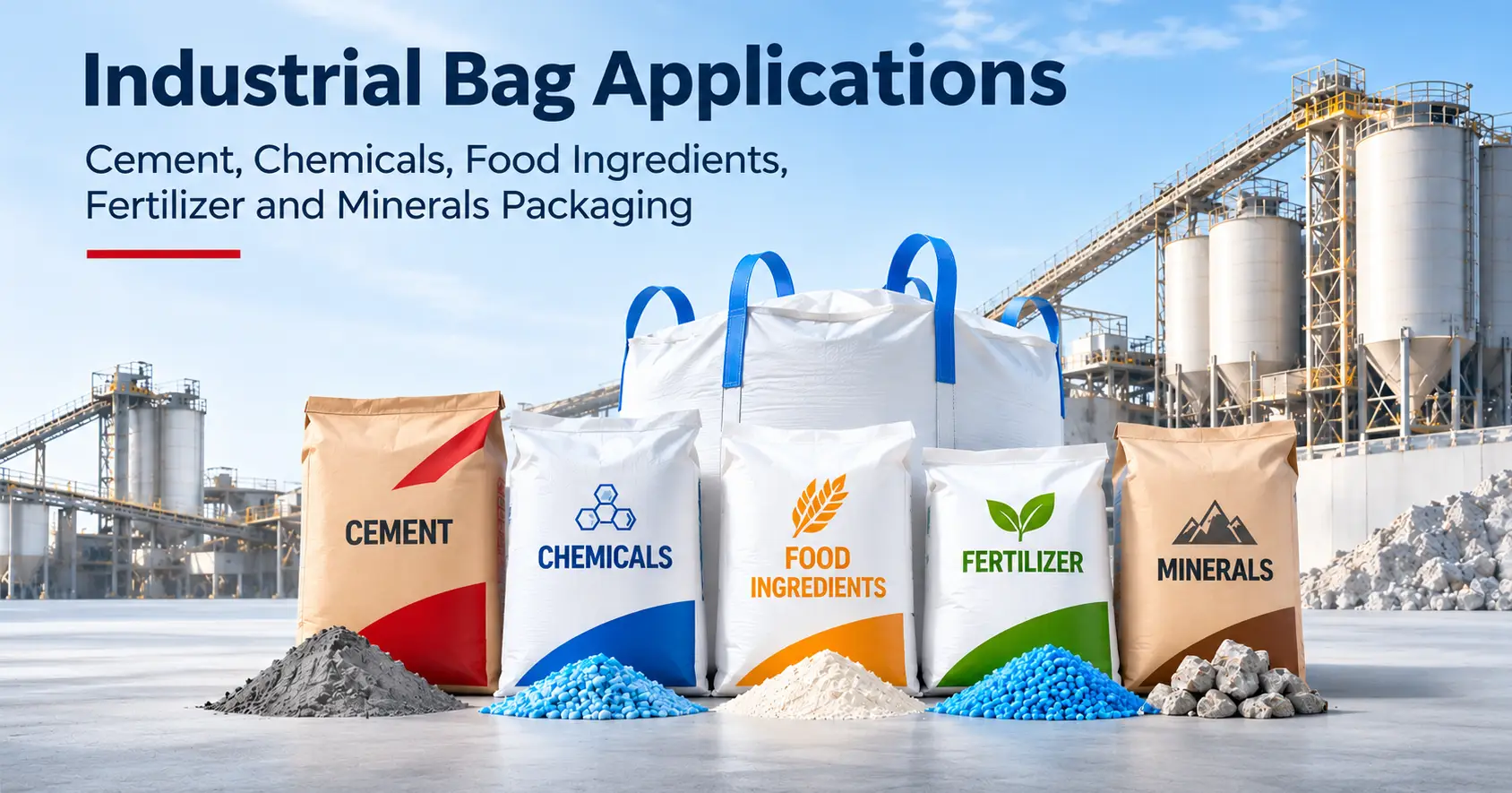
Industrial bag applications for cement, chemicals, food ingredients, fertilizer and minerals packaging

Industrial Bag Applications: Cement, Chemicals, Food Ingredients, Fertilizer and Minerals Packaging

Packing dry materials sounds simple until a sack splits on the conveyor, cement dust coats the filling line, or fertilizer arrives caked and damp. The right bag is rarely the one with the biggest load rating. It is the one that fits your product, your filling equipment, your route and your customer’s emptying process.
This guide explains industrial bag applications across five sectors: cement, chemicals, food ingredients, fertilizer and minerals. You will learn how to compare paper sacks, PP woven bags and bulk bags, what each sector must get right first, and how to brief industrial bulk bag suppliers so the quotes you receive can be compared fairly.
Grid of glasses filled with blue plastic polypropylene granules, masterbatch polymer grain, with shallow DOF. HDPE or PVC resin pellets. 3d render illustration

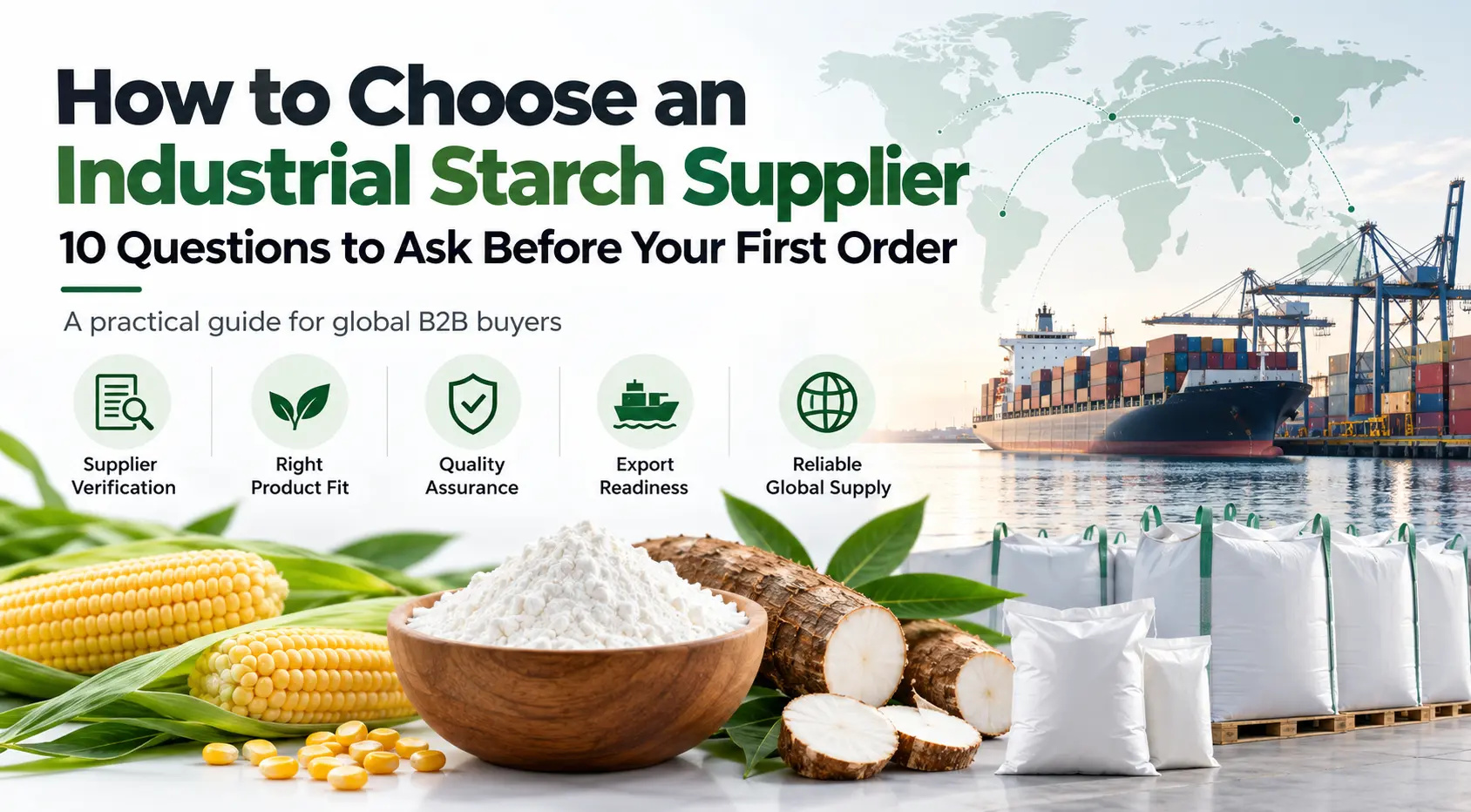
Plastic Resin Sourcing Guide: What Industrial Buyers Should Check Before Choosing a Supplier

Plastic resin sourcing is not just a search for a matching material code. Industrial buyers need to decide if a supplier can meet the required quality, provide the right documents, deliver on time, agree on terms, and ensure a steady supply without risking production. If you already know the resin family, grade, or specification you need, the next step is to qualify the supplier behind the offer.

I’m Here To Assist You

Contact us today

Please read Terms and Conditions, Privacy Notice, Cookies Notice, and I
I acknowledge that I can withdraw the given consent at any time, and I have understood the terms and conditions and how my personal data is processed.