Search

Industrial Bag Applications: Cement, Chemicals, Food Ingredients, Fertilizer and Minerals Packaging

Share this post :

Facebook
LinkedIn
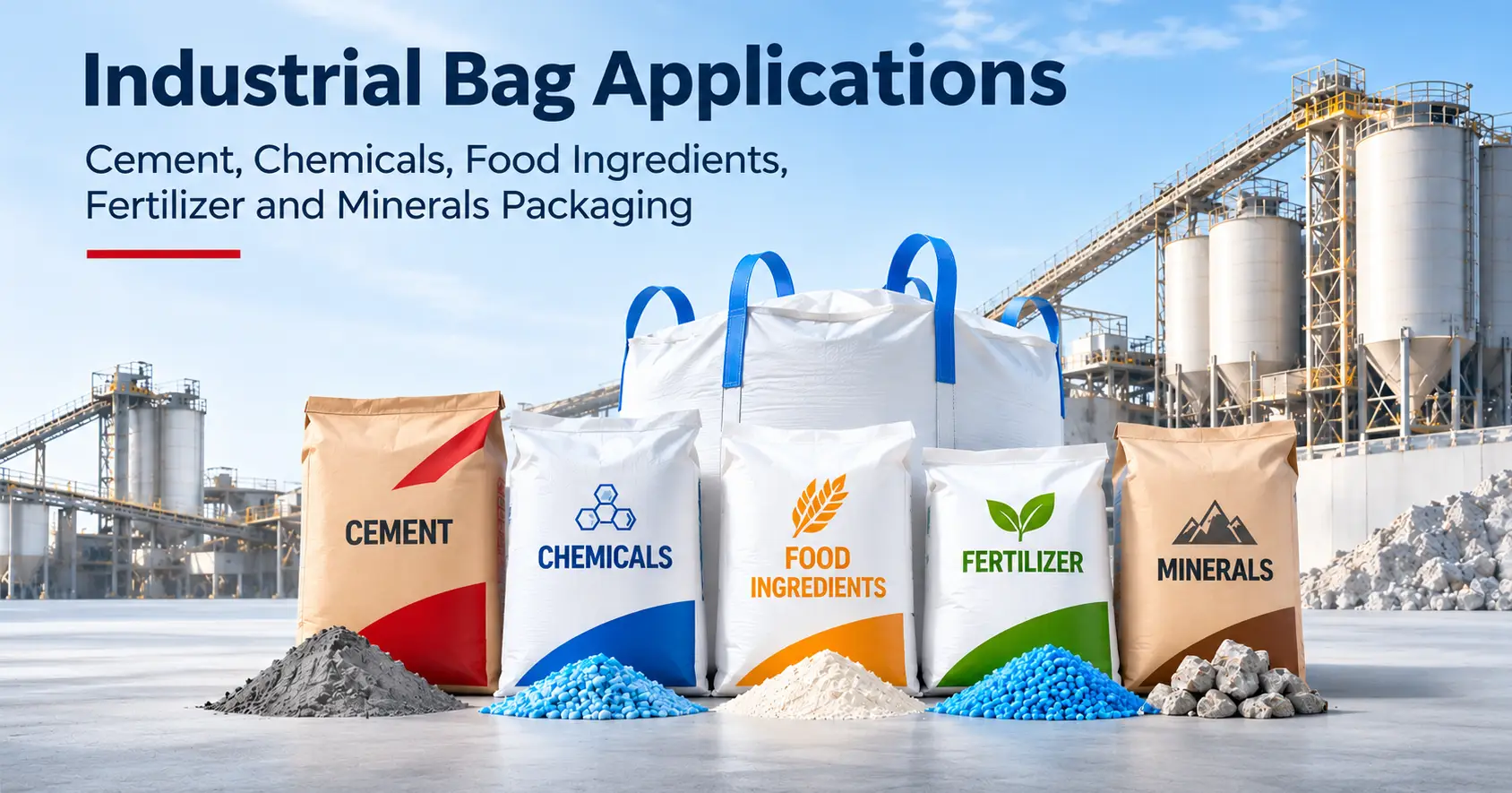
Industrial bag applications for cement, chemicals, food ingredients, fertilizer and minerals packaging

Key takeaways

The right industrial bag depends on the job

Match the bag to your product, filling equipment and route, not to bag size alone.

Each bag format fits a different task

Paper sacks suit powder filling, PP woven bags suit strong, lightweight dry goods, and FIBCs suit mechanically handled bulk loads.

Every sector has its own first priority

Cement needs air release, chemicals need compatibility checks, food ingredients need documentation, fertilizer needs dryness, and minerals need product-specific design.

Trials should cover the full handling cycle

Test filling, closing, movement, storage and emptying, not just the first fill.

Choose suppliers on evidence, not price alone

Compare industrial bulk bag suppliers by written specifications, stated assumptions and trial results.

Packing dry materials sounds simple until a sack splits on the conveyor, cement dust coats the filling line, or fertilizer arrives caked and damp. The right bag is rarely the one with the biggest load rating. It is the one that fits your product, your filling equipment, your route and your customer’s emptying process.

This guide explains industrial bag applications across five sectors: cement, chemicals, food ingredients, fertilizer and minerals. You will learn how to compare paper sacks, PP woven bags and bulk bags, what each sector must get right first, and how to brief industrial bulk bag suppliers so the quotes you receive can be compared fairly.

Which Industrial Bag Is Right for Your Application?

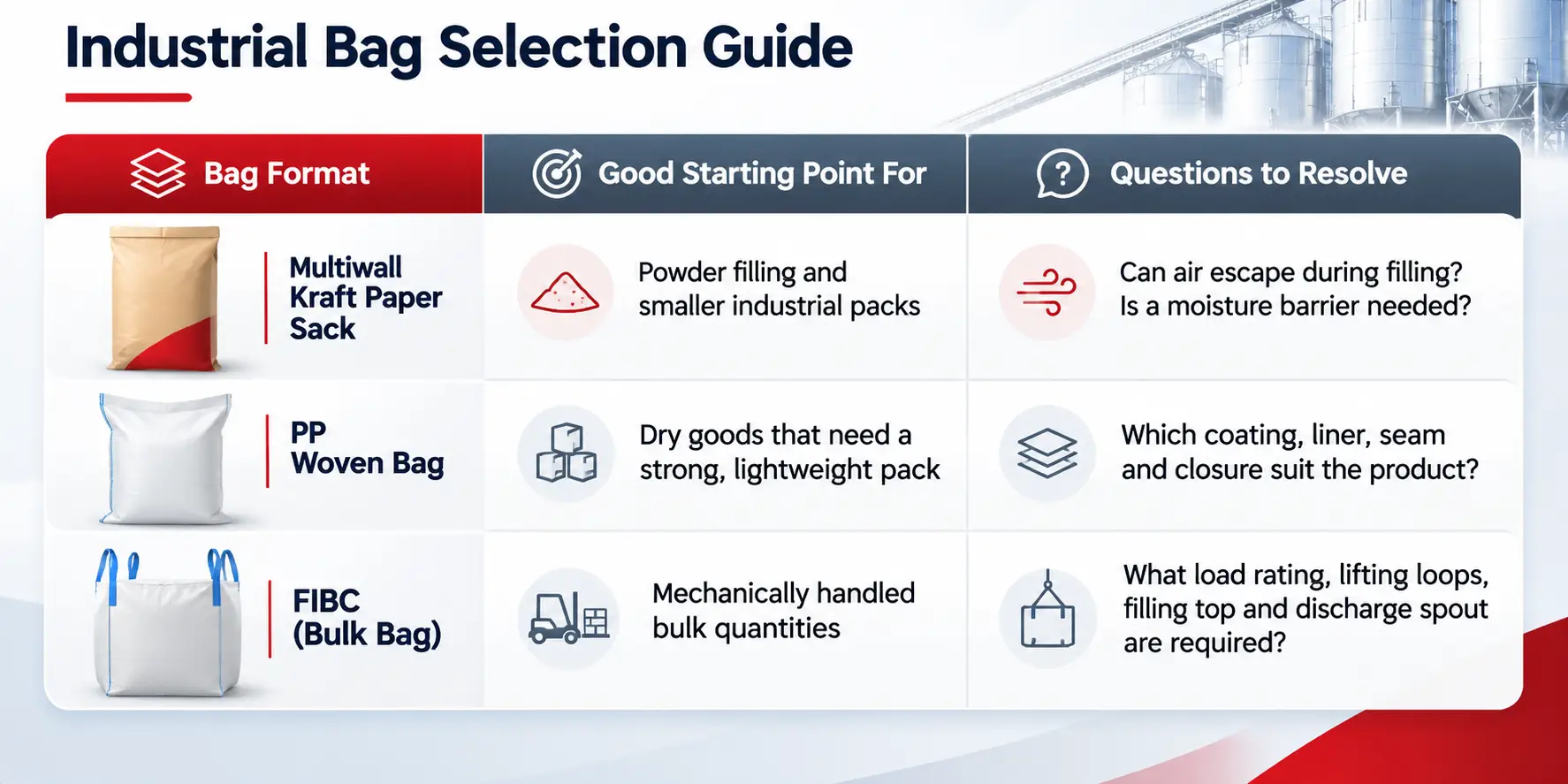
The right industrial bag matches the material and its whole journey: construction, barrier properties, closure and handling features. Start with the product and the operating conditions. Only then compare multiwall paper sacks, woven polypropylene (PP) bags and flexible intermediate bulk containers (FIBCs), often called bulk bags or jumbo bags.

Use the table below to organize early discussions. It is a starting point, not a specification.

Paper sacks come in valve and open-mouth styles. Woven PP bags can be laminated and customized. FIBCs offer many filling and discharge arrangements. Because of this range, the format is only the first step in the specification. Always validate the complete package on the equipment and route where it will run.

Industrial Bag Applications Across Five Sectors

Treat the sector notes below as a discussion guide. Ask each supplier to explain its proposed construction against every relevant risk, and write down which assumptions still need testing. Review product protection, operator handling and the receiving customer’s process together, instead of approving an empty bag in isolation.

Across all five sectors, three questions keep returning: what does the material do to the bag, what does the bag do to the material, and what will the handling equipment do to both? If a supplier cannot answer all three for your product, the proposal is not ready for trial.

1.Cement Packaging: Balance Air Release With Containment

Cement sacks must let air escape during filling while keeping fine particles inside. Paper permeability, valve design, sealing and machine settings all affect the result. A barrier layer that improves moisture protection can also change how air leaves the sack, so test these features together.

Success means more than surviving the filling spout. Watch for dust around the spout, leakage after conveyor transfers, poorly closed valves and filled sacks that will not stack neatly. Paper sack industry groups have published dust-reduction guidance for cement and similar building materials, which is worth raising with your supplier.

Run a trial with your actual cement and production settings. Include the intended moisture barrier and closure, and inspect sacks after handling, not only right after filling. Ask the supplier to separate performance it has demonstrated from assumptions borrowed from a different powder or sack design.

2.Chemical Packaging: Compatibility and Hazard Review Come First

Confirm that the chemical is compatible with the bag and every component, including liners, coatings and thread. For bulk bags, the filling and emptying area matters too. In flammable or explosive atmospheres, electrostatic hazards must be assessed. A bulk bag that looks familiar should never replace an application-specific review.

Keep transport classification separate from general bag strength. Depending on the substance and quantity, hazardous-goods rules may require UN-rated or other certified performance packaging. A general-purpose bag is not automatically acceptable just because it can physically hold the load.

Static control needs expert input. FIBCs are commonly grouped as Type A (no static dissipation), Type C (conductive, must be grounded) and Type D (static-dissipative). Do not choose between them from a short product description.

Before requesting quotes, gather product safety information, a process description and destination details. Ask the supplier what else it needs and to document why the proposed pack is suitable. Resolve safety questions before production trials begin.

3.Food Ingredient Packaging: Document Suitability for the Intended Use

“Food-grade” on its own is not enough. The regulatory status of a food-contact material depends on its component substances and how it is used. Your documentation should therefore cover the actual bag construction and the real conditions of contact, not a broad claim about one raw material.

Review liners, coatings, adhesives, inks and colorants, not just the outer sack. The useful question is whether the complete package suits your ingredient and conditions. Ask each supplier for:

– Intended use: the ingredient, contact time and temperature conditions.

– Material identification: the bag construction and all food-contact components.

– Traceability: how supplied lots can be identified and investigated.

– Contamination controls: how packaging is protected during manufacture, storage and delivery.

– Change notification: which material or process changes need your approval.

Treat this as a purchasing checklist, not a replacement for your own food-safety assessment. Have your quality team review the evidence before approval.

4.Fertilizer Packaging: Protect Dryness and Package Integrity

Fertilizer bags must resist humidity and mechanical stress. Common constructions include polyethylene, polypropylene or combinations of both, with specifications for dimensions, strength, fabric weight or film thickness, and additives such as UV stabilizers. Inner liners can reduce moisture uptake.

Good handling matters after the bag is specified. Use clean, dry equipment, protect bags from weather and spillage, and avoid crushing product during movement. Damage to an inner liner can affect the fertilizer inside.

When requesting samples, describe the real distribution route: multiple warehouses, outdoor staging and repeated loading. Ask the supplier how the liner, closure and outer construction handle those conditions, and confirm storage instructions with the fertilizer producer.

5.Minerals Packaging: Match Containment and Handling to the Materia

Mineral products range from sands and quartz to bentonite, lime and titanium dioxide. Bulk bag designs can be tailored through fabric, seams, liner, lifting, filling and discharge features. A product-specific specification therefore works better than a generic request for a “mineral bag.”

Give suppliers representative product data, not just a trade name: bulk density, dimensions, handling arrangements and shipping conditions. Invite the receiving site into the evaluation. Check how operators connect the bag to discharge equipment, whether emptying follows the intended procedure and what remains inside afterward. Add photos and notes to the trial report so the supplier can investigate specific issues.

How to Evaluate Industrial Bulk Bag Suppliers

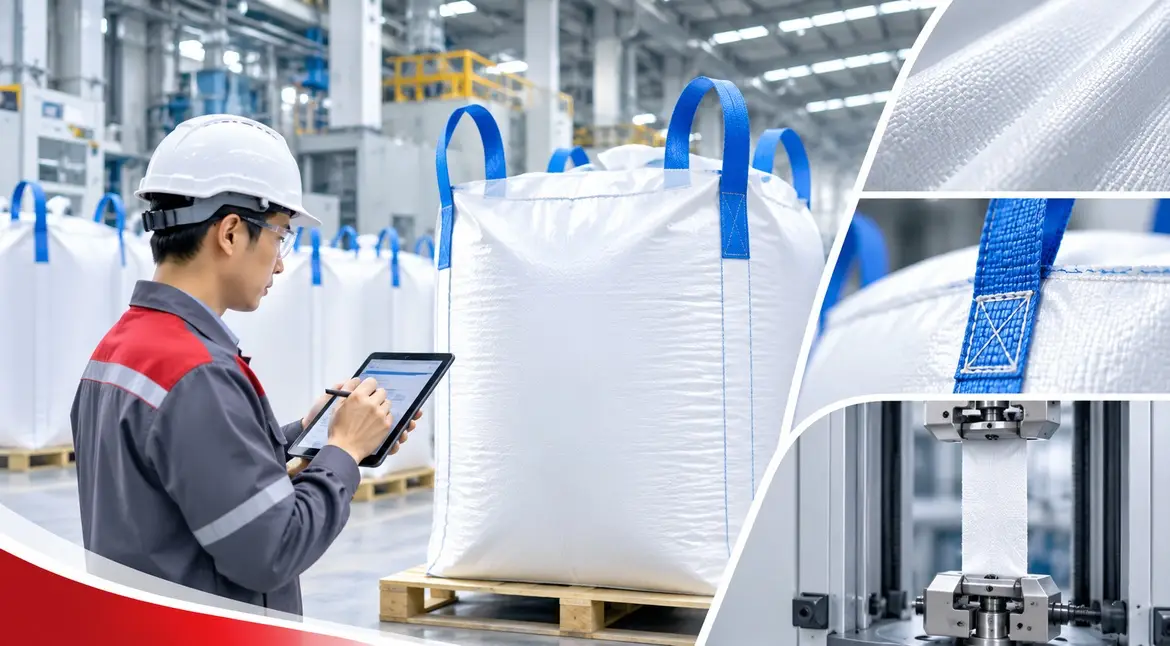
Industrial bulk bag supplier evaluation showing FIBC quality inspection, woven polypropylene fabric, reinforced lifting loops and packaging strength testing.

Judge industrial bulk bag suppliers by the quality of their application review, documentation, samples and agreed acceptance criteria, not by price alone. For bulk bags, consult the manufacturer about your specific product and distribution environment, and treat that technical discussion as part of supplier qualification.

Each supplier type should answer different questions:

– PP woven bag supplier should explain fabric, lamination, liner, seam and closure choices.

– Kraft paper bag supplier should address sack construction, filling behavior and barrier needs.

– Paper sack bags manufacturer should link each recommendation to your product and equipment, not only to a catalog description.

When you compare quotes, ask for a written specification and note which details are provisional pending testing. Ask who investigates a failed trial, how corrective samples are approved and how the final specification will be controlled. If you want to see how paper and woven formats fit together in one range, browse our paper packaging solutions.

Give every shortlisted supplier the same five-part brief:

  1. Product profile: material identity, representative sample, particle characteristics and safety information.
  2. Pack requirement: target fill weight, dimensional limits and customer requirements.
  3. Operating process: filling equipment, closure method, handling sequence and emptying arrangement.
  4. Distribution conditions: transport route, storage environment and expected exposure.
  5. Approval evidence: required documents, trial plan, inspection criteria and change-control expectations.

Also ask suppliers to list exclusions and assumptions next to each quotation. Does the price include a liner, printing, sample development or trial support? Without this detail, the lowest unit price may not describe the same package.

Validate the Bag Through the Complete Handling Cycle

Plan trials around filling, closing, movement, storage and emptying. Each stage tests the bag differently, so a successful filling demonstration should be one milestone, not the whole qualification. Build a trial record with observable acceptance criteria:

– Filling and closing: record stoppages, spillage, closure problems and machine adjustments.

– Movement: inspect packs after the transfers used on the real route.

– Storage: check pack condition under representative, agreed conditions.

– Emptying: note connection difficulties, interruptions, residue and operator feedback.

– Review: compare results with the agreed criteria and document changes before approval.

Keep sample identification with the results: product batch, packaging version, machine setup and any departure from normal operation. If a trial fails, that record gives the supplier a clearer starting point than “the bags leaked.”

If a supplier changes the construction after testing, ask which results still apply and what must be repeated. Keep an approved sample and specification where purchasing, production and quality teams can find them.

For bulk bags, follow the manufacturer’s instructions and inspect for damage. Never handle a damaged FIBC without first consulting the manufacturer or supplier. Trial schedules and production pressure should not override that rule.

Compare Total Operating Value Before You Approve

Make the final comparison with your own trial evidence. Next to bag cost, record filling interruptions, cleaning effort, rejected packs, product loss and emptying difficulties. Do not credit a feature with savings until your operation has shown the benefit.

Keep environmental questions specific as well. Ask what materials the pack contains, whether components must be separated and whether your waste contractor accepts used packaging. Request evidence for environmental claims instead of treating a material name as proof.

Next Step: Build Your Industrial Bag Brief

Start with product data, equipment details and distribution conditions, then shortlist two or three formats for trial. Share the same brief with each supplier and judge the answers against your own acceptance criteria. To discuss your cement, chemical, food ingredient, fertilizer or mineral packing needs, contact the team at SCG International.
Frequently Asked Questions (FAQs)

Multiwall kraft paper sacks are a common starting point because they let air escape during filling. Confirm valve design, moisture barrier and dust control in a trial on your own line.

Yes, polypropylene is a common fertilizer packaging material. Specify fabric weight, UV stabilizer and an inner liner for moisture, then test against your storage and transport route.

Ask for intended-use details, identification of every food-contact component, lot traceability, contamination controls and a change-notification process. Your quality team should review the evidence.

Choose an FIBC for large quantities handled mechanically, where lifting, filling and discharge arrangements must be defined. Paper sacks suit smaller powder packs.

Send each supplier the same brief. Compare written specifications, stated assumptions, trial results and support for failed trials, not only the unit price.

Related Posts

Grid of glasses filled with blue plastic polypropylene granules, masterbatch polymer grain, with shallow DOF. HDPE or PVC resin pellets. 3d render illustration

Plastic Resin Sourcing Guide: What Industrial Buyers Should Check Before Choosing a Supplier

Plastic resin sourcing is not just a search for a matching material code. Industrial buyers need to decide if a supplier can meet the required quality, provide the right documents, deliver on time, agree on terms, and ensure a steady supply without risking production. If you already know the resin family, grade, or specification you need, the next step is to qualify the supplier behind the offer.

I’m Here To Assist You

Contact us today

Please read Terms and Conditions, Privacy Notice, Cookies Notice, and I
I acknowledge that I can withdraw the given consent at any time, and I have understood the terms and conditions and how my personal data is processed.