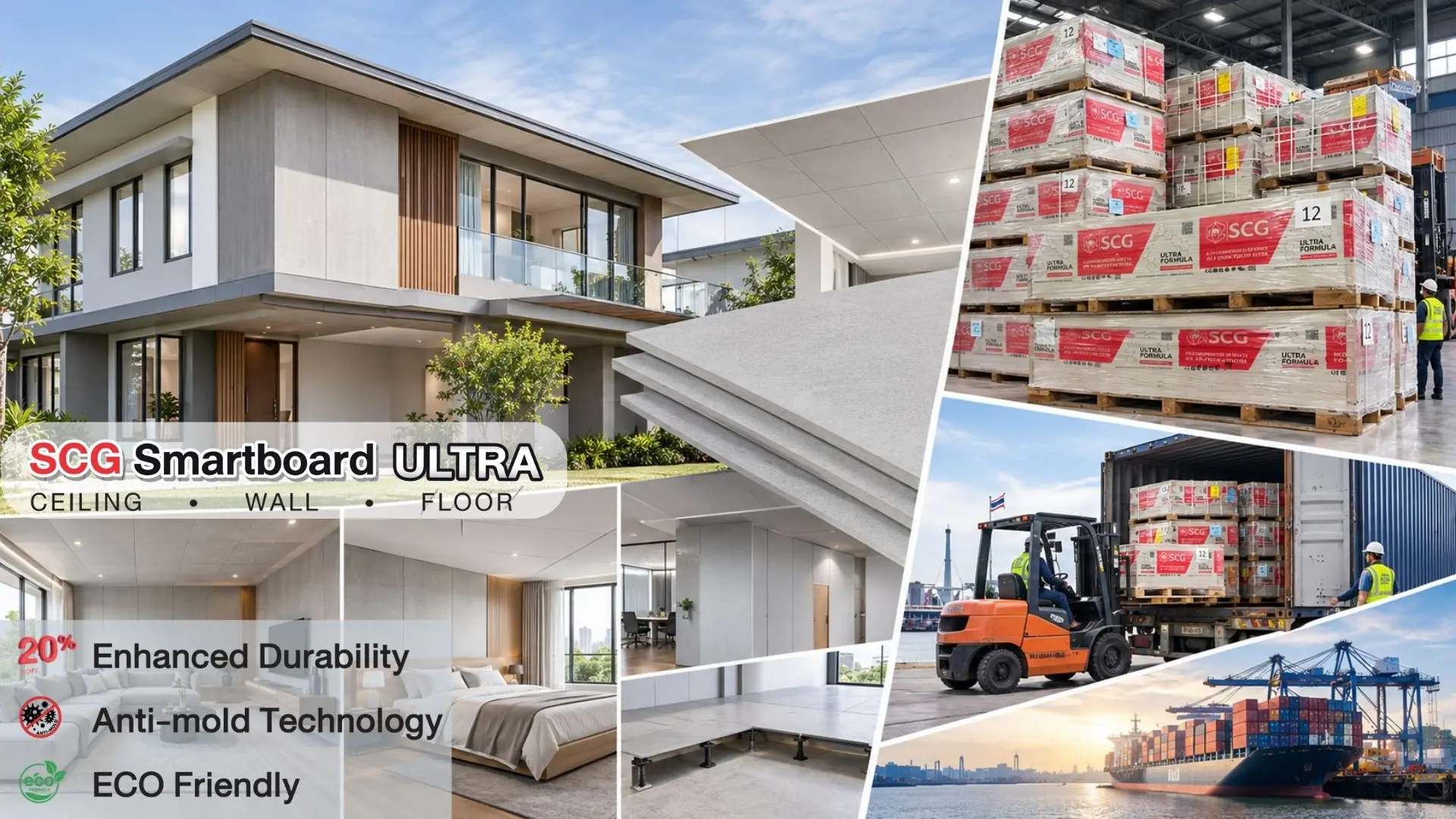
Before sourcing a fiber cement board from Thailand, use these seven checks to assess whether the product meets your commercial and technical requirements.
1. Confirm the intended application
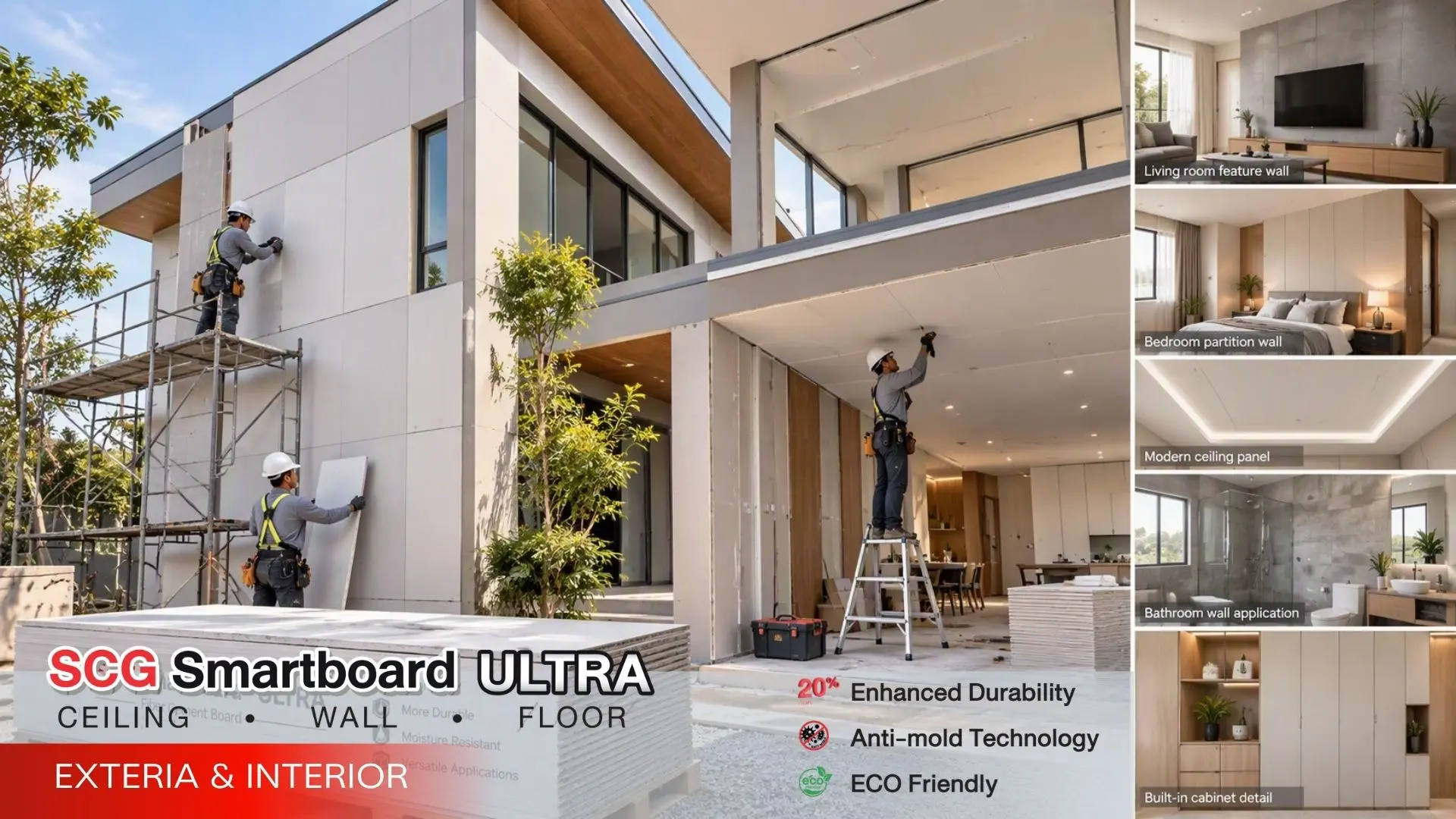
Determine whether the board will be used for interior walls, exterior walls, ceilings, flooring, or another application. Different uses may require different thicknesses, support systems, and installation methods.
2. Review durability specifications
Request the current catalog and relevant technical documentation. For the reported durability improvement, verify the comparison baseline and test conditions before using the percentage in procurement decisions.
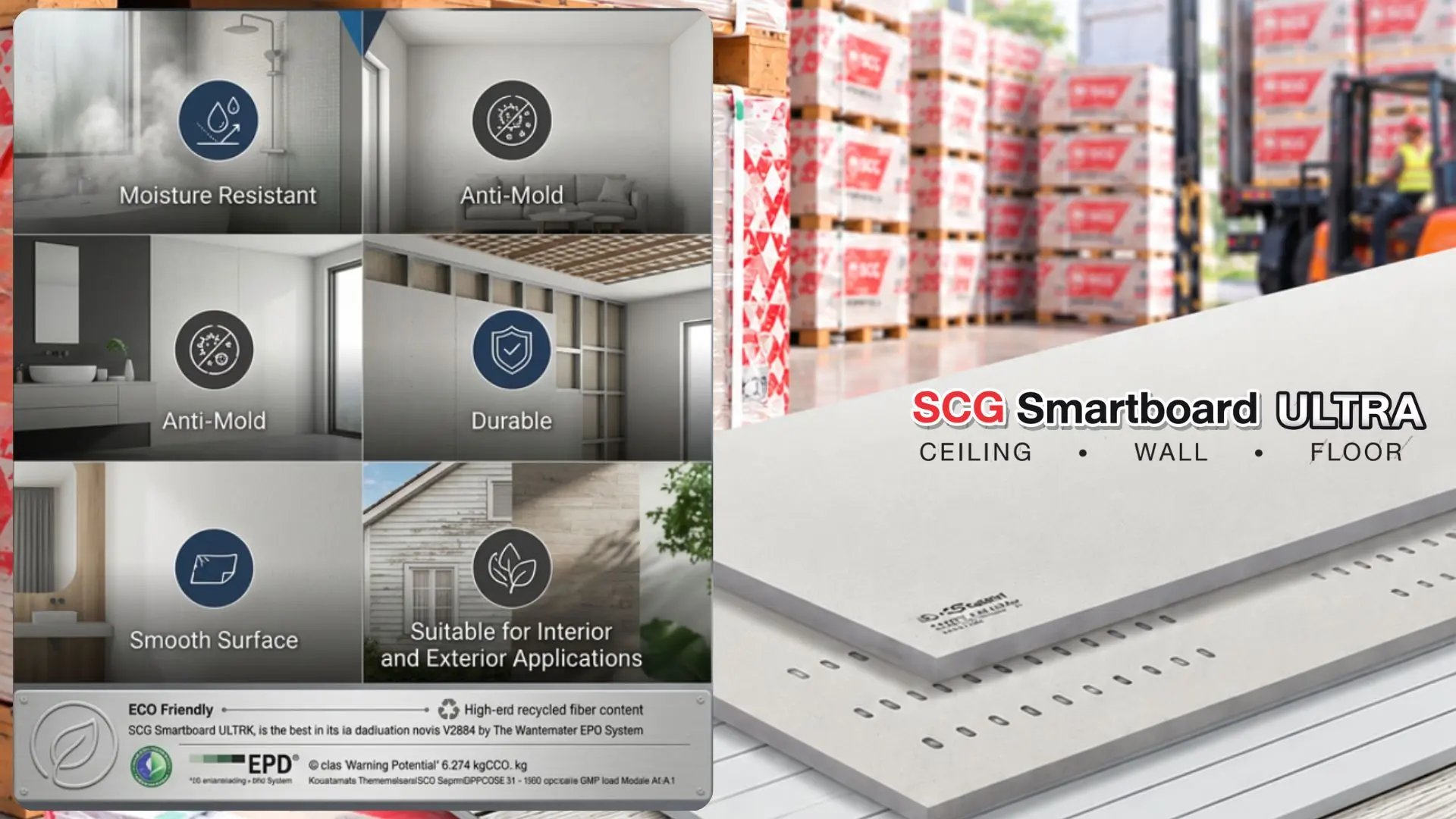
3. Verify moisture resistance
Review documented moisture-related performance and confirm whether the intended installation requires additional waterproofing, protective finishes, or other measures.
4. Check anti-mold evidence
Review the applicable test report and its scope. Confirm which product was tested, which organisms were evaluated, and what the results establish.
5. Examine environmental documentation
For an EPD fiber cement board, check the declared unit, GWP results, life-cycle modules, applicable product category rules, verification details, and validity period.
Do not assume that an environmental declaration for one SCG Smartboard product automatically covers every ULTRA configuration.
6. Confirm destination-market compliance
Check local building codes, relevant product standards, labeling requirements, and any testing or documentation required for importation.
The applicable requirements depend on the destination country and intended building application.
7. Assess export and commercial arrangements
Before ordering, clarify minimum order quantities, lead times, packaging, shipping terms, product availability, and procedures for handling damaged goods or quality claims.
A clear quotation should identify the costs and responsibilities included in the proposed transaction.