SABIC’s Jubail headquarters, which has been certified with LEED Gold, stands as a symbol of green construction.
The building incorporates solar energy systems, wind turbines and electric vehicle charging stations, while also utilizing water recycling systems and low-energy lighting controls.
Beyond infrastructure, SABIC is pioneering efforts in carbon capture and utilization. The company operates the world’s largest CO2 purification and liquefaction plant, capturing 500,000 tonnes annually to convert into valuable products such as methanol and ammonia.
These initiatives reflect SABIC’s broader goal of achieving carbon neutrality by 2050, with an interim target of reducing greenhouse gas emissions by 20 percent by 2030.
In addition to these efforts, SABIC has launched a circular carbon economy model, promoting renewable energy, chemical recycling and afforestation projects.
The company’s recent exports of low-carbon ammonia to global markets, including Japan and South Korea, highlight its leadership in sustainable industrial practices.
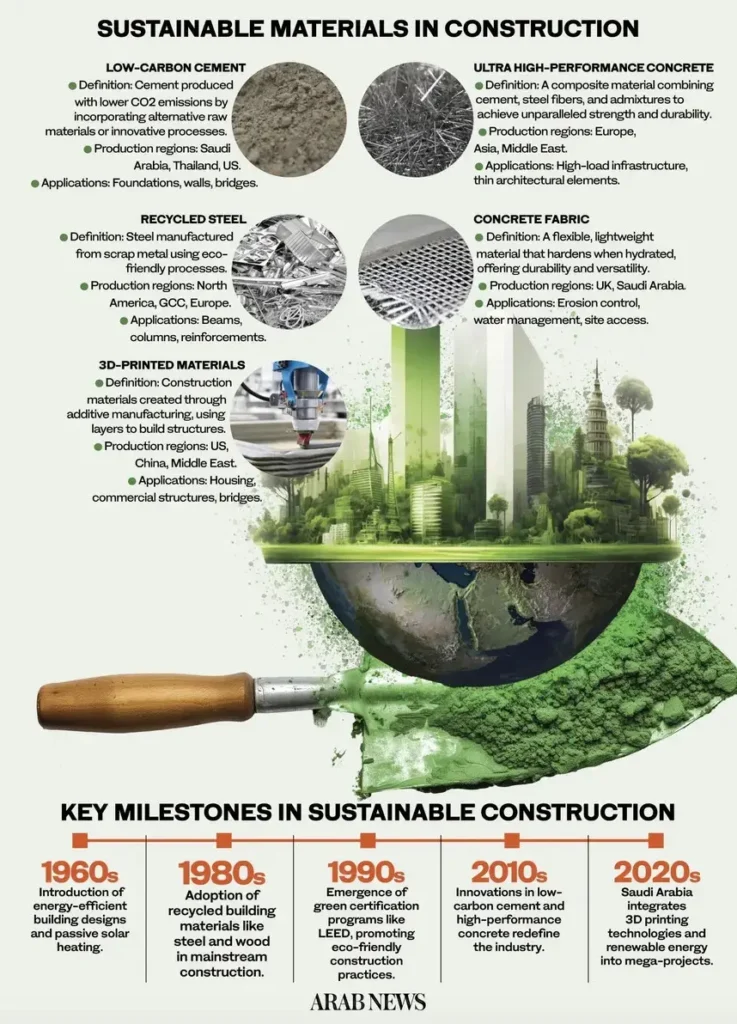
Sustainability in construction is not just about preserving nature but also about adopting technologies that redefine how buildings are constructed. SCG International, a global leader in green building solutions, is paving the way for technological innovation in the Kingdom.
“3D printing technology enables accelerated construction timelines, reducing time by up to 30 to 50 percent and labor requirements by 50 percent,” Abhijit Datta, managing director of SCG International, told Arab News.
“It significantly reduces material waste and ensures no leftover raw materials, contributing to a cleaner and safer working environment, by lowering dust and noise levels.” Among its innovations, SCG’s concrete fabric offers a sustainable solution for erosion control and water management.
“This flexible material conforms to various shapes, reducing logistics costs and emissions while ensuring durability,” Datta said.