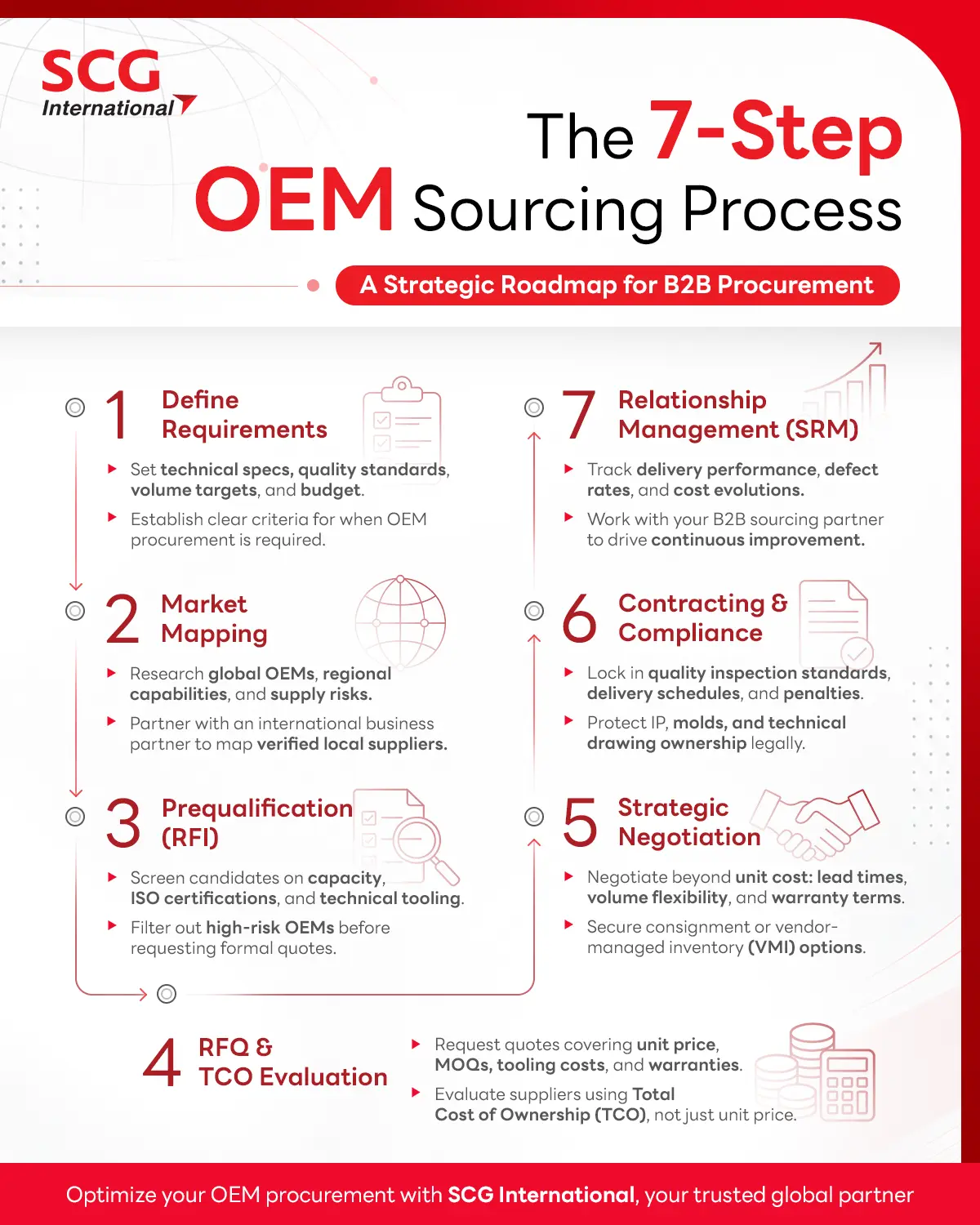
Step 1 – Define Sourcing Methodology And Requirements
Translate business needs into OEM-ready specifications, covering technical requirements, quality standards, certifications, volumes, lifecycle expectations, and target cost. This step also clarifies when OEM sourcing is required versus when alternate suppliers are acceptable.
Step 2 – Market Research And OEM Landscape Mapping
Analyze where components are produced, which OEMs have the required capabilities, typical lead times, and supply risks. Develop a candidate pool by leveraging supplier databases, attending trade shows, and consulting with on-ground sourcing experts. This is often where a B2B sourcing partner with local market access adds the most value.
Step 3 – Prequalification Via RFI And Capability Assessment
Screen OEMs on capacity, certifications, quality systems, tooling, and experience with similar parts. The aim is to identify and remove unsuitable candidates at the outset, decreasing future technical and commercial risks before dedicating resources to elaborate quotations.
Step 4 – RFQ, TCO Evaluation, And Supplier Selection
Invite shortlisted OEMs to quote on pricing, lead times, tooling costs, warranty terms, and minimum order quantities. Evaluate offers using TCO rather than unit price alone, then select a primary OEM or a dual-sourcing model depending on risk tolerance and category strategy.
Step 5 – Negotiation Beyond Price
Effective negotiation in the OEM sourcing process goes well beyond unit cost. Negotiate lead time guarantees, volume flexibility, spare parts availability, warranty terms, escalation procedures, and consignment or vendor-managed inventory (VMI) options. Prioritizing enhanced service and lower operational risk over minor price changes can lead to more favorable results throughout the contract’s duration.
Step 6 – Contracting, Quality, And Compliance
Formalize specifications, quality and inspection criteria, delivery schedules, non-performance penalties, IP clauses, and compliance requirements. Locking in expectations at this stage prevents quality drift and disputes over the product lifecycle.
Step 7 – Supplier Relationship Management And Continuous Improvement
Monitor performance metrics, conduct regular reviews, share forecasts, and involve OEMs in design changes or new product development. Treating key OEMs as strategic partners rather than transactional vendors drives innovation and builds resilience into the supply chain.