Search

Implementing Global Sourcing Solutions in the Paper and Packaging Procurement Process

Share this post :

Facebook
LinkedIn
SCG Paper & Packaging

Key takeaways

Table of Contents

Global sourcing refers to the strategy of procuring raw materials, services, or products from production sources worldwide, not only domestically. It is a preferred approach for businesses to obtain more cost-efficient yet better-quality raw materials and products. Moreover, global sourcing helps reduce the risks associated with raw material procurement for production and drives businesses forward by enabling effective material and product procurement.

Current Trends in Material Sourcing

Shifting tariffs and trade rules are pushing buyers to rethink where they produce, and many are diversifying away from dependence on a single country to protect supply. At the same time, ESG and compliance screening has become a standard part of supplier selection, so buyers now weigh environmental and labor practices alongside price and quality when they choose where to source.

Looking back, the current trend of global sourcing originated from the United States seeking raw materials or production bases in countries with lower labor and production costs, such as China, India, and Southeast Asian countries. This approach helped reduce costs and diversify risks.

With the advancement of logistics technology, global sourcing has become a crucial strategy for managing supply chains for SMEs and large corporations.

Major industries have implemented and benefited from this global sourcing strategy, including:

However, implementing a global sourcing strategy has its challenges in language and cultural differences, transportation and logistics, and product quality control. Businesses must closely monitor these aspects to mitigate future problems. An effective approach is to engage the services of a global sourcing solutions provider with expertise in manufacturing and procuring raw materials from around the world, who can handle the entire process from start to finish.

The Risks of Global Sourcing and How to Control Them

Global sourcing lowers cost and widens choice, but each advantage carries a risk worth managing. The point is not to avoid these risks, but to control them.

How Paper and Packaging Procurement Impacts Businesses

The vast paper and packaging industry caters to virtually every business. It encompasses various applications, from food containers for items like soup, dairy products, condiments, and seasonings to packaging products for the parcels sent for delivery and distribution worldwide.

The paper and paperboard packaging market was worth up to USD 378 billion in 2025 and is expected to reach USD 619 billion by 2035. Asia-Pacific countries dominate the paper and packaging market, especially China, which is a production base for numerous products. Southeast Asian countries also experienced exponential growth in e-commerce and food delivery services, and this surge in demand has led to an increase in the importation of paper and packaging.

As businesses actively pursue expansion, they must seek cost-effective paper and packaging materials that align with specific requirements to avoid supply chain disruptions and production delays. Global sourcing solutions in procuring paper and packaging materials help lessen these risks.

Advantages of Global Sourcing in Paper and Packaging Procurement

Global sourcing is a useful strategy for businesses in procuring quality raw materials at cost-effective prices. Here are some key benefits of this strategy:

Reduction of production costs

With the continuous rise of product prices, the procurement of quality raw materials is becoming more crucial. In packaging procurement, it is essential to consider product quality assurance and reasonable pricing. This approach builds the business’s credibility with customers and prospective customers and enables the business to remain competitive.

More options are available

With the opportunity to source paper and packaging from anywhere in the world, there are limitless options in terms of price and quality. In some cases, specific types of paper and packaging are not readily available within the country or may come at a higher cost. Global sourcing allows businesses to explore alternative options to find one that best suits their business requirements.

Increase in production capacity

Labor shortages and high production costs present challenges that hinder businesses from expanding. Global sourcing helps increase production capacity while controlling costs by engaging manufacturers offering lower labor costs and cost-efficient technology. An increase in production capacity can impact potential revenue as well.

Better quality products at a lower cost

The supplier sourcing process has increasingly become more stringent in most industries. Suppliers worldwide strive to meet the strict production standards of multinational brands while maintaining competitive pricing and lowering costs.

Learning about innovative and technological advancements

The collaboration between businesses and their suppliers enables the exchange of new technologies and innovations to continually develop and improve production efficiency. Early adopters can benefit from learning better processes and methods.

Opening new markets

Domestic markets may be too small or saturated, limiting business growth and expansion. Global sourcing is a good strategy for companies to broaden horizons to international markets. Oftentimes, expanding to the countries where they have partner suppliers or a manufacturing base makes practical business sense.

Mitigates risks during crisis

In case of natural disasters, economic and political situations, or pandemics, sourcing from different areas around the globe will allow businesses to lower the risks of raw materials shortage.

SCG Global Sourcing Solutions

Procurement Process with Global Sourcing Strategy

Let us go through the typical global sourcing procurement process:

1. Devise a plan

The first step is to devise a plan by determining the key factors for supplier selection, including prices, quality, transportation, and risks. These details must align with business goals and marketing strategies. The three main factors to consider when choosing a supplier are product characteristics, utilization, and expected quantity.

2. Search for suppliers

When searching for suppliers that match your criteria, there should be at least three suppliers for comparison and consideration. Look for established suppliers with a long track record who are credible and reliable. It will be advantageous if the supplier has a base of operation at the destination market so government documents and legal requirements can be processed quicker. At this stage, hiring a global sourcing solutions provider with expertise in finding suppliers best suited for the business will save time and resources.

To compare those suppliers fairly, send each one the same request for quotation (RFQ) covering the same points. A complete RFQ for paper and packaging includes:

RFQ elementWhat to specify
Specifications and gradesPaper or board type, grammage, size, finish, print requirements
Volumes and call-off scheduleTotal quantity and how it will be ordered over time
Quality standards and test methodsThe standards to meet and how each will be tested
Lead timeProduction plus shipping time to your destination
IncotermsWho is responsible for freight, duties, and risk at each stage
Payment termsDeposit, balance, and payment method

Scoring every supplier against the same RFQ turns three quotes into a real comparison rather than three different conversations.

3. Products and services assessment

It should be part of a standard operating procedure to ask for product samples from suppliers being considered. This is the best way to determine if their products are up to par regarding quality and standards. It is also a good idea to consider another service that a supplier may provide, such as inventory management or marketing, especially if it falls under their expertise.

4. Make a contract with a clear workflow

Thoroughly study the pros and cons before signing the purchase contract. When the contract has been signed, set a meeting to discuss the needs and goals of the business and to answer questions the supplier may have. Suppliers must be informed of processes, policies, and requirements ahead of time to ensure clear communication and timely delivery.

5. Monitor product delivery and supplier payment

The final step is to ensure that products are delivered within schedule and as expected. Products delivered must undergo quality control measures and verification to ensure standards are met and prevent unqualified products and raw materials.

SCG International: A Sourcing Solutions Provider with Expertise in Global Sourcing

Want to know how to find quality paper supply companies in Thailand? Specializing in global sourcing solutions, SCG International enables businesses to boost their competitiveness in the world market in terms of production quality, quantity, and pricing. SCG International’s expertise allows businesses to realize their revenue potential while strengthening their supply chain.

With over 45 years of experience and expertise in global sourcing solutions, SCG International provides product procurement and supply chain management services to leading businesses across industries, such as paper and packaging, including recycled paper,  industrial supplies, construction, home and living, and energy.

We offer a complete and comprehensive range of services encompassing end-to-end supply chain solutions. SCG International is ready to be your partner in sourcing the right products and materials to elevate your business even higher.

Frequently Asked Questions About Global Sourcing Solutions for Paper & Packaging

Importing is the act of buying goods from another country. Global sourcing is the wider strategy behind it: deciding which countries and suppliers to use, qualifying and comparing them, managing quality and compliance, and balancing cost against risk. Importing is one transaction; global sourcing is how you plan, control, and improve a cross-border supply chain over time.

Evaluate partners on on-the-ground presence in the sourcing market, industry-specific expertise, verifiable supplier-audit and quality-control processes, transparent communication, and financial stability. Ask for export references and in-country teams. For a country-specific walkthrough, see our guide on how to find quality paper supply companies in Thailand.

The main risks are lead-time and freight variability, customs and compliance gaps, quality drift between sample and production, single-country dependence, and payment disputes. They are controlled through written specifications and testing, in-production inspection, a qualified second source, clear Incoterms, and secured payment terms rather than open advance payments.

A complete RFQ covers specifications and grades (type, grammage, size, finish), total volume and the call-off schedule, the quality standards and test methods to meet, required lead time, Incoterms, and payment terms. Sending every supplier the same RFQ lets you score quotes on equal terms instead of comparing mismatched offers.

Ask for business registration, export licenses, and current certificates, then verify them at source rather than taking copies at face value. Request recent production references, and use a factory audit or an on-the-ground inspection to confirm the plant, equipment, and output exist at the scale claimed. A local team or sourcing partner can do this for you.

Plan for longer than the steady-state lead time, because a first order adds supplier qualification, sampling and approval, and initial production setup before shipping begins. The exact timeline depends on the grade, volume, origin, and destination, so confirm production plus shipping time in writing during the RFQ stage.

A sourcing solutions provider adds reach and presence an internal team usually lacks: established supplier networks, local-language teams in the sourcing market, and on-the-ground quality control and compliance knowledge. It can qualify suppliers, inspect production, and manage logistics across countries at a scale that would be costly to build in-house, while your team stays focused on strategy.

Related Posts

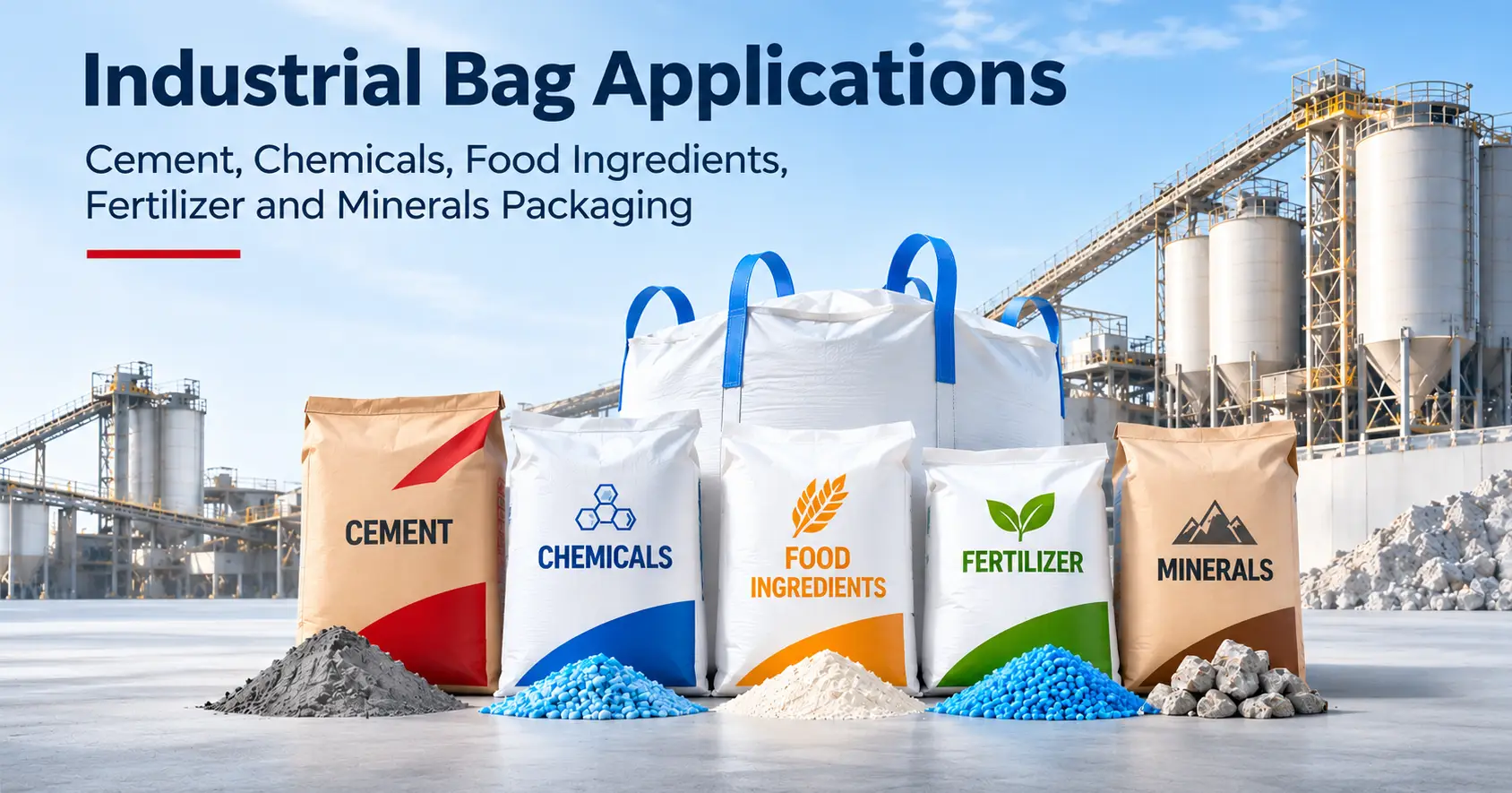
Industrial bag applications for cement, chemicals, food ingredients, fertilizer and minerals packaging

Industrial Bag Applications: Cement, Chemicals, Food Ingredients, Fertilizer and Minerals Packaging

Packing dry materials sounds simple until a sack splits on the conveyor, cement dust coats the filling line, or fertilizer arrives caked and damp. The right bag is rarely the one with the biggest load rating. It is the one that fits your product, your filling equipment, your route and your customer’s emptying process.
This guide explains industrial bag applications across five sectors: cement, chemicals, food ingredients, fertilizer and minerals. You will learn how to compare paper sacks, PP woven bags and bulk bags, what each sector must get right first, and how to brief industrial bulk bag suppliers so the quotes you receive can be compared fairly.
Grid of glasses filled with blue plastic polypropylene granules, masterbatch polymer grain, with shallow DOF. HDPE or PVC resin pellets. 3d render illustration

Plastic Resin Sourcing Guide: What Industrial Buyers Should Check Before Choosing a Supplier

Plastic resin sourcing is not just a search for a matching material code. Industrial buyers need to decide if a supplier can meet the required quality, provide the right documents, deliver on time, agree on terms, and ensure a steady supply without risking production. If you already know the resin family, grade, or specification you need, the next step is to qualify the supplier behind the offer.

I’m Here To Assist You

Contact us today

Please read Terms and Conditions, Privacy Notice, Cookies Notice, and I
I acknowledge that I can withdraw the given consent at any time, and I have understood the terms and conditions and how my personal data is processed.