Search

What Is EPD Cement? Why This Certification Matters for Modern Cement Buyers

Share this post :

Facebook
LinkedIn
Bulk cement discharged at a U.S. port terminal by global cement supplier SCG International

Key takeaways

EPD cement is defined by a verified disclosure document, not by an eco-label or an award.

U.S. buyers increasingly cannot use a low-carbon claim in a submittal package unless an EPD backs it.

LEED v5 became mandatory for new project registrations on July 1, 2026, putting embodied carbon quantification at the center of green building.

State "Buy Clean" programs — Colorado's includes cement and concrete mixtures — require Type III EPDs to prove compliance with maximum GWP limits.

Performance still rules: an EPD is worthless if the structural cement underneath it does not meet ASTM strength and durability requirements.

The problem with “green cement”

Walk any U.S. trade show floor and every cement supplier is green. Lower clinker. Blended. Sustainable. Carbon-conscious. The vocabulary has become so uniform that it no longer transmits information.

This is the practical difficulty facing a project engineer or procurement manager in Dallas, Denver or Atlanta: two bulk cement offers land on the desk, both described as green cement, and nothing in either document lets you rank them. Marketing language is not a unit of measurement. You cannot enter “eco-friendly” into a whole-building life cycle assessment tool, and a LEED reviewer will not accept it.

Worse, an unverified claim is a liability. As of 2026, U.S. procurement culture has shifted decisively toward documentary evidence, and unsubstantiated environmental claims — the practice commonly called greenwashing — carry real commercial and reputational risk for everyone in the supply chain, including the buyer who repeated the claim in a bid.

That is the gap EPD cement closes.

What is EPD cement? A precise definition

SCG Low Carbon Cement certification marks including Environmental Product Declaration to ISO 14025 and SCG Green Choice

An Environmental Product Declaration (EPD) is a standardized, third-party-verified report that quantifies the environmental impacts of a product across a defined portion of its life cycle. “EPD cement” is shorthand for cement covered by such a declaration.

Four elements make an EPD meaningfully different from a brochure:


1. It follows a life cycle assessment (LCA). Real production data — quarrying, clinker burning, grinding, fuel mix, electricity, transport — is modeled to ISO 14040/14044 methodology. Nothing is asserted; everything is calculated.

2. It follows Product Category Rules (PCR). Cement EPDs are written against core rules for construction products: ISO 21930 (the international standard for construction product EPDs) and EN 15804 (the European core PCR, now in its +A2 revision). These rules dictate the declared unit, the life cycle stages, the impact categories and the cut-off criteria — so one cement EPD can be compared with another.

3. It is verified independently. A Type III EPD under ISO 14025 must be reviewed and validated by an independent verifier and published through a recognized program operator. The manufacturer does not grade its own homework.

4. It discloses, rather than flatters. An EPD reports what the numbers are, including the unflattering ones. There is no passing score. This is why EPDs are trusted, and it is precisely why “we have an EPD” is not the same claim as “we are low carbon.” A credible cement supplier makes both claims separately and proves each one.

Why EPD cement matters right now in the U.S. mainland market

Five forces have converted EPD cement from a nice-to-have into a gating requirement for cement supply in the lower 48.


1. LEED v5 made embodied carbon unavoidable

       LEED v4 and v4.1 closed to new registrations on June 30, 2026. Every project registering from July 1, 2026 onward uses LEED v5, which opens with a prerequisite requiring teams to quantify and assess embodied carbon across structure, enclosure and hardscape, and to identify their highest-impact materials. Separate credits reward disclosure through EPDs and measurable reductions in embodied carbon.

Cement is almost always among the hotspot materials on a concrete-framed building. If your cement has no EPD, the design team must either substitute an industry-average value — which is rarely favorable to the supplier — or look for a different product.

2. State Buy Clean programs set hard GWP ceilings

       Buy Clean policies attach maximum acceptable Global Warming Potential limits to materials on public projects and require EPDs as the proof mechanism. Coverage varies by state, and cement is not always in scope: California’s Buy Clean California Act, for example, covers structural steel, reinforcing steel, flat glass and mineral wool insulation rather than cement. Colorado’s Buy Clean Colorado Act, by contrast, lists cement and concrete mixtures among eligible materials, with Type III EPDs required to demonstrate compliance against GWP limits set by the Office of the State Architect.

For a national cement supplier, the practical consequence is simple: EPD documentation must be ready before the bid, not after the award.

3. Federal and institutional procurement follows the same logic

       Federal buildings, transportation programs and large institutional owners have adopted low-embodied-carbon material criteria that lean on EPD data as the common currency. Whatever the specific program, the mechanics repeat: declare the number, verify the number, beat the benchmark.

4. Carbon accounting has moved downstream to your customers

        Contractors and developers reporting Scope 3 emissions need supplier-specific data, not industry averages. Digital tools such as the Embodied Carbon in Construction Calculator (EC3) and whole-building LCA plug-ins ingest EPDs directly. A product without an EPD is effectively invisible to the software your customers are already using.

5. Comparability is a competitive advantage

       When a buyer can compare two offers numerically, the better product wins on evidence instead of on rhetoric. Manufacturers with genuinely lower-clinker formulations have every incentive to publish. Those without tend to stay vague.


How to read a cement EPD in seven checks

Most buyers receive an EPD cement declaration as a PDF and simply file it. Here is how to actually interrogate it before you commit to a bulk cement contract.

  1. Declared unit. Cement EPDs normally declare one metric ton of cement. Confirm it before comparing figures — a per-cubic-meter concrete EPD is a different document entirely.
  2. System boundary. Most cement EPDs are cradle-to-gate, covering modules A1–A3 (raw material supply, transport, manufacturing). Ocean freight and inland haul sit in A4 and are usually excluded, so add your own logistics assumptions.
  3. GWP figures. Look for GWP-total plus the fossil, biogenic and land-use splits under EN 15804+A2. Industry-average declarations place North American portland cement in the broad range of roughly 900 kg CO₂e per metric ton for A1–A3, which gives you a benchmark against which any reduction claim can be sanity-checked.
  4. PCR and program operator. Both must be named. Two EPDs written to different PCRs are not directly comparable.
  5. Verification statement. The independent verifier should be identified. An unverified “self-declared” environmental claim is a Type II claim, not a Type III EPD.
  6. Validity date. EPDs typically expire after five years. An expired EPD will not be accepted in a submittal.
  7. Product-specific or industry-average. A product-specific EPD describes the cement you are actually buying. An industry-average EPD describes a sector. Only the former lets a manufacturer demonstrate that it outperforms the baseline.

Certification without performance is still a failure

EPD cement documentation says nothing about whether the cement will reach specified strength.

This is the trap in the current market. A buyer chasing a carbon number can end up with a binder that struggles with early strength gain, setting time or sulfate exposure — and on a structural pour, that is a far more expensive problem than a missing sustainability point.

Any structural cement entering a U.S. project must first satisfy the relevant ASTM specification: ASTM C150 for portland cement, ASTM C595 for blended hydraulic cements including Type IL portland-limestone cement, or ASTM C1157 for performance-based hydraulic cement. Portland-limestone cement is now well established in U.S. practice precisely because it lowers clinker content while remaining fully specifiable, and FHWA has published technical guidance supporting its use in pavements.

The correct sequence for evaluating any green cement offer is therefore:

ASTM performance compliance → verified EPD → GWP comparison → total delivered cost.

Reverse that order and you are buying a document instead of a building material.

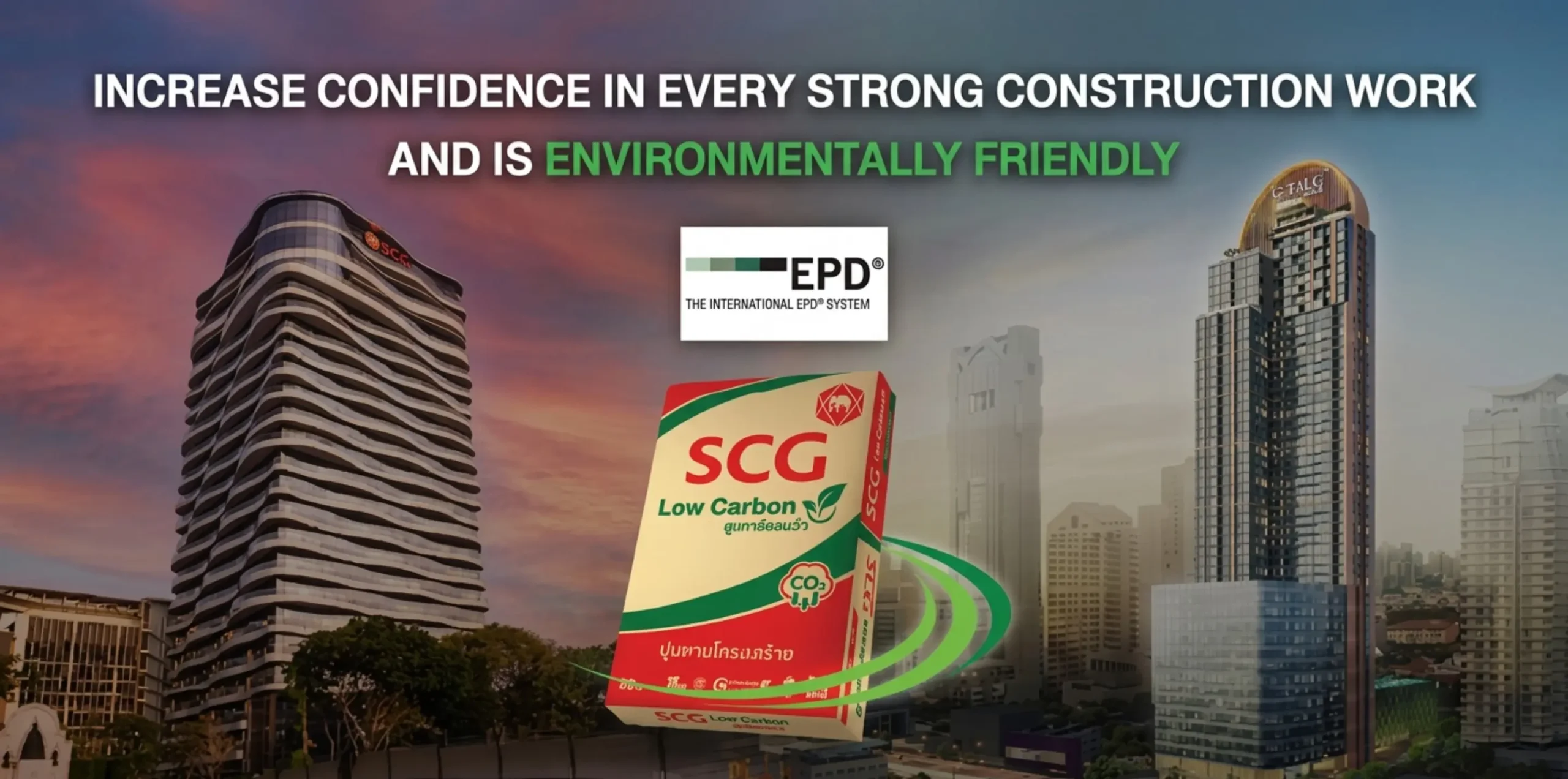
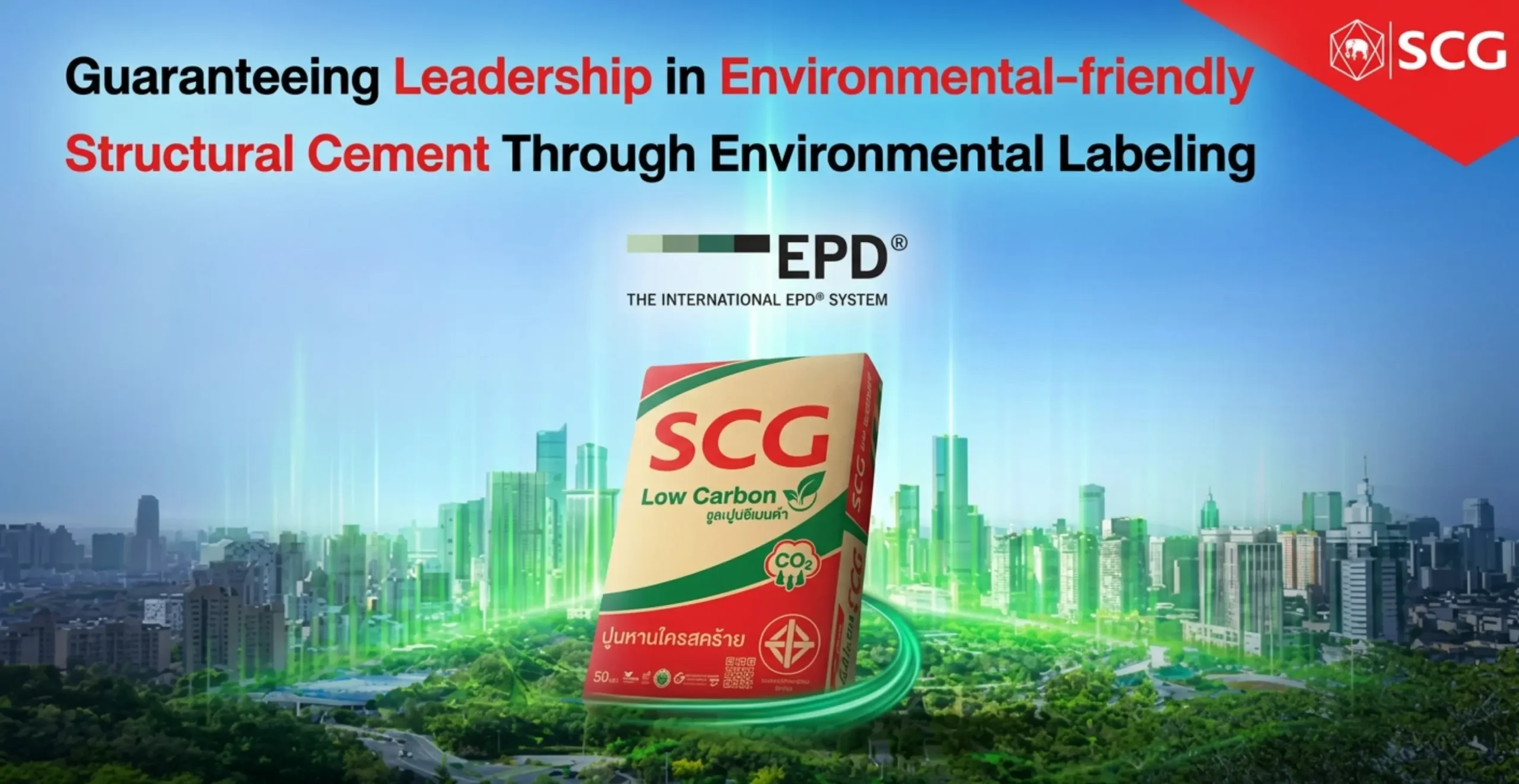
SCG Low Carbon Cement: EPD-verified structural cement for U.S. buyers

This is the standard SCG Low Carbon Cement is built to meet.

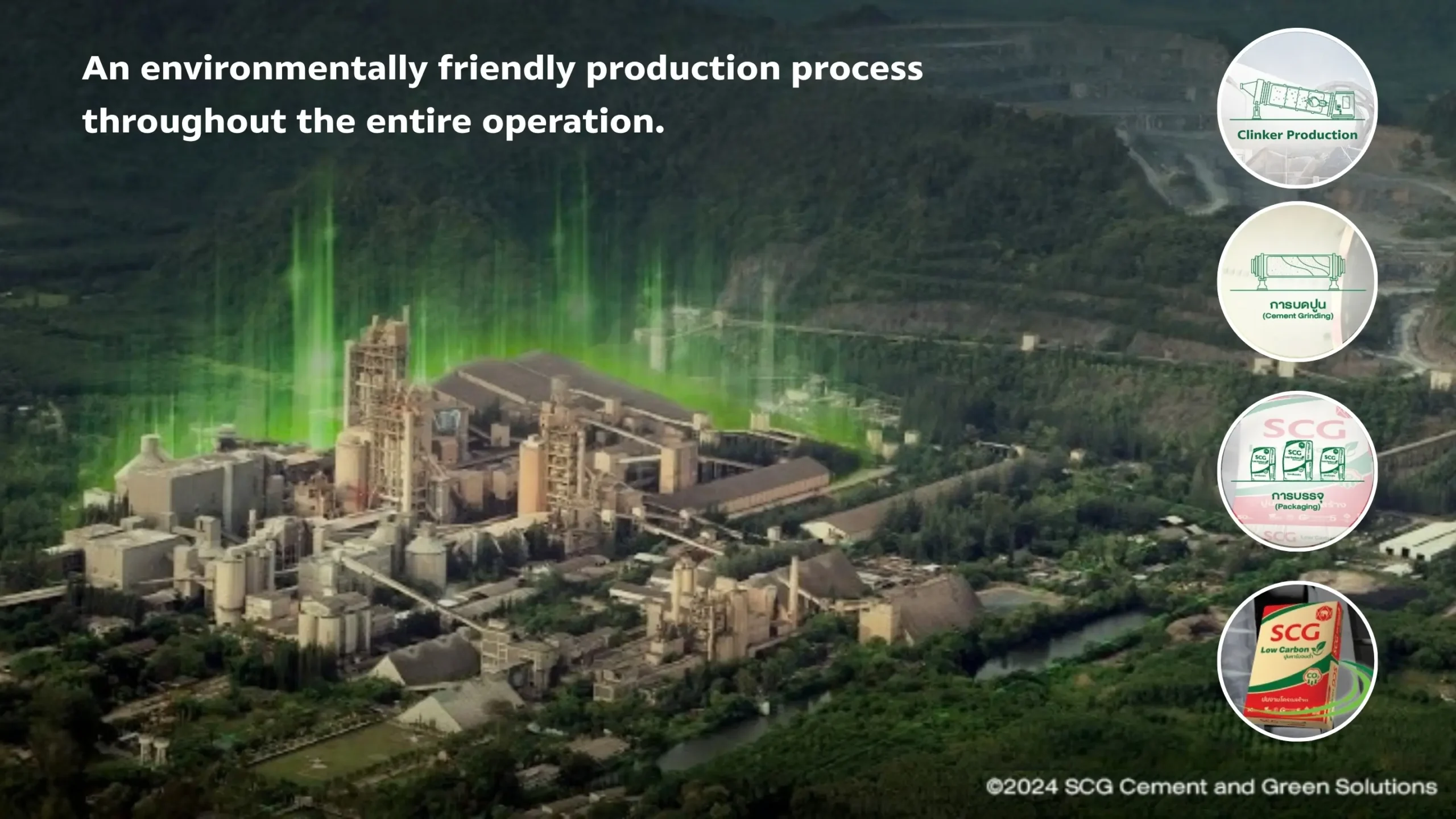
   SCG is a high-quality cement manufacturer, not a reseller. Cement supplied into the United States is produced in SCG’s own plants under a single quality regime, which is what makes consistent, documented performance possible across repeat shipments rather than lot by lot.

What the documentation covers
  • – Environmental Product Declaration to ISO 14025, confirming that the environmental profile is measured and independently verified rather than asserted.
  • – Alignment with ISO 21930 and EN 15804, the core PCR frameworks U.S. LCA tools and rating systems are built to read.
  • – ASTM compliance for structural use, so the product is specifiable on real projects.
  • – SCG Green Choice certification, SCG’s own eco-label program for verified lower-impact products.
What the product delivers
  • Up to 20% lower CO₂ emissions than general structural cement, achieved through a reduced clinker factor and optimized raw material use — a reduction expressed as a number, traceable to the declaration.
  • High early and long-term strength suitable for infrastructure, commercial, residential and public-sector work.
  • Cost efficiency that lets projects pursue green building certification without a green premium.

Frequently asked questions

EPD cement is cement accompanied by an Environmental Product Declaration — a third-party-verified report, prepared under ISO 14025 and construction-product rules such as ISO 21930 and EN 15804, that quantifies the product's environmental impacts including global warming potential across defined life cycle stages.

No. An EPD verifies and discloses environmental data; it is not a pass/fail eco-label. Green cement describes a product with lower environmental impact. Credible low carbon cement carries an EPD so that the "green" claim can be independently checked.

Because LEED v5, state Buy Clean programs, federal low-embodied-carbon procurement criteria and corporate Scope 3 reporting all rely on EPD data. Without an EPD, a cement's carbon performance cannot be entered into the tools that decide compliance.

Yes. SCG Low Carbon Structural Cement holds an Environmental Product Declaration to ISO 14025 and aligns with ASTM, EN 15804 and ISO 21930, alongside SCG Green Choice certification.

No. EPDs address environmental impact only. Structural cement must separately satisfy ASTM C150, ASTM C595 or ASTM C1157 and the project specification.

Related Posts

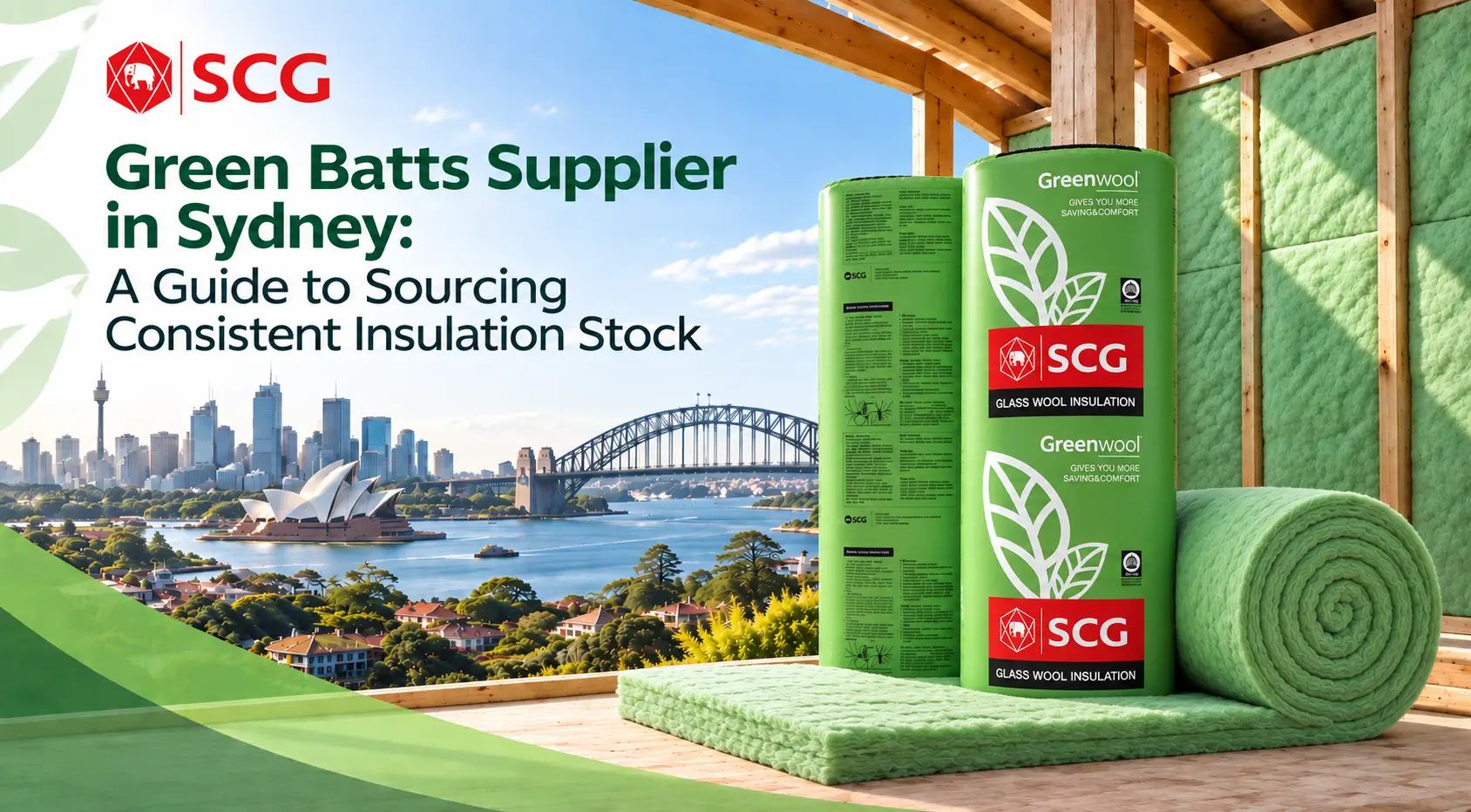
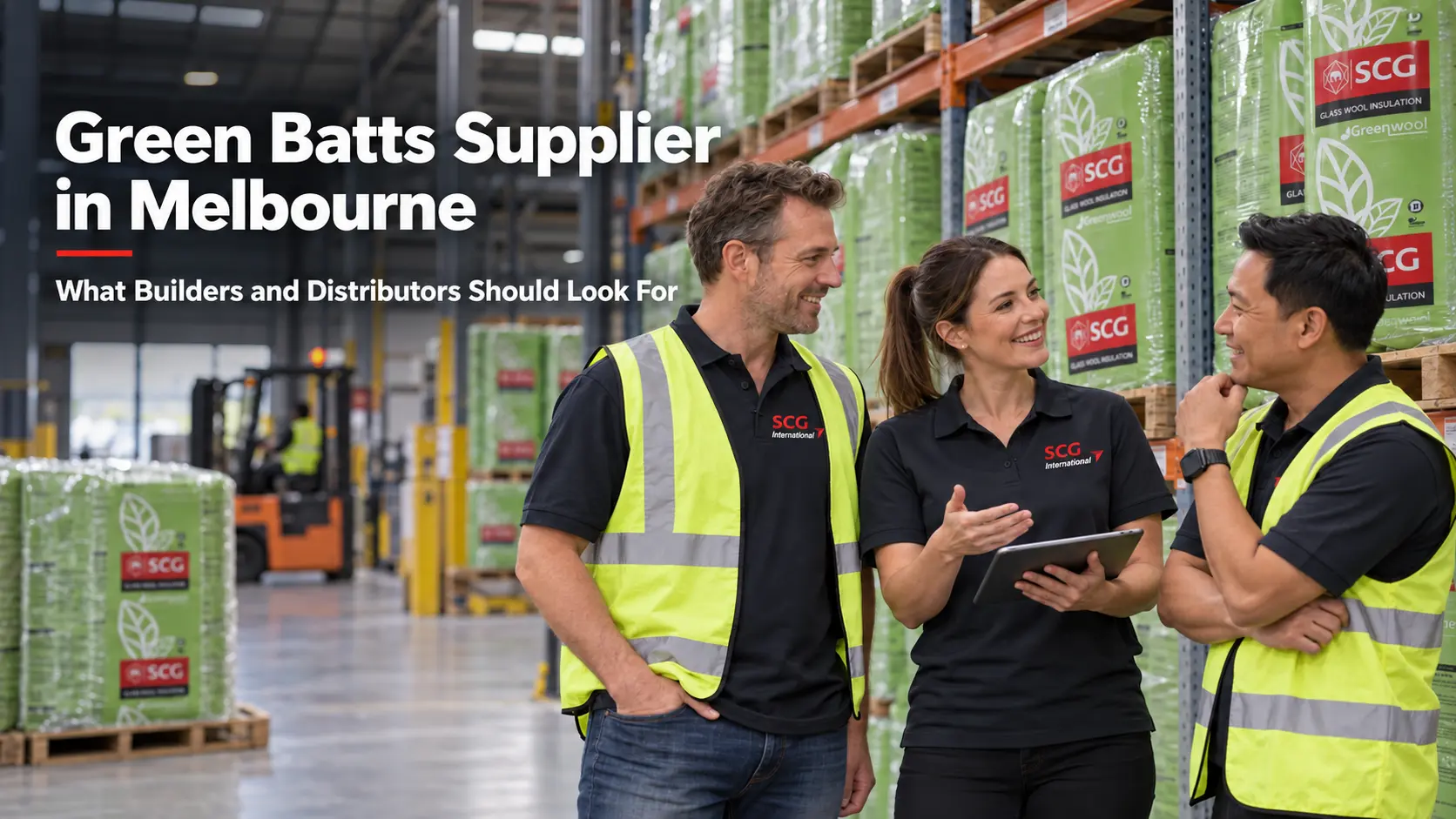
SCG Green Batts insulation products for a reliable green batts supplier in Sydney, Australia.

Green Batts Supplier in Sydney: A Guide to Sourcing Consistent Insulation Stock

Sourcing insulation should not slow down a build, delay a retail order, or leave your team chasing uncertain stock. If you need a dependable green batts supplier in Sydney, the goal is more than finding a product at the right price. You need consistent Glasswool batts, clear product information, responsive communication, and supply planning that matches real project demand.

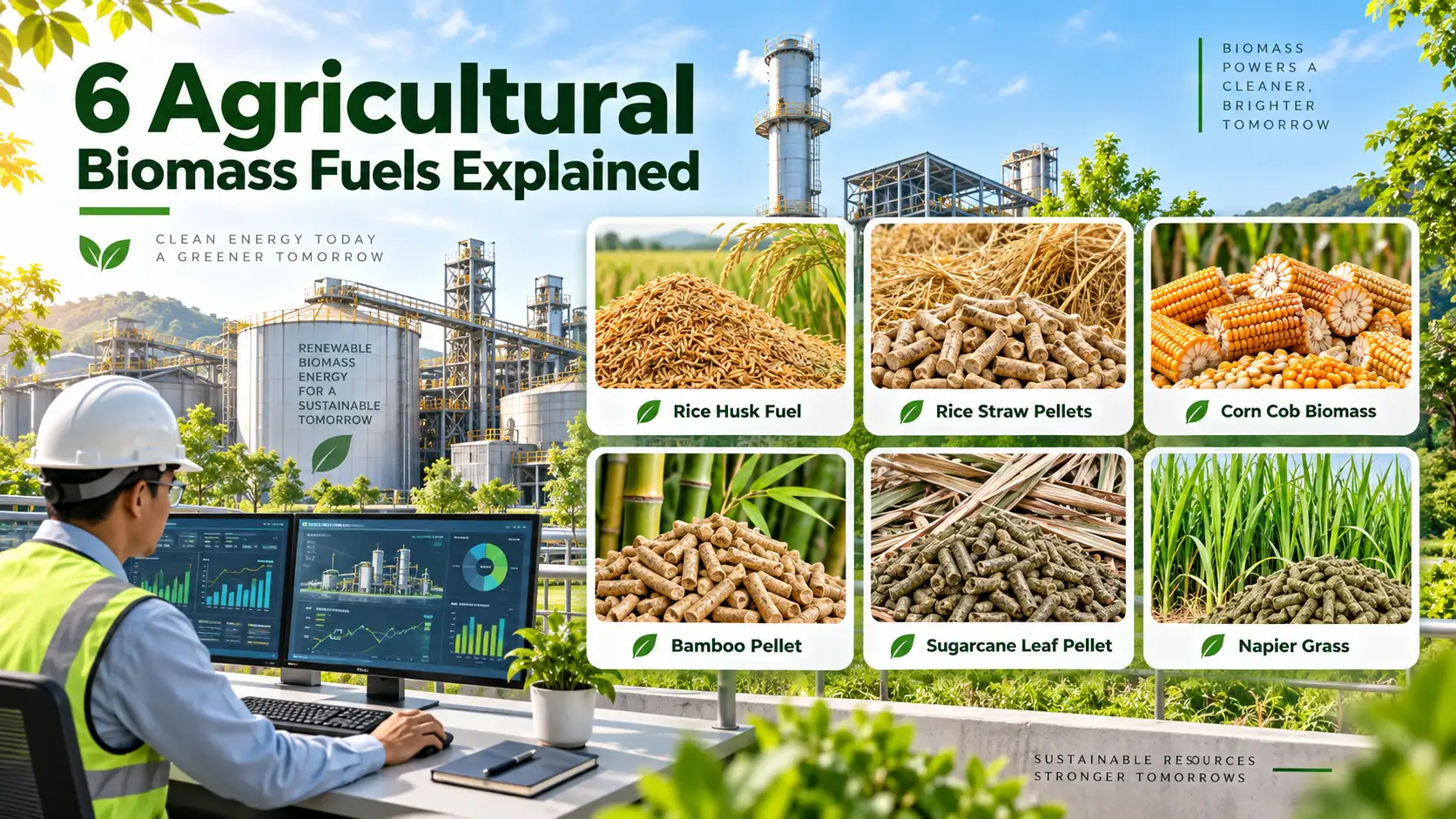
SCG agricultural biomass fuel

6 Agricultural Biomass Fuels Explained: From Field Residue to Factory Heat

This guide breaks down six of the most widely used agricultural biomass fuels — rice husk, rice straw pellets, corn cob, bamboo pellets, sugarcane leaf pellets, and Napier grass — and explains which boiler types and handling systems suit each one. If you’re evaluating fuel switching or diversifying your current supply, this is the practical reference to work from before you talk specifications with a supplier.

I’m Here To Assist You

Contact us today

Please read Terms and Conditions, Privacy Notice, Cookies Notice, and I
I acknowledge that I can withdraw the given consent at any time, and I have understood the terms and conditions and how my personal data is processed.