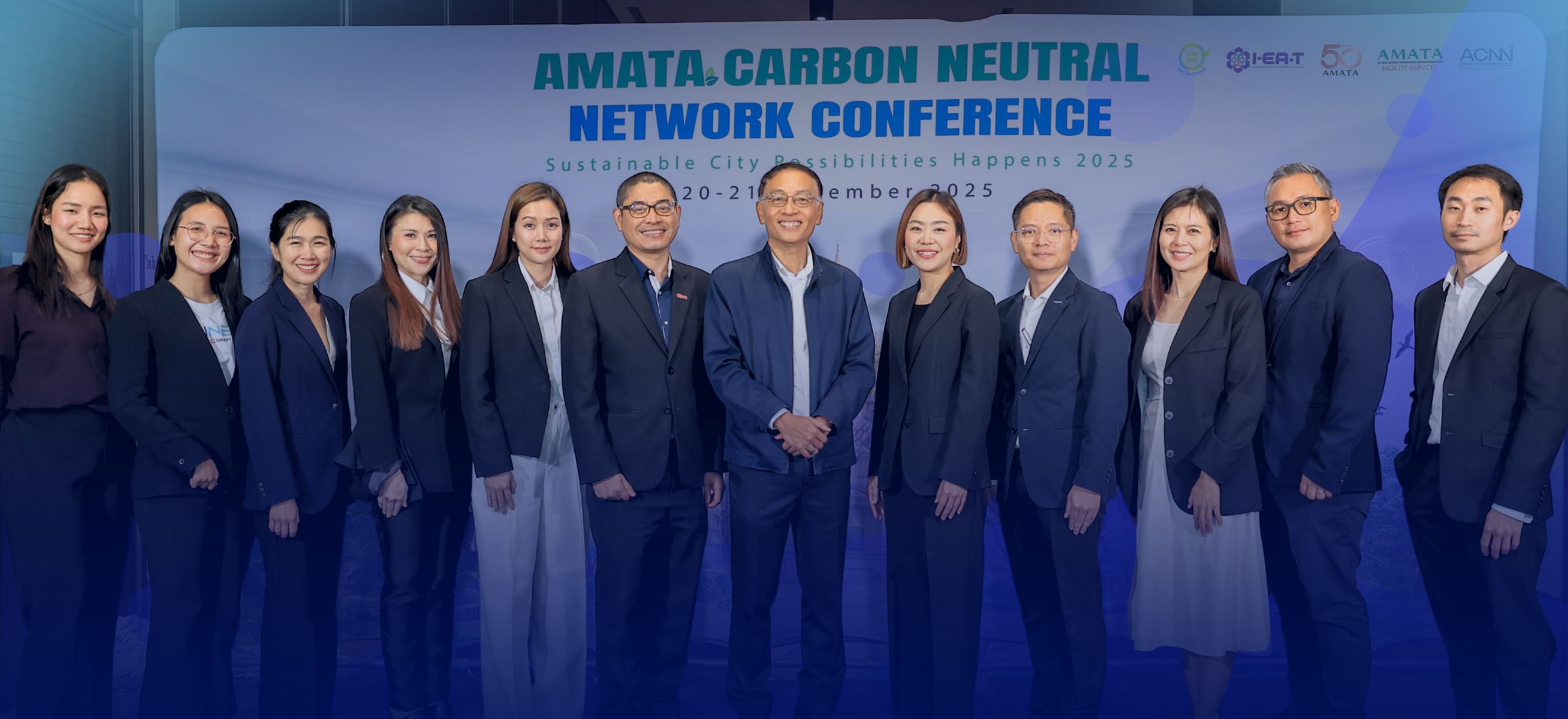
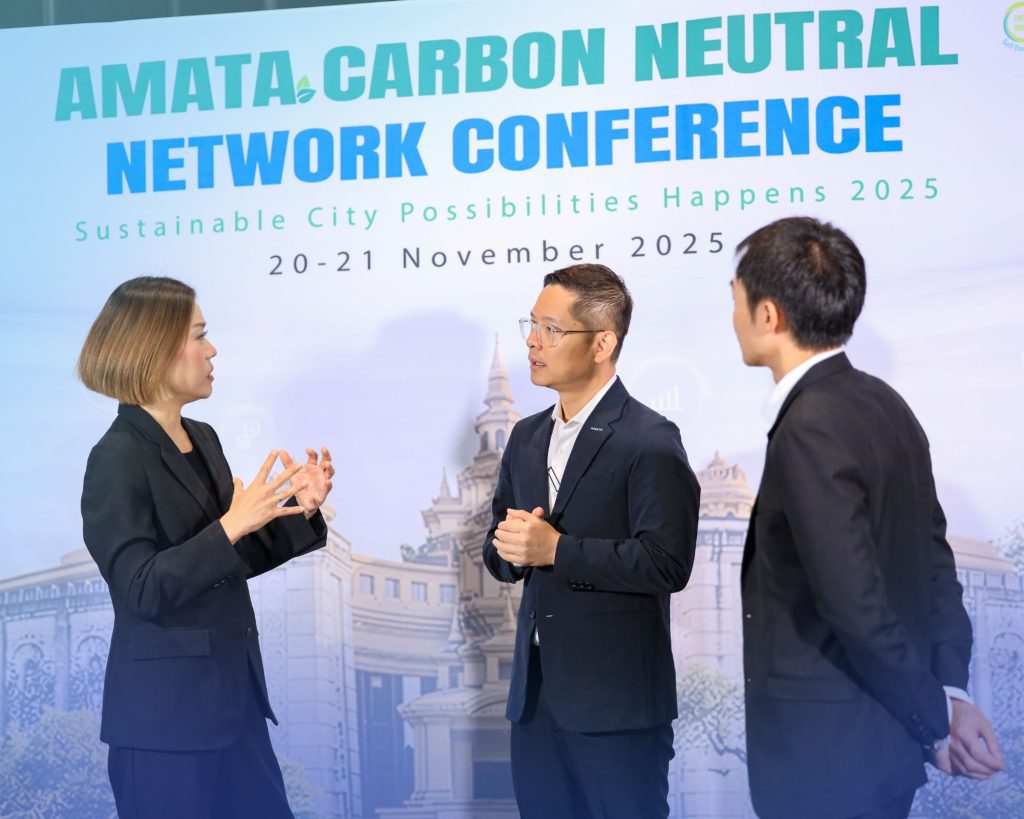
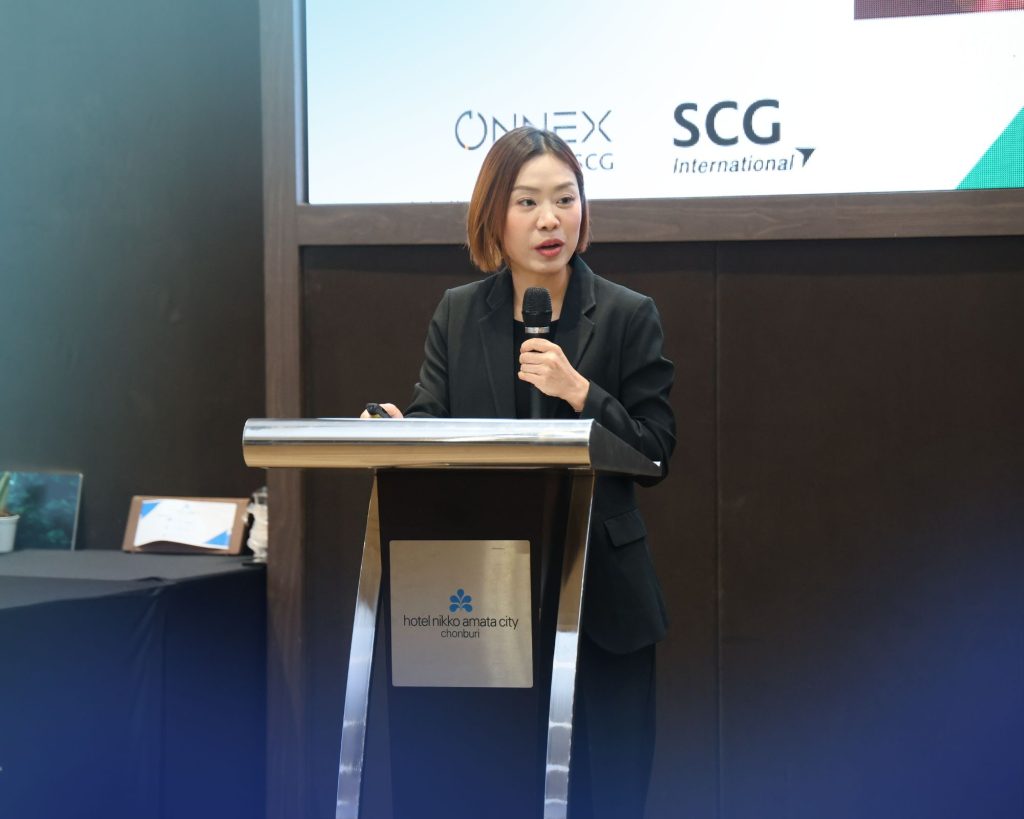
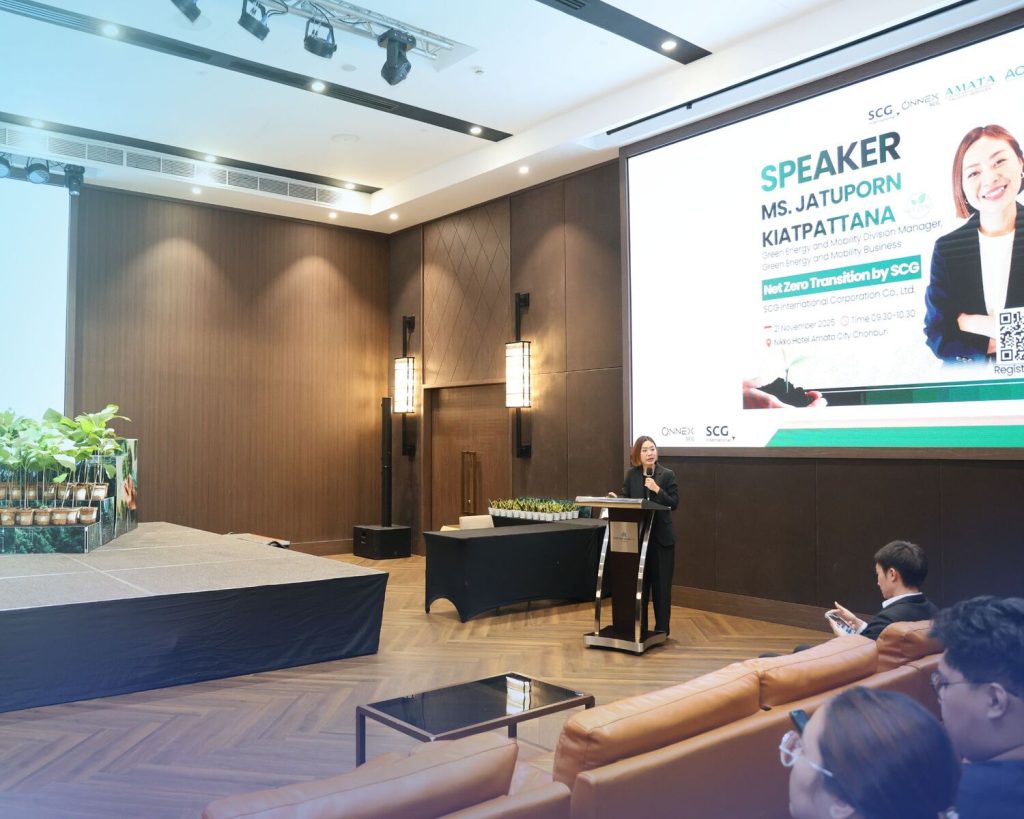
On November 20–21 2025, SCG International together with ONNEX by SCG jointly presented innovative carbon reduction solutions at the AMATA CARBON NEUTRAL NETWORK CONFERENCE 2025, hosted by AMATA Industrial Estate, Bangpakong. This event provided a platform to exchange strategies for reducing carbon emissions, moving the industrial sector closer to the targets of Carbon Neutrality and Net Zero.
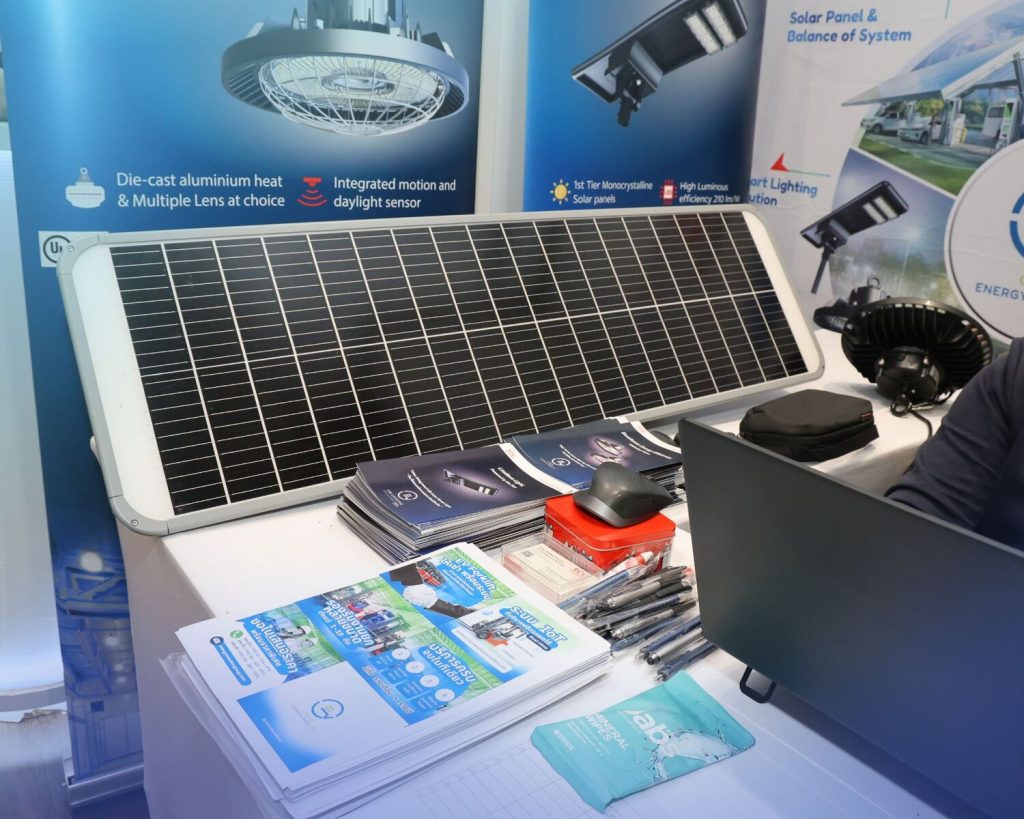
The conference featured a seminar on “Energy Management and Carbon Reduction in the Industrial Sector,” where Mr.Soravit Angsuvarungsri, Senior Sustainability Consultant at ONNEX by SCG, introduced clean energy and energy management solutions that help prevent and reduce greenhouse gas emissions. He also recommended solutions for efficient and sustainable energy use. Additionally, Mr. Jatuporn Kiatpatthana, Green Energy and Mobility Division Manager at SCG International, presented a range of Green Energy & Mobility solutions, such as Electric Wheel Loaders, EV Mining Vehicles, and EV Trucks for industrial use, alongside the Smart LED Lighting Solution that contributes to energy savings and reduced greenhouse gas emissions.
By introducing these carbon reduction solutions at the AMATA CARBON NEUTRAL NETWORK CONFERENCE 2025, SCG International and ONNEX by SCG are not only driving the Thai industrial sector towards Carbon Neutrality and Net Zero, but also reinforcing a strong commitment to long-term business sustainability. Through the adoption of clean energy technologies and innovative solutions, they aim to empower businesses to grow competitively while achieving a balance across environmental, economic, and social dimensions.
Starch is a key raw material used to produce products in various industries, especially tapioca starch, which plays an important role in the production of adhesives, textiles, biodegradable materials, and paper, as well as in food products like pasta, snacks, instant foods, semi-finished foods, sweeteners, and even medical products.
Although the flooring and tile industry has shown continuous growth post-pandemic, driven by increased investment in both public and private construction projects, as well as rising home renovation demands, businesses still face intense competition. This includes competing on material quality, offering a wide range of choices to customers, and competing against low-quality, low-priced products. Construction businesses cannot gain a competitive edge over others without a robust and comprehensive supply chain for flooring and tiles.