Search

SCG Green Batts vs Standard Glasswool Insulation

Share this post :

Facebook
LinkedIn
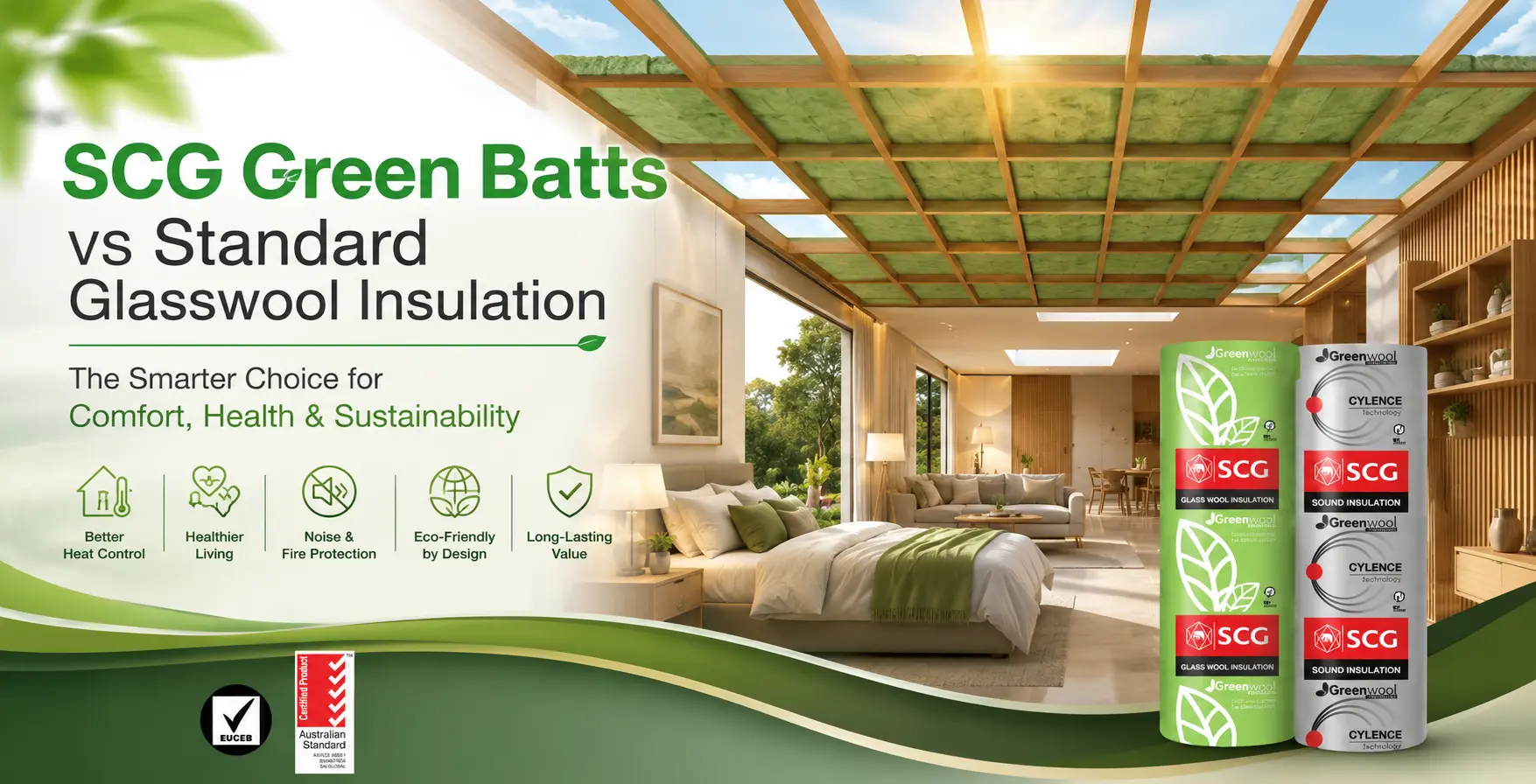
SCG Green Batts compared with standard glasswool insulation in a modern home

Key takeaways

Comparable Thermal Performance

Both SCG Green Batts and standard glasswool provide excellent insulation with similar R-values, helping reduce heat transfer and lower energy costs when installed correctly.

Better Health & Installation Comfort

SCG Green Batts use bio-based, formaldehyde-free binders, making them softer, less itchy, and easier to install while improving indoor air quality.

More Sustainable Choice

Made with up to 80% recycled glass, SCG Green Batts reduce energy consumption, carbon emissions, and the use of virgin raw materials.

Strong Long-Term Value

Although slightly more expensive, SCG Green Batts offer easier installation, lasting durability, and better overall value for homeowners focused on comfort and sustainability.

Choose Based on Your Priorities

Standard glasswool is ideal for budget-conscious projects, while SCG Green Batts are the better option for healthier living, eco-friendly construction, and long-term performance.

When you renovate or build a home, it’s easy to get excited about paint colors, light fixtures, and furniture. But the real hero of a comfortable home is hidden inside your walls and ceiling: your glasswool insulation. Good insulation keeps your home cool in the heat, warm in the cold, and quiet from outside noise.

Today, more homeowners are asking the same question: should I choose standard glasswool, or should I upgrade to SCG Green Batts? Both are popular types of house insulation batts, but they are made differently and feel different to use. This guide breaks everything down in plain language so you can pick the right one for your home.

What Is Glasswool Insulation?

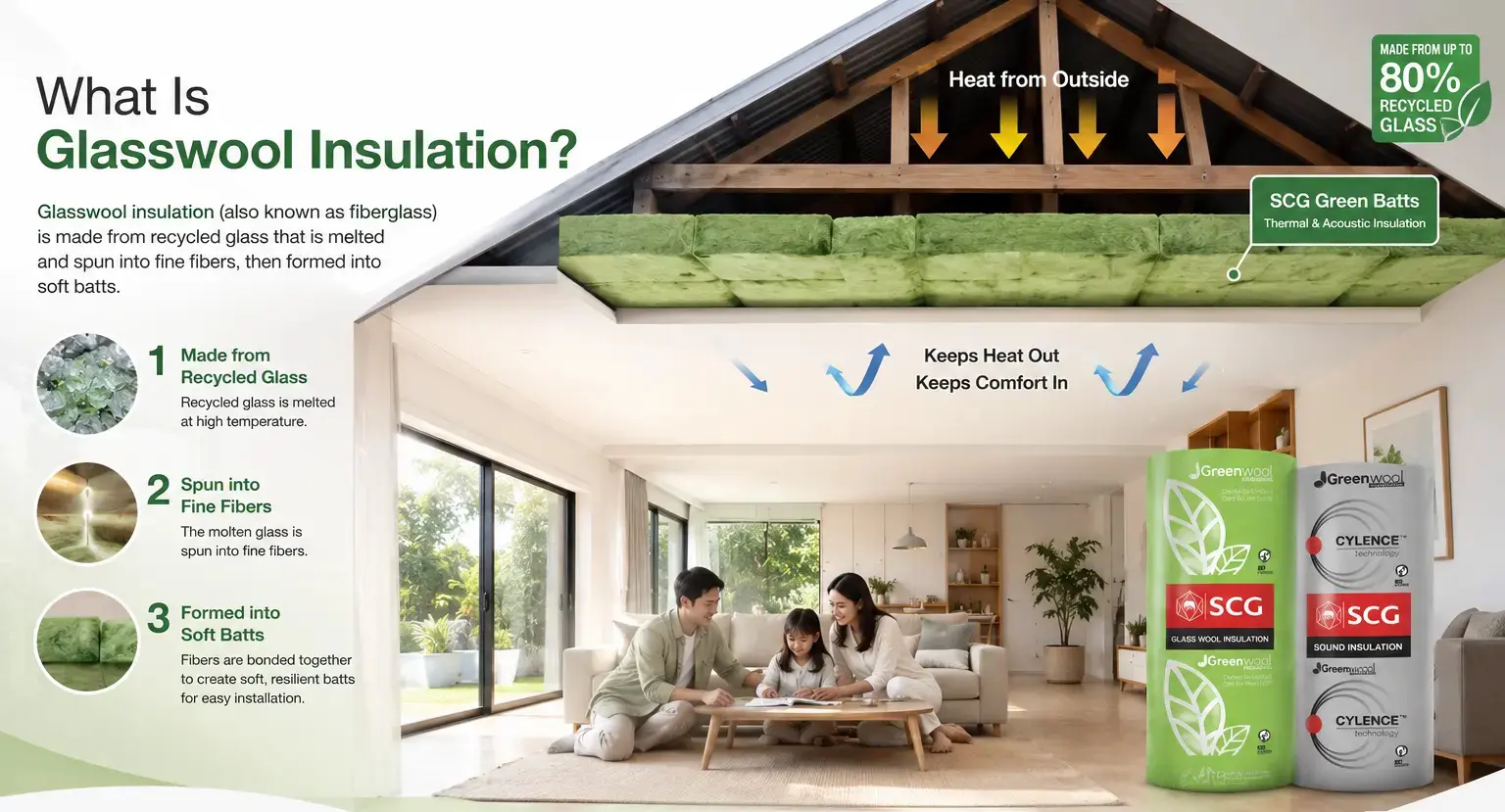
Diagram showing how glasswool insulation traps air to reduce heat transfer

Let’s start with the basics. Glasswool insulation ( also called fiberglass ) has been used in homes and buildings for decades. It’s made by melting sand and recycled glass at very high heat, then spinning the melted glass into thin fibers. These fibers are pressed together into soft, fluffy sheets called glasswool batts.

The way glasswool insulation works is simple: the fibers trap millions of tiny air pockets. Air is a poor conductor of heat, so trapped air slows down heat moving through your walls and ceiling. That’s how glasswool keeps your home at a comfortable temperature all year round.

Standard glasswool is popular because it’s affordable and easy to find at almost any insulation supplier. However, older or basic versions often use chemical binders — sometimes including small amounts of formaldehyde to hold the fibers together. These binders can make the batts feel stiff, dusty, and itchy to touch, especially during installation.

What Makes SCG Green Batts Different?

As people care more about health and the environment, insulation manufacturers have worked to create better, cleaner products. SCG Green Batts are a good example of this shift in house insulation batts.

SCG Green Batts are still made from spun glass fibers, just like standard glasswool insulation. But the way they are produced is much improved. Here are the two biggest differences:

    1. More recycled glass. SCG Green Batts often use up to 80% recycled glass, which means less waste goes to landfills and fewer raw materials need to be mined.
    2. No harsh chemicals. Instead of using formaldehyde-based glue, SCG Green Batts use plant-based or bio-based binders. This means no strong chemical smell, less itching, and a softer texture that’s much nicer to handle.

In short, SCG Green Batts offer the same core benefits as standard glasswool, but with a gentler feel and a smaller impact on the planet.

Comparing the Two: What Really Matters

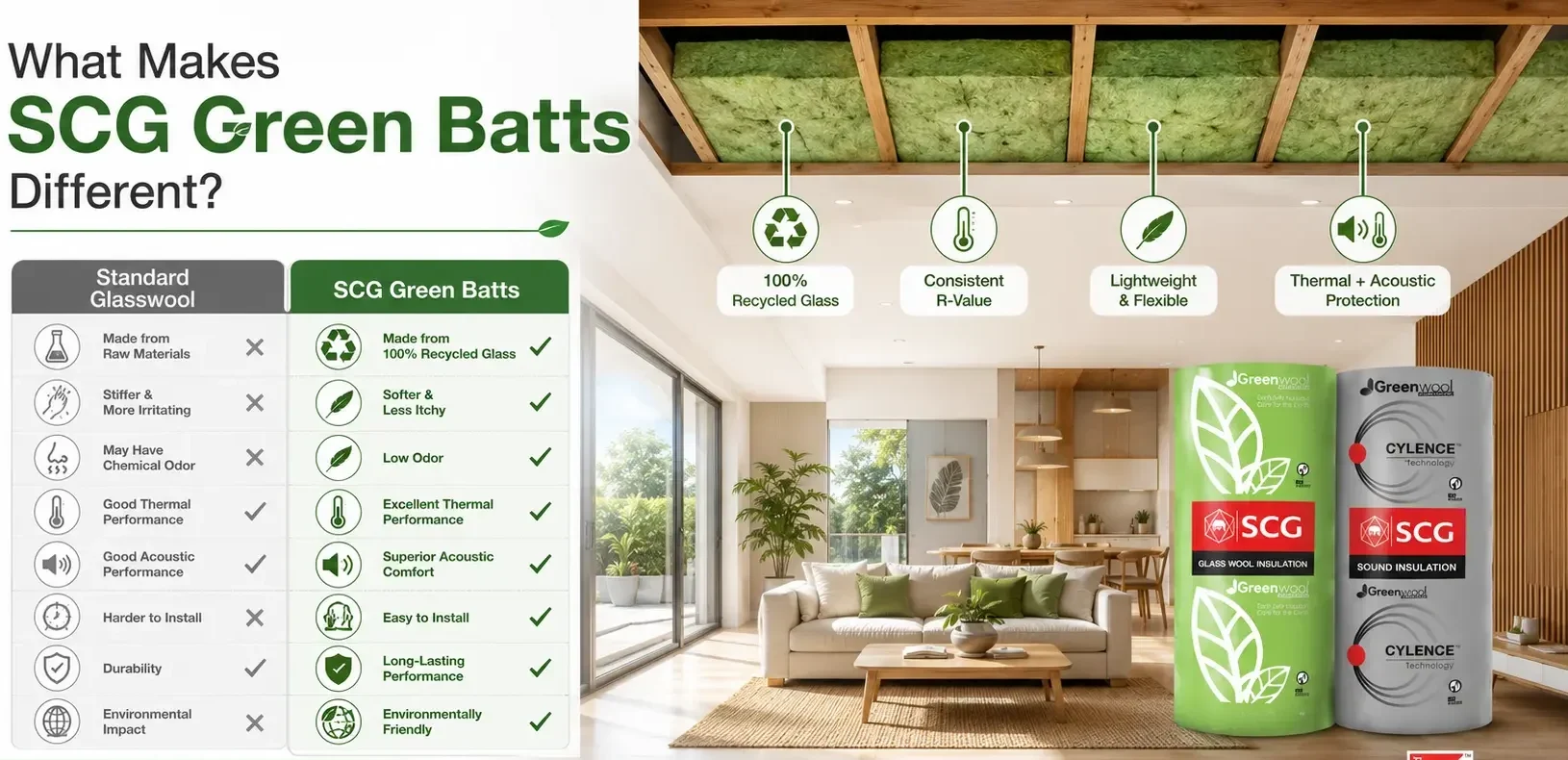
Infographic comparing SCG Green Batts and standard glasswool insulation for heat control, noise reduction, indoor comfort, and environmental sustainability.

To choose the right house insulation batts for your home, let’s compare both options across the categories that matter most: heat control, health, sound, fire safety, environmental impact, cost, and durability.

  1. Heat Control and Energy Savings

The main job of any insulation is to stop heat from moving in or out of your home. This ability is measured using something called an “R-value” the higher the number, the better the insulation performs.

Good news: both standard glasswool and SCG Green Batts perform very well in this area. Their R-values are very similar when compared at the same thickness and density. In fact, some high-density versions of SCG Green Batts can perform even better than basic standard glasswool.

This means switching to the eco-friendly option does not mean giving up performance. Whichever type of glasswool batts you choose, correct installation in your ceiling and walls can reduce your heating and cooling bills by up to 40%. That’s a big saving over time, especially in hot climates like Thailand where air conditioning use is high.

  1. Health, Comfort, and Air Quality

This is where the biggest difference between the two products shows up.

Standard glasswool, especially older or cheaper versions, is known for being uncomfortable to install. The stiff fibers can cause itchy skin, watery eyes, and throat irritation. That’s why many installers wear thick protective clothing just to lay a few sheets of insulation.

SCG Green Batts solve this problem. Thanks to the softer, chemical-free binders, the fibers are gentler and less likely to break apart into dust. This makes SCG Green Batts a much friendlier choice for do-it-yourself projects.

So, are green batts better for people with allergies? In most cases, yes. Because SCG Green Batts release fewer airborne particles and don’t emit strong chemical fumes (called VOCs, or volatile organic compounds), they are a safer option for people with asthma, allergies, or sensitive skin.

Still, even with a gentler product, it’s smart to wear basic protective gear, a mask, gloves, and goggles, any time you’re handling glasswool batts.

  1. Noise Control and Fire Safety

Insulation doesn’t just control temperature — it also helps control noise and improves fire safety.

 – For noise: Both standard and green glasswool absorb sound waves, which reduces noise between rooms and blocks outside noise. If you want extra-quiet spaces, like a home office or media room, look for high-density SCG Green Batts, which are specially designed for stronger soundproofing.

 – For fire safety: Glass does not burn, so both types of insulation are naturally fire-resistant. They act as a barrier that slows down the spread of flames. While some other materials like mineral wool can handle slightly higher heat, both standard and SCG Green glasswool insulation meet strict fire safety standards, giving homeowners peace of mind.

  1. Environmental Impact

More homeowners today care about how their building choices affect the planet and this is another area where SCG Green Batts shine.

Making standard glasswool requires melting raw sand at very high temperatures, which uses a lot of energy. SCG Green Batts, on the other hand, are made mostly from recycled glass. Recycled glass melts at a lower temperature than raw sand, so less energy is used during production. This means lower emissions and a smaller carbon footprint overall.

By choosing SCG Green Batts, you’re not only insulating your home, you’re also supporting recycling and reducing the need for new raw materials.

  1. Price, Lifespan, and Long-Term Value

Budget always plays a role in home improvement decisions. Standard glasswool is generally the cheaper option upfront, which makes it a solid choice if you’re working with a tight budget, insulating a shed, or renovating a rental property.

SCG Green Batts cost a little more, but they offer good value in other ways:

 – Easier and faster installation, since the material is softer and less irritating to handle

 – Potential labor savings if you’re hiring a professional installer

 – A more pleasant experience if you’re doing the job yourself

As for lifespan, both types of insulation are built to last as long as your home, as long as they stay dry. Moisture is the biggest enemy of any glasswool insulation. If the material gets wet, the air pockets inside collapse, and the insulation becomes far less effective. SCG Green Batts, with their improved bio-based binders, tend to hold their shape a little better in humid conditions compared to older standard products.

Tips for Installing Glasswool Batts Safely

If you’re planning to install glasswool insulation yourself, keep these tips in mind:

 – Wear protective gear. Long sleeves, long pants, a dust mask (N95 is best), safety goggles, and gloves are all recommended, even with softer, low-irritation products.

 – Use a sharp knife to cut batts. Tearing the material creates extra dust and uneven edges.

 – Don’t compress the insulation. Insulation works by trapping air. If you squeeze a thick batt into a space that’s too small, you push out the air and lower its effectiveness. Always cut batts to fit the space without squashing them.

 – Keep the area ventilated. Open windows and doors while you work.

 – Wash your clothes separately afterward. This helps remove any stray fibers before they touch your skin again.

Getting the Most Out of Your Attic Insulation

Most homes lose or gain heat through the ceiling and roof space, so this area deserves extra attention. Make sure your insulation fully covers the ceiling joists, since exposed wood can let heat pass through in a process called thermal bridging.

For best results, consider installing one layer of glasswool batts between the joists, and a second layer laid across the top of the joists. This creates a more complete thermal barrier and helps stop heat from sneaking through small gaps.

Talk to a Trusted Insulation Supplier

Before buying insulation, it’s worth speaking with an experienced insulation supplier. A good supplier can help you:

 – Calculate exactly how many batts you’ll need for your space

 – Recommend the right R-value for your local climate

 – Compare standard glasswool and SCG Green Batts based on your budget and priorities

Don’t just grab the first product you see at a hardware store, a little research and expert advice can save you money and improve your results.

Final Thoughts: Which One Should You Choose?

Choosing the best insulation for an energy-efficient home

There’s no single “best” answer for every home, but there is a clear direction for homeowners who want comfort, health, and sustainability.

Standard glasswool insulation remains an affordable, reliable option. It has been trusted for decades and continues to work well for budget-conscious projects or commercial buildings.

SCG Green Batts, however, represent the next step forward. With a much higher recycled content, no harsh chemicals, and a softer, gentler feel, they solve many of the common complaints people have about traditional fiberglass. They deliver strong thermal performance, excellent noise reduction, and better indoor air quality, all while supporting a healthier environment.

If your goal is an energy-efficient, comfortable home made with sustainable materials without dealing with the itchiness of old-style fiberglass investing a little more in SCG Green Batts is a choice that can pay off in comfort and savings for years to come.
Frequently Asked Questions

Both use spun glass fibers, but SCG Green Batts typically contain up to 80% recycled glass and use plant/bio-based, formaldehyde-free binders. That leads to a softer feel, less dust and odor, and a smaller environmental footprint—without sacrificing thermal performance.

You’re paying for easier, more comfortable handling (less itch, dust, and smell), potential labor savings, and a greener product. For many homeowners who value health, DIY-friendliness, and sustainability, those benefits justify the modest price premium.

Don’t compress the batts—insulation works by trapping air. Cut pieces to fit snugly without squashing, keep the work area ventilated, wear basic PPE (mask, goggles, gloves, long sleeves), and in attics, cover joists and consider a second layer laid across them to reduce thermal bridging.

Moisture collapses the air pockets that provide insulation, severely reducing effectiveness. Both types must stay dry; however, SCG Green Batts’ bio-based binders tend to hold shape a bit better in humid conditions than older, standard products. Prevent leaks and ensure good roof-space ventilation.

Both materials absorb sound and are naturally fire-resistant because glass doesn’t burn. For extra-quiet rooms, high-density SCG Green Batts can improve sound blocking. While mineral wool tolerates slightly higher heat, both standard and SCG Green glasswool meet strict fire safety standards.

Related Posts

SCG INTERNATIONAL MALAYSIA Joins Prime Minister's Dialogue with the Thai Business Community in Malaysia_0

SCG International Malaysia Joins PM Dialogue on Thailand–Malaysia Trade

On 9 July 2026,SCG INTERNATIONAL (Malaysia) Sdn. Bhd., represented by Ms. Chomplearn Sumethasorn, Malaysia Office Manager, ASEAN Region, participated in the Prime Minister’s Dialogue with the Thai Business Community in Malaysia, organized by the Royal Thai Embassy in Kuala Lumpur during the official visit of H.E. Mr. Anutin Charnvirakul, Prime Minister and Minister of Interior of Thailand

SCG building materials supplier in Melbourne

SCG International Australia : Office & Products Guide 2026

In this guide, we go inside how the SCG International Australia office operates in 2026, the product range it supports, and why “high-quality manufacturer” isn’t just a tagline — it’s the operational model behind every shipment that lands on an Australian job site.

SCG Fiber cement sheet for Wall&Ceiling

SCG Fiber Cement Sheet vs Plasterboard vs MgO Board for Australian Builders

Among the concrete roof tiles types offered by SCG, three distinct personalities define the current lineup. Jewel C delivers classic, bold waves that cast deep, traditional shadows across the roofline. Stepping toward a softer aesthetic, Sadie E offers elegant, subtle curves that smoothly bridge heritage and contemporary styles. For a sleek, minimalist finish, the True Flat mimics a smooth slate tablet, keeping architectural lines sharp and modern.

I’m Here To Assist You

Contact us today

Please read Terms and Conditions, Privacy Notice, Cookies Notice, and I
I acknowledge that I can withdraw the given consent at any time, and I have understood the terms and conditions and how my personal data is processed.