Search

Green Cement Guide for U.S. Producers, Specifiers, and Owners

Share this post :

Facebook
LinkedIn
Low carbon cement supply at sustainable ready-mix concrete plant

Key takeaways

Less clinker, lower emissions

Most green cement solutions work by cutting clinker content or switching to a different binder chemistry.

There's more than one option

Choices range from limestone-blended cement (like PLC) to higher-SCM blends, calcined clay, geopolymers, and commercial low-carbon products such as SCG Low Carbon Cement.

Performance can match standard cement

With the right specification and curing, low-carbon binders can hit the same strength and durability targets.

Always check the data

Use EPDs and GWP numbers to compare products fairly.

Adoption is a process, not a swap

Talk to suppliers early, run trials, and get everyone aligned on performance and carbon goals.

Look at the sidewalks in any big city, or the highways that stretch between towns, and you’re looking at a huge, hidden carbon footprint. Climate researchers say that if the cement industry were a country, it would be the third-largest carbon emitter in the world.
This guide explains green cement in plain terms: what it is, the main types available, how it performs, how to check the data, and how to start using it — written for concrete producers, specifiers, and project owners in the United States who want greener construction without giving up reliability. In short, it covers Green cement: definition, types, performance, specs, sourcing, and use cases for concrete producers, specifiers, and project owners in the United States.

Quick Summary

Green cement cuts carbon mainly by using less “clinker” (the part of cement that creates the most emissions) or by using different binder ingredients altogether — while still meeting strength and durability needs. Low carbon cement options include PLC/Type 1L cement, blends with more supplementary materials, calcined clay, and geopolymers, plus newer commercial products like SCG Low Carbon Cement. The right choice depends on what’s available locally, the exposure conditions, and careful mix design and curing. You can verify real performance using EPDs (Environmental Product Declarations) and GWP (Global Warming Potential) numbers, and by checking relevant codes and standards. Talking to suppliers early, running trials, and keeping up with low-carbon purchasing rules all make it easier to adopt these mixes at scale. These are core strategies in green construction and align with green building materials programs.

Most people use “cement” and “concrete” interchangeably, but the difference matters. Think of concrete like a cake recipe: crushed rock and sand are the bulky dry ingredients, and cement is the binder that holds it all together.

The environmental cost comes from how that binder is made. Traditional factories bake limestone at extremely high heat to create hard lumps called clinker. That heating process is the main reason cement carries so much “embodied carbon” — the total greenhouse gases released before a single slab of concrete is even poured.

Green cement rewrites that recipe. In simple terms, this sustainable cement approach means using less clinker and replacing it with materials that need less heat and release less CO2 — while still aiming for the strength, durability, and workability that builders expect.

Green Cement vs. Ordinary Portland Cement (OPC): What's the Difference?

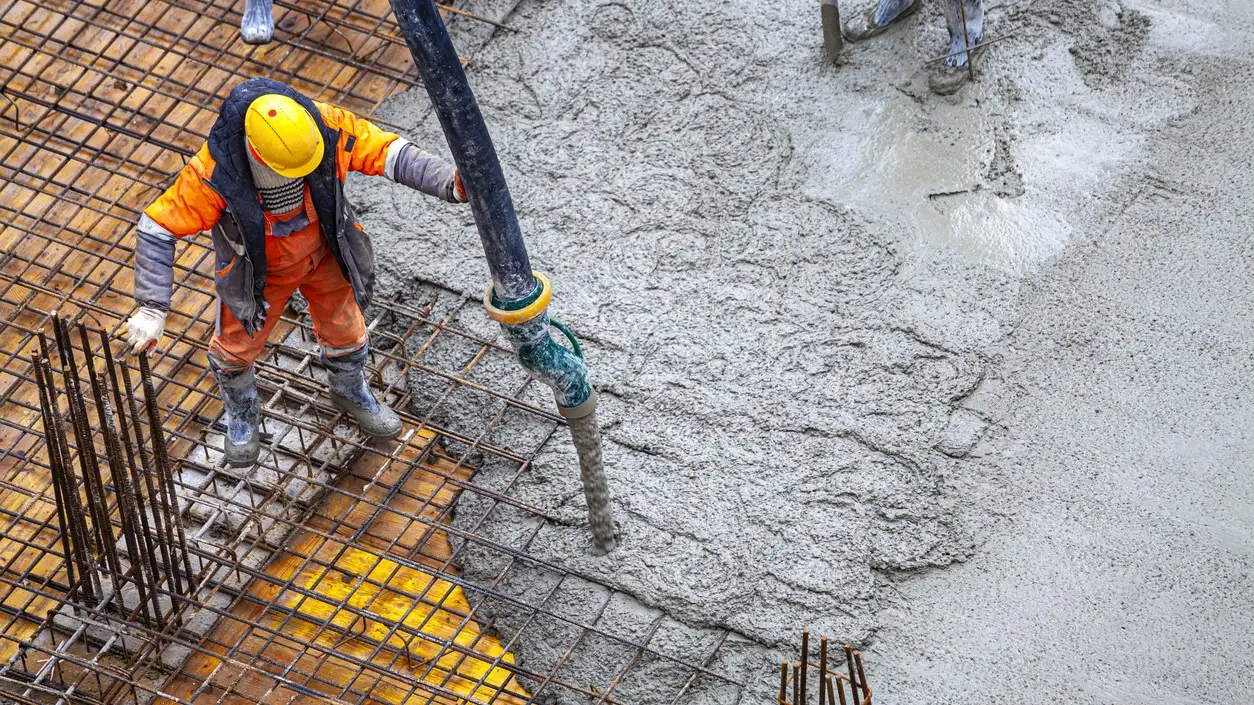
Sustainable concrete pour using green cement on construction site

Green cement (often called sustainable cement or low carbon cement) is a broad term for cements and binders built to lower greenhouse gas emissions compared to standard products. Most do this by cutting the clinker content — the most carbon-heavy ingredient — and replacing some of it with finely ground limestone, calcined clay, or other supplementary cementitious materials (SCMs). Some newer products skip traditional clinker almost entirely.

Ordinary Portland Cement (OPC), by comparison, is made by heating limestone in a kiln to form clinker, then grinding that clinker with gypsum. OPC is reliable and widely used, but its high clinker content makes it carbon-intensive.

In short:

– OPC: More clinker. Emissions come from both the kiln fuel and the chemical breakdown of limestone.

– Green cement: Less clinker, sometimes a different chemistry altogether. Emissions drop because there’s less clinker to produce, some ingredients need lower heat, and more SCMs are used.

“Green” doesn’t mean “non-standard.” In most regions, green cement products — like Portland-limestone cement and other blended cements — are covered by existing building codes and standards, and they go through the same strength and durability testing as OPC.

Why Does Traditional Cement Have Such a Big Carbon Footprint?

Cement’s carbon problem really comes down to heat. To make it, factories bake raw materials in giant rotating kilns. Temperatures climb past 2,700°F — hotter than lava from an active volcano. Reaching that heat takes a lot of fuel, which is the first big source of emissions.

But the heat isn’t the only issue. As limestone cooks, it turns into clinker — and in the process, it releases the carbon dioxide that was trapped inside the rock. This chemical reaction is unavoidable with traditional methods, which is exactly why cutting clinker is so central to reducing cement’s carbon footprint.

Between kiln fuel and the gases released by the limestone itself, traditional cement production leaves a heavy mark. That’s pushed the industry to rethink the recipe from the ground up — starting with what goes into the kiln and how much clinker ends up in the final mix.

Easy Win: Portland Limestone Cement (PLC) / Type 1L

One of the simplest ways to cut emissions is to use less clinker without changing how concrete is produced or placed. That’s the idea behind Portland Limestone Cement (PLC). Manufacturers grind limestone finely and blend it into the cement, lowering the clinker share while keeping performance steady. In the U.S., this is often labeled “Type 1L”; other regions use similar names for comparable blends.

This swap can cut the cement’s carbon footprint by roughly 10%, depending on the exact formula. Local cement standards and building codes help make sure the product still holds up structurally.

For most everyday jobs, PLC performs close to OPC:

– Strength: Comparable compressive strength when specified correctly.

– Workability: Similar placement, finishing, and set times.

– Availability: Increasingly the default option in many markets.

PLC is a good first step, but bigger emissions cuts usually call for higher SCM content or alternative binders — which is where calcined clay, advanced SCM blends, and geopolymers come in.

Going Further: Calcined Clay, SCM Blends, and Geopolymers

Builders have long used supplementary cementitious materials (SCMs) — fly ash, slag (GGBS), natural pozzolans, and silica fume — to reduce how much traditional cement a mix needs. These materials can boost long-term strength, tighten the pore structure, and improve resistance to harsh conditions, all while cutting clinker demand.

But SCM supply isn’t constant. As coal power plants shut down, fly ash becomes harder to find in some regions. That’s pushed researchers toward clay. By heating certain clays at much lower temperatures than clinker production (a process called calcination), manufacturers get a reactive, lower-carbon ingredient.

Combined with limestone, calcined clay can improve durability — tightening the concrete’s microstructure, reducing how much water and chlorides can get in. That’s especially useful for coastal projects, bridge decks, parking structures, and industrial floors.

Some manufacturers go even further with geopolymer binders, which skip clinker hydration altogether and instead use alkaline activation to harden the mix. Geopolymers are still mostly used in specialized projects today, but they show how far the technology can go when supply chains and specs line up.

A Real-World Option: SCG Low Carbon Cement

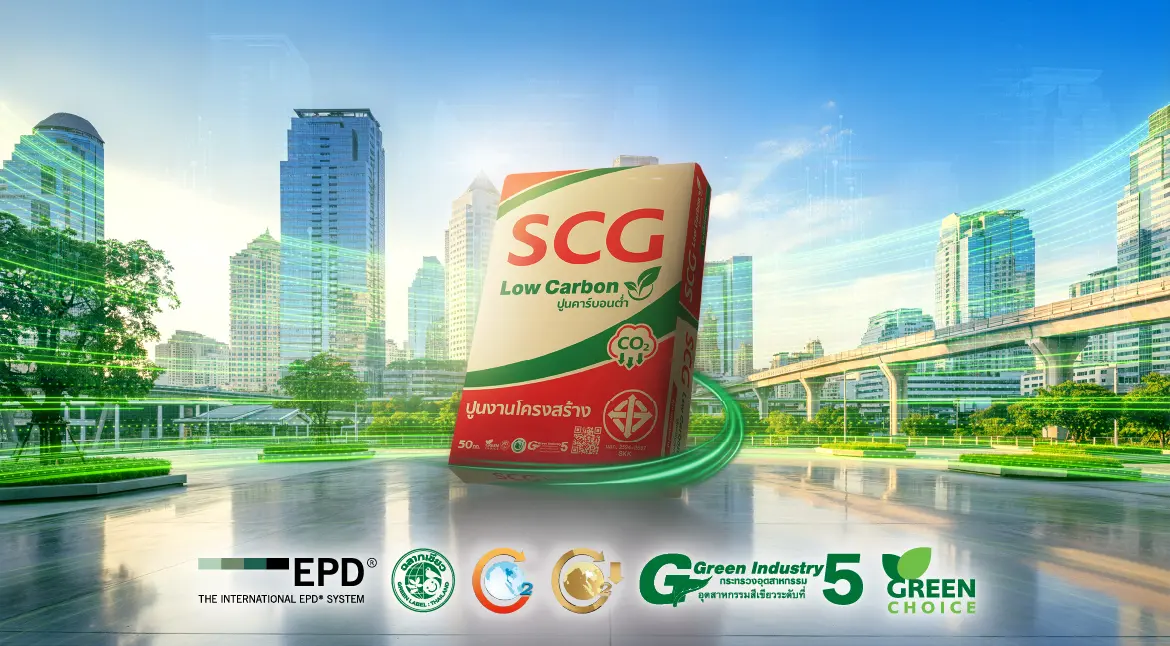
SCG Low Carbon Cement green sustainable construction

For producers and specifiers looking for a commercially available, ready-to-spec product, SCG Low Carbon Structural Cement is one example worth knowing. It’s an environmentally friendly cement, high-strength cement built to cut carbon emissions while still delivering the structural performance builders expect.

What it offers, according to the manufacturer:

– Lower carbon footprint: SCG says the cement cuts CO2 emissions by up to 20% compared to general structural cement, through an advanced formulation that lowers the clinker factor and optimizes raw material use.

– High strength and durability: Designed to provide reliable structural performance for residential, commercial, and infrastructure projects of varying scale.

– Verified sustainability credentials: It carries an Environmental Product Declaration (EPD) under ISO 14025, and meets ASTM, EN 15804, and ISO 21930 standards. It has also been awarded the SCG Green Choice certification.

– Broad application range: Suitable for infrastructure (bridges, highways, dams), commercial developments, residential housing, and public-sector buildings like schools and hospitals.

If a project owner or specifier is considering SCG Low Carbon Cement, the same evaluation steps apply as with any green cement product: check how it’s designated under local codes, request the EPD and compare its GWP to a regional baseline, review strength and durability data for the relevant exposure class, confirm it works with local aggregates and admixtures, and check supply chain availability and lead times.

Key Benefits of Green Cement

For producers, specifiers, and owners, green cement’s value comes down to three things: environmental performance, technical performance, and lower project risk, as part of broader green building materials strategies.

– Lower embodied carbon: Less clinker generally means a lower Global Warming Potential (GWP), which helps meet low-carbon purchasing requirements and company sustainability goals.

– Works with standard practices: Many green cement products are drop-in replacements — no major changes needed to batching, placing, finishing, or curing.

– Better durability in tough conditions: Optimized SCM blends often resist chloride and sulfate attack better, which matters for marine, deicing-salt, and industrial environments.

– Less heat during curing (in many blends): Lower peak temperatures help reduce thermal cracking risk in thick pours like foundations and large slabs.

– Smarter use of resources: SCMs and similar materials reduce the need for virgin raw materials and can use industrial byproducts.

– Access to green certifications: Verified low-carbon mixes can support sustainability ratings and programs that require transparent environmental data.

None of this happens automatically — it depends on good specification, proper curing, and matching the mix to the right exposure class.

Is Green Cement as Strong? The Truth About Safety and Durability

Switching to lower-carbon ingredients doesn’t automatically weaken concrete. Structural-grade green cements are generally held to the same strength and durability standards as conventional cement.

In fact, many green mixes can actually improve crack resistance. Standard OPC hydration generates a lot of heat, which can cause thermal cracking. Blends with more SCMs tend to hydrate more slowly and at lower peak temperatures — reducing that risk, as long as curing is done properly.

Durability gains often come from reduced permeability. SCMs contain very fine, reactive particles that tighten the concrete’s pore structure, making it harder for water and chlorides to get through. That can mean a longer service life — provided the mix is designed correctly for its exposure class and tested to confirm it.

How to Read an EPD: The "Nutrition Label" for Concrete

Just like checking nutrition facts on food, you can check a building material’s environmental impact using an Environmental Product Declaration (EPD) — a standardized, third-party-verified report. The key number to look at is Global Warming Potential (GWP): a comparable measure of the greenhouse gases released in making that product.

When reviewing an EPD, check:

– System boundary: What does the EPD actually cover (e.g., cradle-to-gate)? This affects whether comparisons are fair.

– Plant location: Local electricity, fuel sources, and transport distances all affect the numbers.

– GWP value: Compare it to a relevant regional baseline.

– Date: Prefer recent EPDs, since plants and formulas change over time.

On a real project, one simple question can make a difference: “Can you provide the EPD for this cement or mix design?” It gives you the data to make a genuinely informed choice about sustainable cement and other green building materials.

Why Low-Carbon Cement Is Becoming the Norm ?

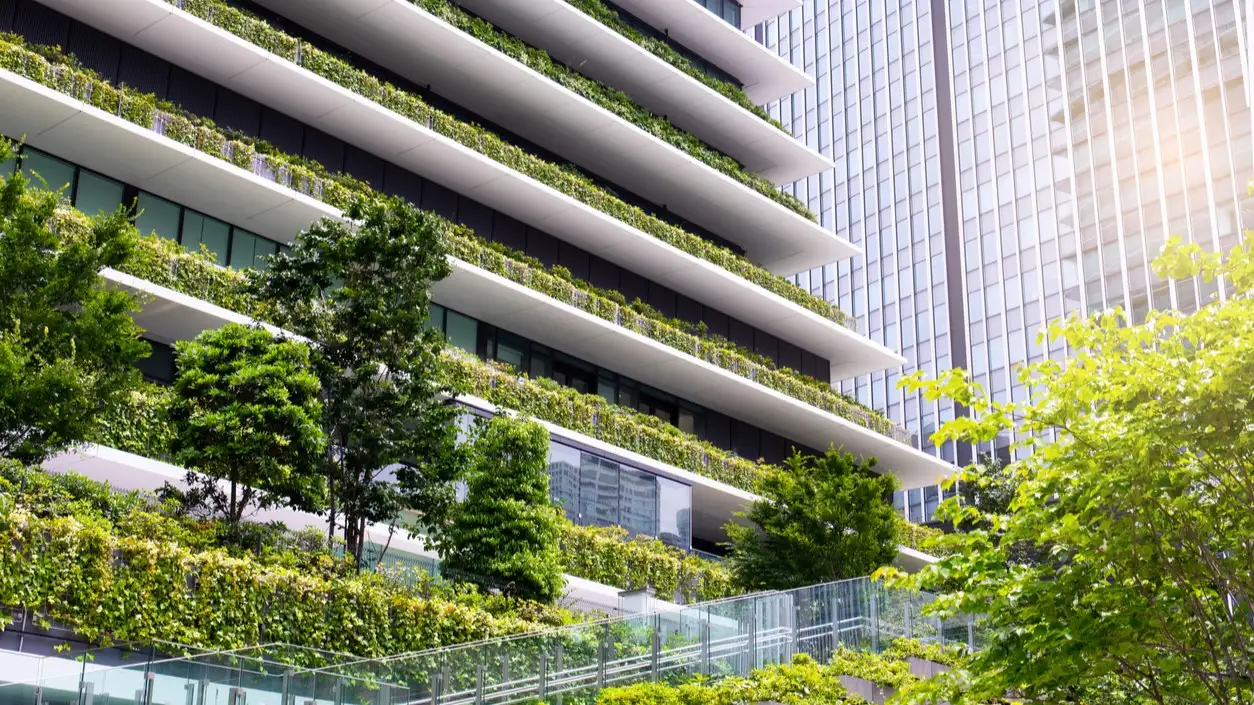
Low carbon cement used in green building

Public and private buyers are increasingly rewarding transparency and lower-carbon materials. Many regions and large project owners now require embodied-carbon reporting or set GWP limits for cement and concrete. These rules vary — from government procurement standards to city-level rules to corporate sustainability commitments — but they all push in the same direction: steady demand for lower-carbon cement, and more incentive for producers to supply it.

For owners and specifiers, that means low-carbon cement is moving from a “special request” to a standard option in more places. For producers, it puts a premium on consistent quality, verified EPDs, and mixes optimized for local conditions.

Your Green Construction Checklist

Building green doesn’t mean giving up durability. The best results come from treating low-carbon concrete as a specification and quality process — not just swapping one bag of cement for another.

  1. Define performance first. Start with exposure class, strength targets, placement conditions, and how long the structure needs to last.
  2. Talk to suppliers early. Ask your low carbon cement manufacturer and ready-mix providers what blended cement and SCM options are available locally, and what data backs them up — including products like SCG Low Carbon Cement if it’s available in your market.
  3. Get the paperwork. Request EPDs for the cement and/or concrete mix, and make sure you’re comparing against the right baseline.
  4. Plan for curing. Some low-carbon mixes need more disciplined curing or temperature control to hit early-age strength targets.
  5. Test before you commit. Use trial batches and performance testing to confirm strength and durability for your specific use case.

When producers, specifiers, and owners agree on performance targets and back up their choices with real data, green cement becomes a practical way to cut embodied carbon — without compromising on reliability.

Project owners and contractors in Hawaii who looking for a trusted local source can find SCG Low Carbon Cement suppliers in Hawaii to support their next low-carbon build.

To explore the full range of high quality building solutions available, visit SCG Building Materials for more details.

Frequently Asked Questions (FAQ)​

Green cement is any cement designed to cut life-cycle emissions compared to standard OPC, mainly by reducing clinker content through additions like limestone, calcined clay, and SCMs. Some products, like geopolymers, skip clinker almost entirely. Many green cements — including PLC/Type 1L and products like SCG Low Carbon Cement — meet the same codes and testing standards as OPC.

Not if it's specified, mixed, and cured correctly for the job. PLC generally matches OPC for common applications. Higher-SCM and calcined-clay blends often reduce cracking risk and improve resistance to chlorides and sulfates — useful for marine, deicing, and industrial settings.

- PLC/Type 1L: Easy, drop-in option, roughly 10% lower CO2 at the cement level.

- Higher-SCM blends: Bigger clinker reduction, often better durability — but supply varies by region.

- Calcined clay + limestone: Lower-temperature production with strong durability benefits, especially against chloride exposure.

- Geopolymers: Lowest clinker content, best suited to specialized projects.

- SCG Low Carbon Cement: A commercially available structural cement claiming up to 20% lower CO2 than general structural cement, with EPD, ASTM, EN 15804, and ISO 21930 backing.

Use EPDs and compare GWP values like-for-like. Check the system boundary, plant location, GWP versus a regional baseline, and how recent the EPD is. Always ask suppliers for the EPD behind their cement or mix.

Use the same framework as any green cement: confirm code compliance, get the EPD and compare GWP, review strength and durability data for your exposure class, check compatibility with your local aggregates and admixtures, and confirm supply chain availability and lead times.
Related Posts

SCG Showcases Green Innovations and Low-Carbon Cement at Cemtech Asia 2026, Reinforcing ASEAN Leadership and Commitment to the Net Zero Pathway

SCG Showcases Low-Carbon Cement Innovation at Cemtech Asia 2026

Bangkok, 7 May 2025 – SCG co-hosted INTERCEM Asia 2025, a premier global cement industry conference that convened industry stakeholders worldwide to exchange cutting-edge knowledge, explore technological innovations, and cultivate business opportunities amid evolving environmental regulations, construction technology transformations, and shifting market dynamics—collectively advancing toward a low-carbon cement industry.

During the event, SCG demonstrated its position as a frontrunner in low-carbon cement technology, showcasing its commitment to environmental innovation and concrete implementation of Net Zero strategies. The company highlighted its expertise in green innovations and sustainable construction solutions tailored to meet the evolving requirements of customers across Asian and global markets through signature offerings :

Building material importer in australia

Building Materials for Australia : Climate Performance & Supply

In Australia, material selection is rarely a purely aesthetic decision. Across the building materials Australia sector, climatic stressors (heat, humidity, wind-driven rain, salt air), tightening energy expectations, and the practical realities of lead times and logistics all shape what is “buildable” at scale. For distributors, importers, builders, and project buyers, the commercial risk is clear: products that underperform in-service, fail to meet compliance documentation needs, or arrive inconsistently can erode margins and reputations.

Concrete Roof Tile Suppliers in Australia

How to Vet Concrete Roof Tile Suppliers in Australia?

Building or renovating a home in Australia means designing for one of the most demanding climates on earth. From the blistering summer sun and relentless coastal salt sprays to high-wind storms and the ever-present threat of bushfires, your roof is your home’s primary shield. Because of this, selecting the right roofing material—and the right supplier—is a decision that goes far beyond simple aesthetics.

australia green building materials

SCG Sustainable Building Materials Australia: 2026 Green Star

Welcome to the ultimate SCG Sustainable Building Materials in Australia 2026: Green Star & EPD Buyer’s Guide. In this comprehensive resource, we will explore the pivotal role of SCG (Siam Cement Group) in delivering top-tier green building materials, unpack the complexities of Environmental Product Declarations (EPDs), and show you how to leverage these innovations to meet Australia’s stringent upcoming building standards. This guide also highlights eco-friendly products that align with Australia’s path to Net Zero.

I’m Here To Assist You

Contact us today

Please read Terms and Conditions, Privacy Notice, Cookies Notice, and I
I acknowledge that I can withdraw the given consent at any time, and I have understood the terms and conditions and how my personal data is processed.