Not every insulation supplier operates the same way. Before committing to a new supply relationship, Melbourne-based distributors and dealers should be asking a few practical questions.
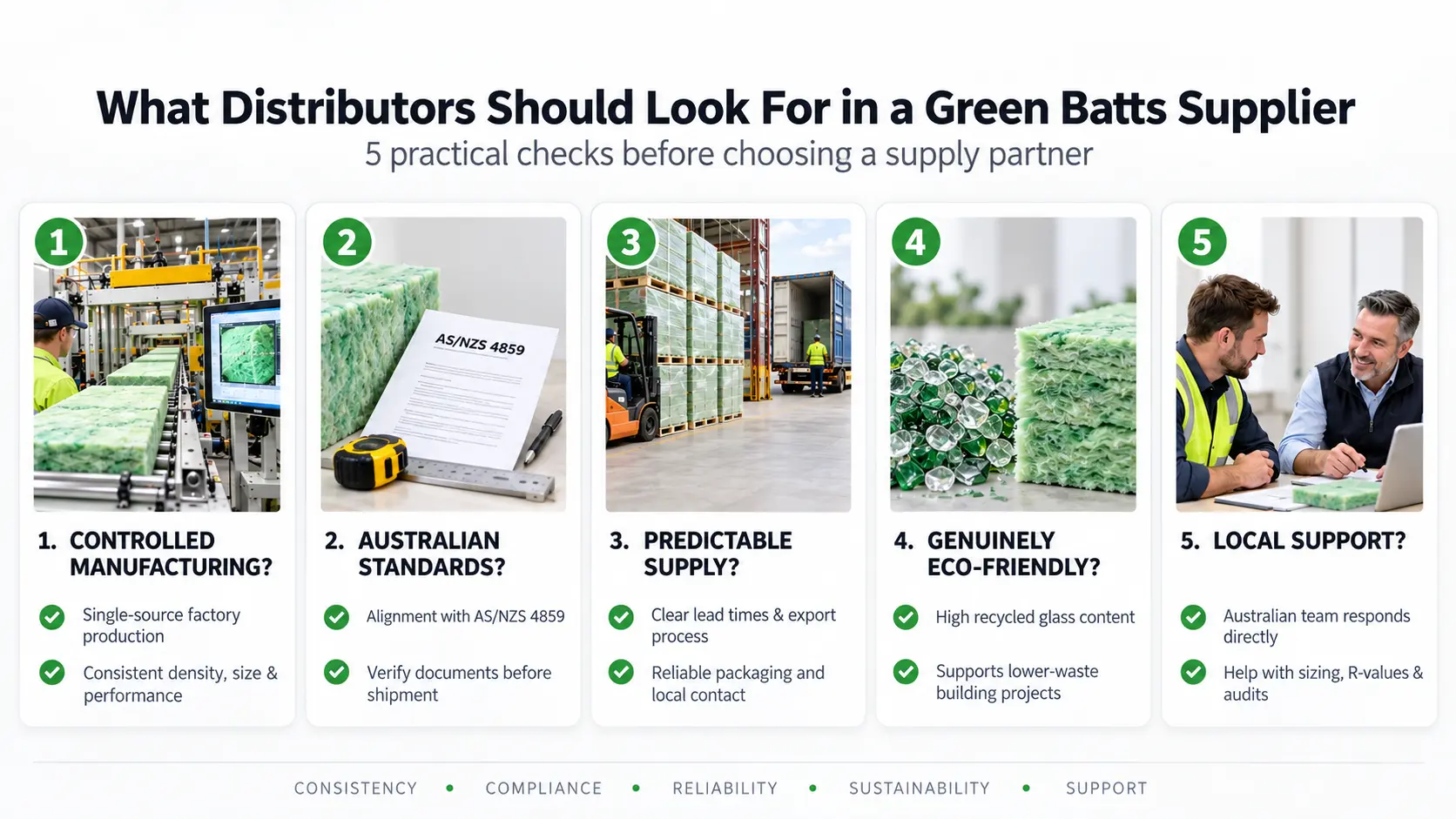
- Is the Product Manufactured Under Controlled Conditions?
Batch-to-batch consistency comes down to how the product is made. A green batts supplier that produces its own material under controlled factory conditions — rather than aggregating stock from multiple third-party mills — is generally better positioned to deliver consistent density, sizing, and performance across every shipment. This matters directly to distributors, because inconsistent batts translate into installer complaints and callbacks that land back on the dealer, not the factory.
- Does It Meet Australian Standards?
Compliance isn’t optional. Builders need insulation manufactured to meet the performance, safety, and handling expectations required for Australian applications, including alignment with AS/NZS 4859 for thermal insulation materials. Distributors should confirm this upfront, not after a batch has already landed in a warehouse.
- Is the Supply Chain Actually Predictable?
A supplier’s export schedule, documentation process, and logistics coordination all affect how confidently a distributor can plan stock levels. Ask about lead times, how shipments are packaged, and whether there’s a local point of contact who understands the Australian market — not just an overseas sales inbox.
- Is the Material Genuinely Eco-Friendly?
Sustainability credentials increasingly influence builder and homeowner decisions. Glasswool batts made from a high proportion of recycled glass content support sustainable building projects and reduce waste across the supply chain, which is a meaningful point of difference when distributors are pitching to environmentally conscious builders.
- Is There Local Support When Issues Come Up?
Even with strong manufacturing, questions come up — sizing for a specific project, R-value selection for a climate zone, or documentation for a compliance audit. A supplier with an Australian-based team that can respond directly, rather than routing every query through an overseas office, makes day-to-day distribution significantly easier.