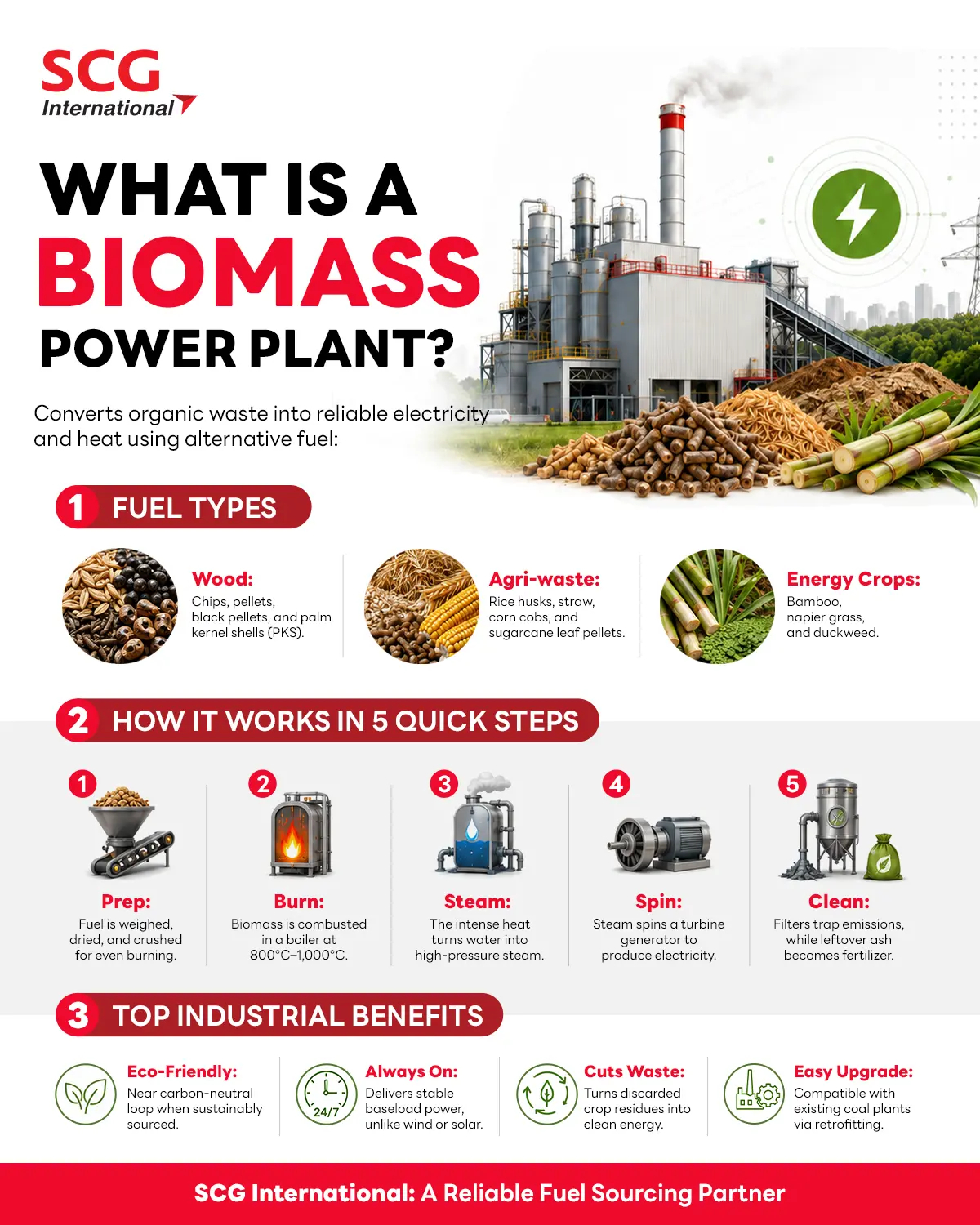
For procurement and operations teams asking how does a biomass power plant work, the process can be broken down into five clear stages that move fuel from delivery to grid-ready electricity.
1. Fuel Reception and Preparation
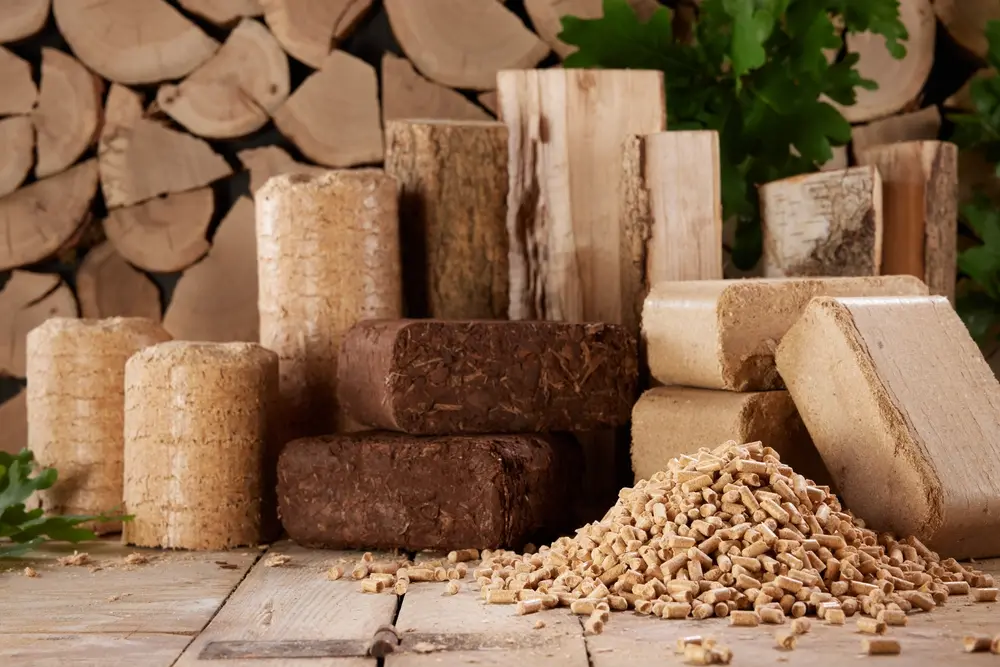
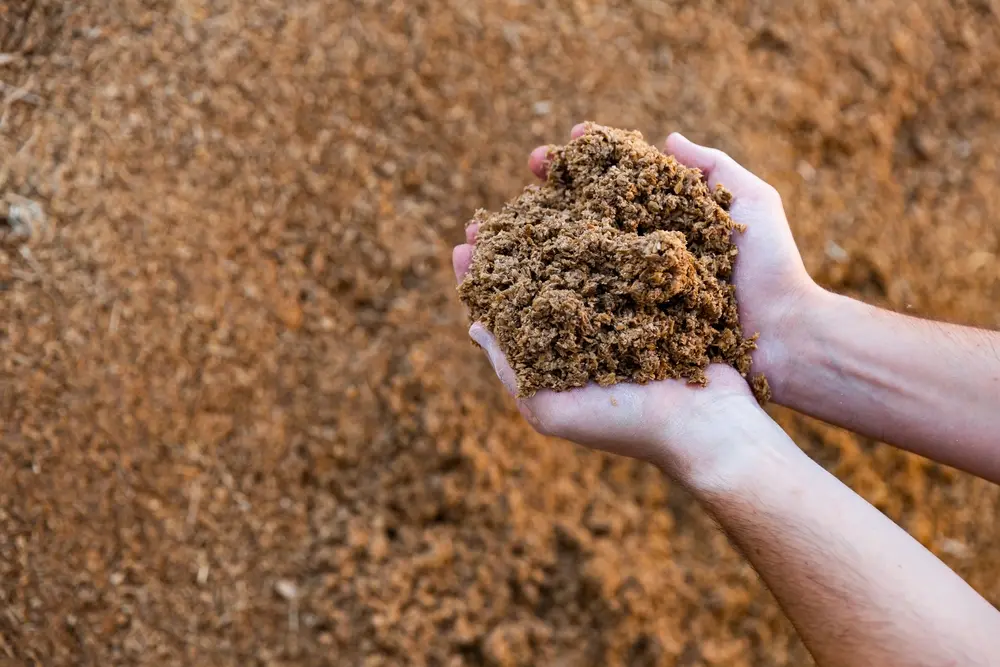
Biomass arrives at the plant by truck, rail, or vessel, where it is weighed, sampled for quality, and stored in covered facilities to control moisture. The fuel is then processed into uniform sizes through chipping, shredding, drying, or pelletizing, depending on the boiler design. Consistent particle size and moisture content directly affect combustion efficiency.
2. Combustion or Conversion
Prepared biomass is fed into a boiler and burned at high temperatures, typically between 800°C and 1,000°C. Alternative conversion methods include gasification, which converts biomass into a combustible gas, and anaerobic digestion, which produces biogas from wet organic feedstocks. The choice depends on fuel type and plant configuration.
3. Steam Generation
The heat released during combustion is transferred to water flowing through boiler tubes, converting it into high-pressure, high-temperature steam. This is the same fundamental thermodynamic cycle used in coal and gas-fired plants, which is why many existing boilers can be retrofitted to run on biomass for electricity generation with proper tuning.
4. Electricity Generation
The high-pressure steam is directed onto the blades of a steam turbine, causing it to spin at high speed. The turbine is mechanically connected to a generator, which converts that rotational energy into electrical energy. The electricity is then stepped up through transformers and exported to the grid or used directly for on-site industrial processes.
5. Emissions Control and Ash Handling
Flue gases pass through filters, electrostatic precipitators, and scrubbers to capture particulates and remove pollutants before release. Bottom ash and fly ash are collected and often repurposed as fertilizer, soil amendment, or as an additive in cement and construction materials, closing the loop on the circular use of biomass byproducts.