Key takeaways
Table of Contents
Choosing the right copper scrap supplier comes down to a few checks around verified source, consistent grade, documentation, pricing basis, and export capability, rather than the quote alone. This guide walks through what matters, whether you run a refinery, a recycling operation, or a plant that uses recycled metal as an input. For manufacturers and refiners seeking high-purity recycled copper feedstock, partnering with a reliable Milberry copper scrap supplier in Asia is often the most effective way to secure consistent quality and supply. For a smelter, refiner, or secondary producer, the scrap you buy is your feedstock, and the supplier behind it decides how your melt behaves. A wrong grade call or an inconsistent source shows up quickly as lower metal yield, off-spec output, and reject rates that cost far more than any savings on the purchase price.
Why Your Copper Scrap Supplier Choice Matters More Than the Per-Ton Price
Price per ton is the easiest number to compare and the easiest to be misled by. A one-percent difference in copper recovery can represent substantial cost implications when processing thousands of tonnes annually. Scrap is a production feedstock, so the grade you receive feeds straight into your yield and recovery. A load that looks clean on the contract but arrives contaminated, with moisture, or with the wrong grade raises your refining costs and your reject rate at once. A low price does not help if a third of the cargo is unusable.
Pricing itself rewards the same caution. Copper scrap trades against the LME, the London Metal Exchange benchmark that underpins most copper pricing, so a low headline figure can hide a larger discount to the LME once you add freight, duties, and Incoterms. Then there is supply. A single unverified source leaves your production exposed, so a supplier who delivers steady volume you can plan around is worth more than a cheap one-off cargo. The cheapest quote and the lowest total landed cost are rarely from the same copper scrap supplier, and the reliable one is almost always the better buy.
Know Your Copper Scrap Grades
You cannot vet a supplier against a specification you have not defined, so start with the grade. Copper is one of several non-ferrous metals traded as scrap, and even within copper, grades vary widely in purity and price.
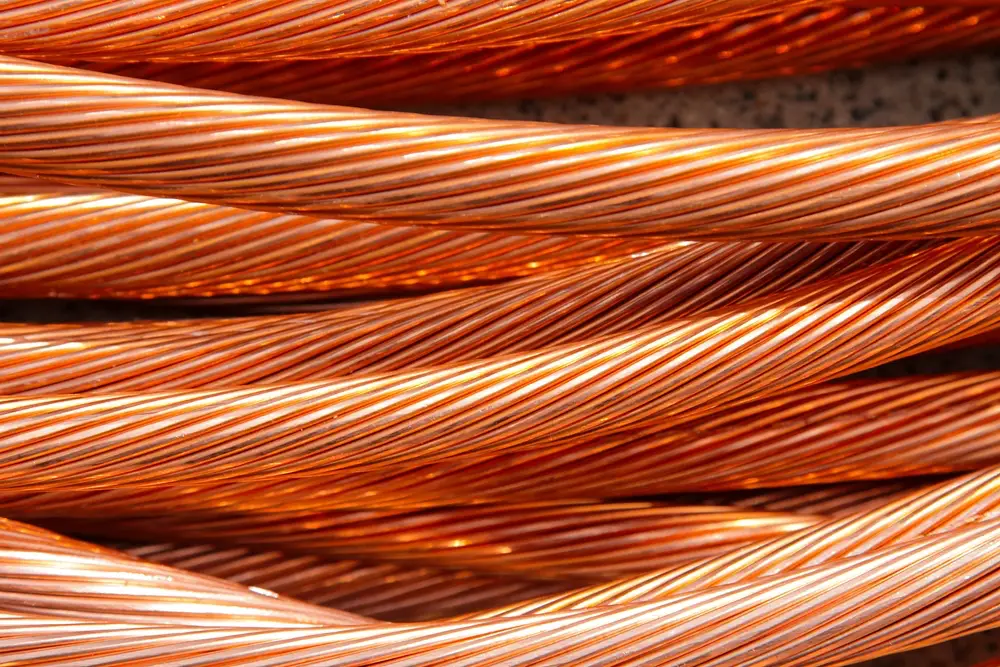
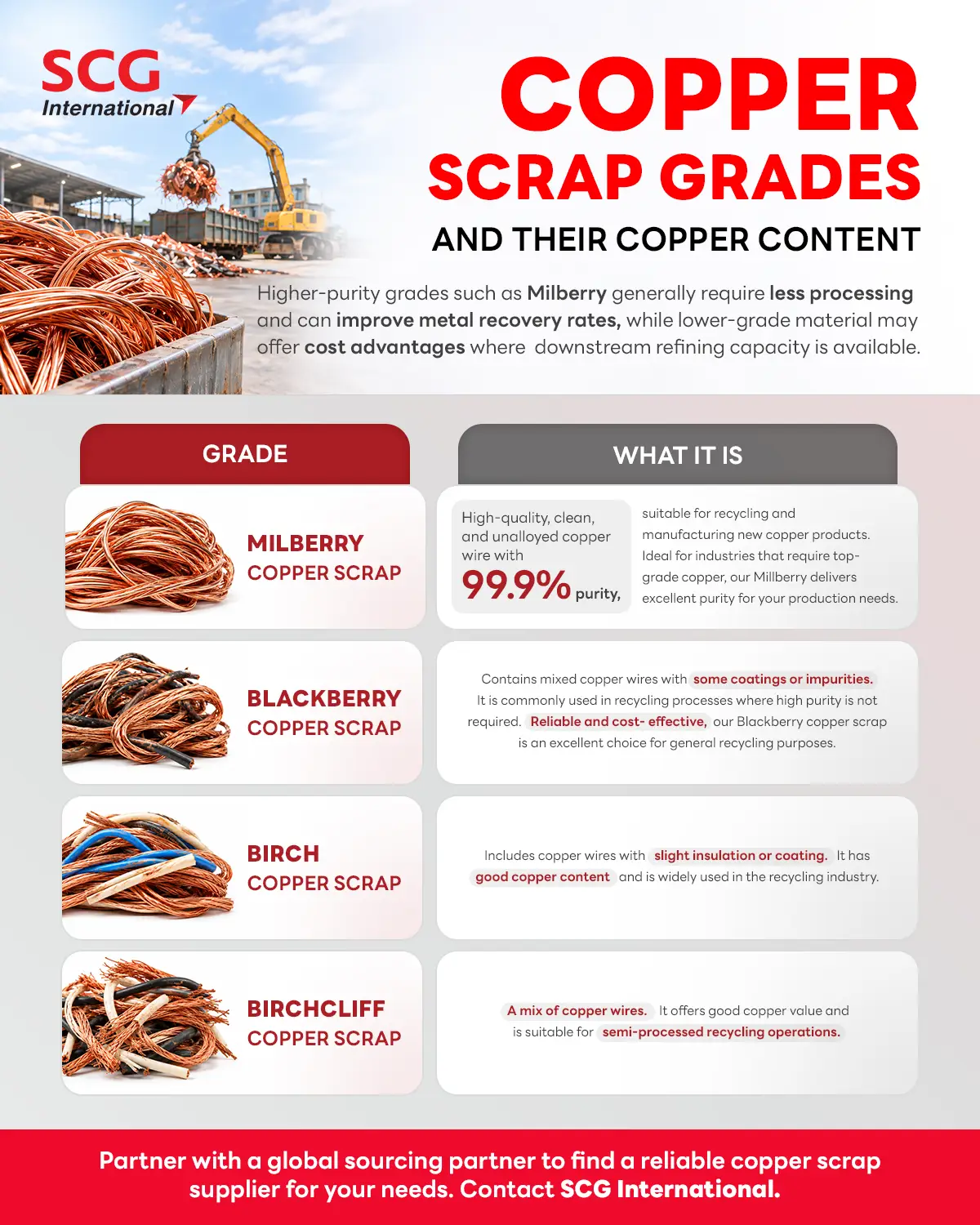
Milberry is the grade buyers ask about most. It is the trade name for No. 1 bare bright copper wire scrap, typically around 99.9% copper, clean, uncoated, and unalloyed, no thinner than 16-gauge, and classified under ISRI (now ReMA, the Recycled Materials Association) non-ferrous specifications. Below it sit mixed and coated grades that cost less and suit recyclers who do not need top purity. Matching the grade to your process protects your yield and budget.
What to Check Before Signing With a Copper Scrap Supplier
Before signing with a copper scrap supplier, verify source traceability, grade consistency, assay certificates, inspection procedures, LME-linked pricing methodology, export compliance, and the supplier’s ability to maintain consistent monthly volumes.
These are the same supplier qualification criteria used by sourcing partners such as SCG International when evaluating recycling companies and exporters. Procurement teams typically evaluate suppliers across six areas before signing a long-term supply agreement.
– Verified source and traceability. Ask whether the counterparty is a yard, a processor, or a trader, and get a documented origin. A verified source lowers the risk of misdeclared or contaminated material arriving against a clean-grade contract.
– Grade consistency. Ask how the supplier holds the same specification from shipment to shipment, and request a trial batch before you commit to a bigger volume.
– Quality documentation. Look for electrolytic assay or analysis certificates, moisture and contamination allowances stated as a percentage, and clear packing details.
– Independent inspection. Third-party inspection at the load or destination port, as specified in the contract, protects both parties when a grade dispute arises.
– Pricing basis. Copper scrap is priced as a discount to the LME cash or three-month price. Confirm the discount structure, the pricing date, Incoterms, freight, duties, and any inspection costs, so you compare total landed cost rather than a bare number.
– Export capability and compliance. A credible copper scrap exporter can show export licensing, port and shipping arrangements, and compliance with transboundary movement rules, such as Basel Convention requirements and destination-country import controls.
– Volume and continuity. Confirm whether the supplier can hold a repeatable monthly tonnage through market swings, or whether they only fill one spot cargo.
A few red flags to watch for: refusal of third-party inspection, an origin they will not document, “direct supplier” claims that turn out to be broker chains, and quotes sitting far off the prevailing LME discount.
Sourcing Copper Scrap in Asia
Asia sits at the center of secondary copper demand, with a dense concentration of smelters, refiners, and secondary producers that run on scrap feedstock. That makes it a logical place to source, and it also makes competition for clean grades real. If you are evaluating a Milberry copper scrap supplier in Asia, factor in that import regulations vary widely from one country to the next. Permitted scrap categories, purity thresholds, and documentation requirements change by destination and get revised over time, so confirm the current rules for your receiving market before you sign a contract.
Where SCG International Fits as a Recycled Metal Sourcing and Supply Partner
SCG International serves as a recycled metal sourcing and supply partner, specializing in secondary non-ferrous metal scrap and connecting buyers to verified suppliers with consistent global supply. Its compliance and quality teams inspect every shipment against internationally recognized standards, and supply runs through a global network of verified recycling companies and exporters. For buyers who need steady volume, the company offers long-term supply agreements rather than one-off cargos.
When production depends on consistent feedstock, supplier reliability matters as much as price. SCG International helps manufacturers, recyclers, and refiners source traceable, specification-matched copper scrap from trusted global suppliers. Whether you need Milberry, Blackberry, Birch, or Birchcliff scrap, connect with SCG International to explore tailored sourcing solutions and secure dependable long-term supply.
Contact SCG International to discuss your copper and non-ferrous scrap specifications and supply needs, and to talk through verified sources and consistent feedstock supply.
References :