Search

Green Batts Supplier in Melbourne: What Builders and Distributors Should Look For

Share this post :

Facebook
LinkedIn
SCG green batts supplier in Melbourne

Key takeaways

Melbourne's climate and building mix

make thermal and acoustic performance genuine selling points for house insulation batts, not just a compliance formality.

A green batts supplier that manufactures

under controlled factory conditions is better positioned to deliver consistent density, sizing, and performance across shipments.

Glasswool batts offer a practical combination of thermal performance

acoustic benefit, fire safety, and durability, which supports how distributors position the product to builders.

Acoustic performance is a growing purchase driver in Melbourne

where townhouses, apartments, and multi-unit developments make up a larger share of the build mix — making acoustic-rated batts a relevant addition to a distributor's range.

Working directly with a manufacturer-backed insulation supplier

such as SCG Green Batts, gives Melbourne distributors more predictable supply, local support, and room to scale for larger developments.

Melbourne’s housing pipeline isn’t slowing down, and every new build, renovation, and retrofit needs dependable insulation supply. For dealers and distributors across Victoria, finding a consistent green batts supplier in Melbourne is quickly becoming more about reliability – the product actually meet what builders and homeowners expect on site.

This guide breaks down what distributors and dealers should be evaluating when choosing an insulation supplier, why glasswool batts remain the material of choice for most Australian residential builds.

Why Melbourne's Insulation Market Needs a Reliable Green Batts Supplier

Melbourne’s climate swings between cold, damp winters and hot, dry summers — conditions that make thermal performance a genuine selling point rather than a compliance checkbox. Builders working on new estates in the outer suburbs, renovators upgrading older weatherboard homes closer to the city, and multi-unit developers all rely on distributors to have house insulation batts in stock, in the right sizes, and ready to move.

The problem many Melbourne distributors run into isn’t demand — it’s supply consistency. Import delays, inconsistent batch quality, and unclear documentation are common frustrations when sourcing insulation from overseas. This creates real costs: delayed builds, frustrated tradespeople, and damaged relationships with the builders a distributor depends on.

This is where the choice of green batts supplier matters more than it might first appear. A supplier with direct manufacturing control, rather than one sourcing from multiple third-party mills, is in a far better position to keep quality and delivery predictable.

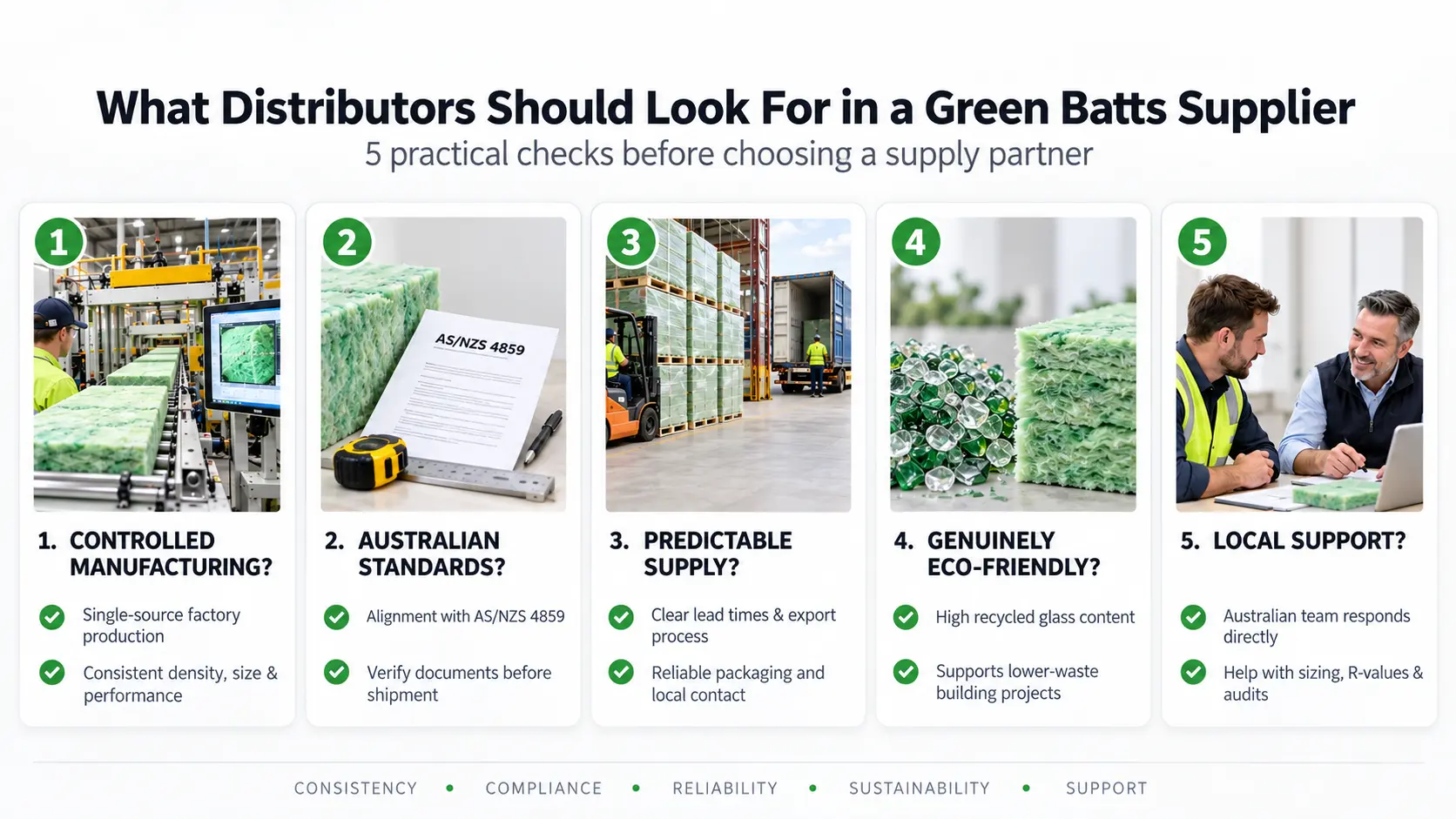
What Distributors Should Look For in a Green Batts Supplier

Not every insulation supplier operates the same way. Before committing to a new supply relationship, Melbourne-based distributors and dealers should be asking a few practical questions.

  1. Is the Product Manufactured Under Controlled Conditions?

Batch-to-batch consistency comes down to how the product is made. A green batts supplier that produces its own material under controlled factory conditions — rather than aggregating stock from multiple third-party mills — is generally better positioned to deliver consistent density, sizing, and performance across every shipment. This matters directly to distributors, because inconsistent batts translate into installer complaints and callbacks that land back on the dealer, not the factory.

  1. Does It Meet Australian Standards?

Compliance isn’t optional. Builders need insulation manufactured to meet the performance, safety, and handling expectations required for Australian applications, including alignment with AS/NZS 4859 for thermal insulation materials. Distributors should confirm this upfront, not after a batch has already landed in a warehouse.

  1. Is the Supply Chain Actually Predictable?

A supplier’s export schedule, documentation process, and logistics coordination all affect how confidently a distributor can plan stock levels. Ask about lead times, how shipments are packaged, and whether there’s a local point of contact who understands the Australian market — not just an overseas sales inbox.

  1. Is the Material Genuinely Eco-Friendly?

Sustainability credentials increasingly influence builder and homeowner decisions. Glasswool batts made from a high proportion of recycled glass content support sustainable building projects and reduce waste across the supply chain, which is a meaningful point of difference when distributors are pitching to environmentally conscious builders.

  1. Is There Local Support When Issues Come Up?

Even with strong manufacturing, questions come up — sizing for a specific project, R-value selection for a climate zone, or documentation for a compliance audit. A supplier with an Australian-based team that can respond directly, rather than routing every query through an overseas office, makes day-to-day distribution significantly easier.
Glasswool Batts 101: Why This Material Still Wins on Melbourne Sites

Glasswool remains one of the most widely specified insulation materials in Australian residential construction, and for good reason. As a house insulation batts option, glasswool offers a practical balance of thermal performance, acoustic benefit, and ease of handling on site.

– Thermal performance: Glasswool batts help reduce heat transfer through ceilings and walls, supporting more stable indoor temperatures across Melbourne’s seasonal extremes. This is particularly relevant for reducing reliance on heating and cooling systems in both new builds and retrofits of older housing stock.

– Acoustic comfort: In townhouses, apartments, and multi-unit developments — a growing share of Melbourne’s build mix — glasswool’s structure supports sound absorption, helping reduce noise transfer between internal spaces and from external sources.

– Fire safety: Glasswool insulation is non-combustible, which is a key consideration for builders and developers working under increasingly strict fire safety expectations.

– Durability: Quality glasswool batts are engineered to resist settling, vibration, and shakedown over time, along with resistance to mold, fungi, and pests, so the thermal performance installed on day one holds up over the life of the building.

For distributors, understanding these fundamentals matters because it shapes how the product is positioned to builders — not just as “insulation,” but as a material that addresses thermal, acoustic, and fire performance in one product category.

SCG Green Batts: A Manufacturer-Backed Option for Melbourne Distributors

Among the options available to Melbourne-based dealers, SCG Green Batts is worth a closer look, particularly for distributors who want a direct line to the factory.

SCG Green Batts are made from sustainable recycled glass and produced under SCG’s controlled manufacturing in Thailand, with the goal of delivering consistent quality and performance across shipments — the same underlying issue that causes friction for distributors sourcing from fragmented supply chains. Because all product comes from a single SCG factory line, distributors can get more uniform and dependable quality

Through SCG International’s Australia office, distributors also get local coordination — predictable shipments, clearer documentation, and SCG International Team support. For a Melbourne dealer trying to plan stock levels three or six months out, that kind of visibility into the supply chain is genuinely useful.

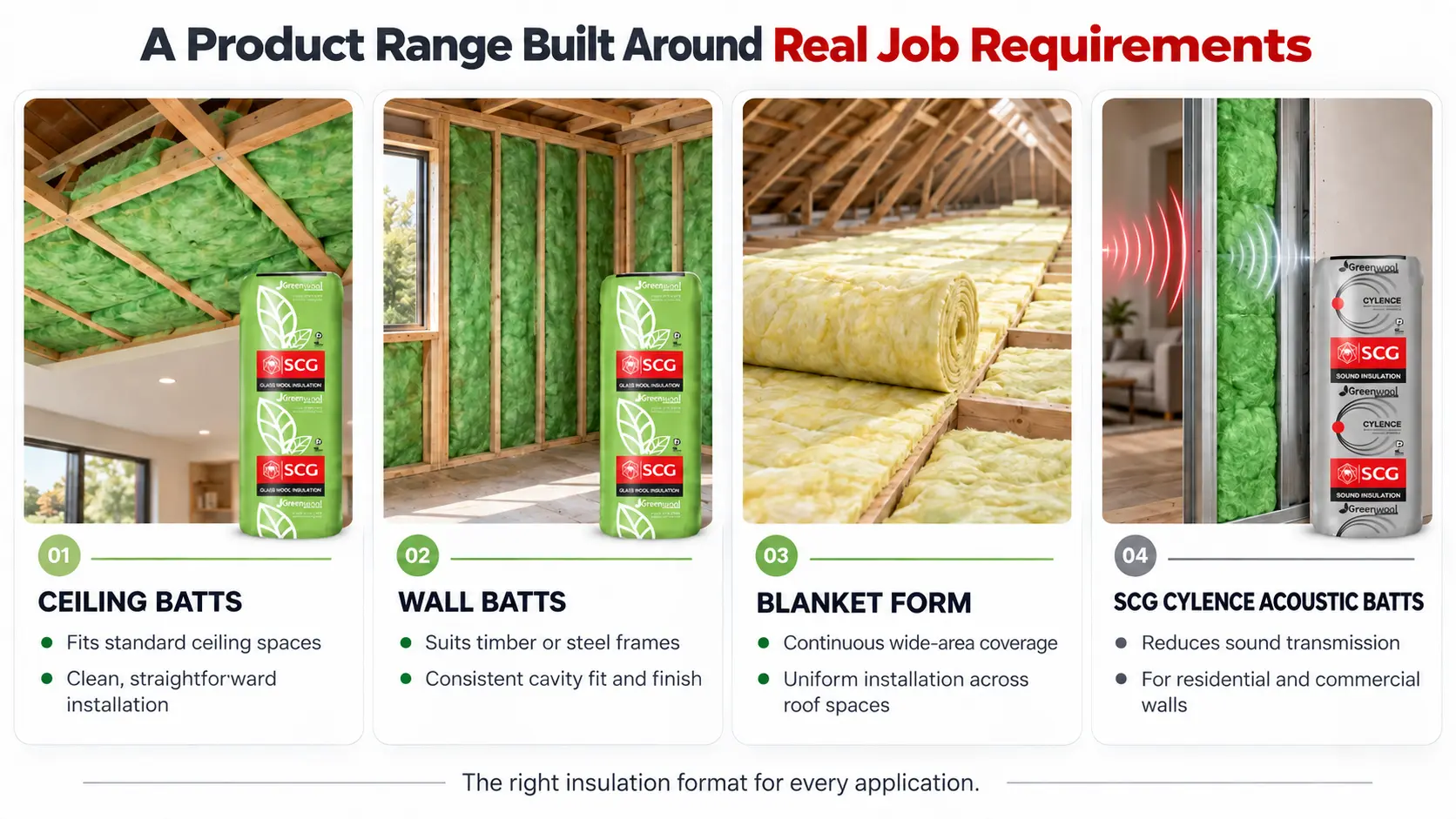
A Product Range Built Around Real Job Requirements

A dependable insulation supplier needs a range that matches what’s actually being built, not a one-size-fits-all product. The SCG Green Batts range covers the formats Melbourne builders regularly ask for:

– Ceiling Batts — designed to fit standard ceiling spaces for clean placement and straightforward installation.

– Wall Batts — sized to fit naturally into timber or steel-frame wall cavities for a consistent finish.

– Blanket form — a continuous-layer option suited to wide roof-space coverage or larger sections needing uniform installation.

– SCG Cylence Acoustic Batts — a higher-density glasswool option engineered specifically to reduce sound transmission through walls, suited to both residential and commercial projects where noise control matters.

For distributors, having ceiling, wall, blanket, and acoustic options from one green batts supplier simplifies procurement — fewer supplier relationships to manage, and more consistent quality across the entire product line a dealer offers to builders.

Fire Safety, Compliance, and Indoor Environment Considerations

Builders and developers are under growing pressure to demonstrate that the materials they specify meet both safety and environmental expectations. Glasswool batts, including SCG Green Batts, are produced as non-combustible insulation products, with the glasswool structure also offering resistance to flame spread — a relevant factor for both residential and light commercial projects.

On the indoor environment side, materials made from recycled glass and engineered to resist mold, fungi, and pests support the broader push toward healthier indoor environments, which is increasingly part of the conversation with environmentally conscious builders and homeowners across Melbourne.

Having clear, accurate answers about compliance and material composition on hand is often what closes the conversation.

What Distributors Gain from Partnering with a Direct Insulation Supplier

For a Melbourne distributor or dealer, the case for working with a manufacturer-backed green batts supplier comes down to a few practical business outcomes:

– Fewer surprises in quality control, since product comes from a single, controlled manufacturing line.

– More predictable lead times, supported by aligned manufacturing and export schedules.

– Local responsiveness, through an Australia-based team that understands local project requirements and can support documentation, packaging, and logistics questions directly.

– Scalability for larger orders, with manufacturing capacity able to support high-volume, recurring supply for large-scale developments and retail networks.

Distributors and dealers in Melbourne looking for a consistent, manufacturer-backed insulation supply can learn more about the full SCG Green Batts range, specifications, and supply options directly from SCG International’s Australia team.

Frequently Asked Questions (FAQ)​ about Green Batts Supplier in Melbourne

Confirm how the product is manufactured, whether it meets AS/NZS 4859 requirements, what lead times look like, and whether local support is available for documentation and logistics questions.

Yes. Glasswool batts are commonly used in new residential construction as well as retrofits of older homes, since they can be fitted into existing wall cavities and ceiling spaces to improve energy efficiency.

SCG Green Batts are made from sustainable recycled glass manufactured from SCG, the leading building materials manufacturer in Thailand which supports consistent quality across shipments, backed by local coordination through SCG International's Australia office.

Yes. Insulation products used in Australian residential and light commercial construction need to meet relevant performance, safety, and handling expectations, including alignment with AS/NZS 4859 for thermal insulation materials.

Yes, provided the supplier has scalable manufacturing capacity. Manufacturer-backed suppliers with aligned export schedules are typically better equipped to support high-volume, recurring orders for large-scale developments.

Related Posts

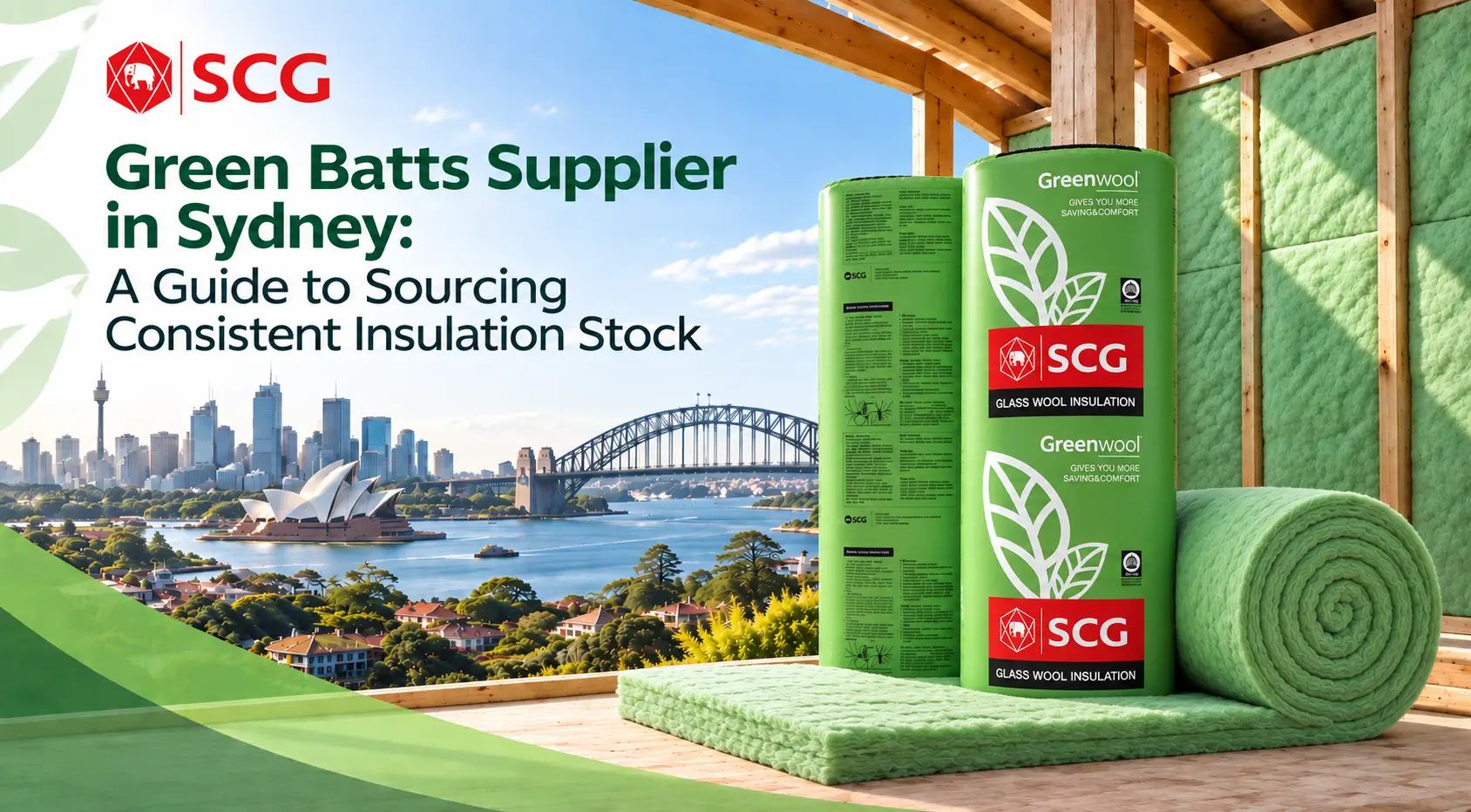
SCG Green Batts insulation products for a reliable green batts supplier in Sydney, Australia.

Green Batts Supplier in Sydney: A Guide to Sourcing Consistent Insulation Stock

Sourcing insulation should not slow down a build, delay a retail order, or leave your team chasing uncertain stock. If you need a dependable green batts supplier in Sydney, the goal is more than finding a product at the right price. You need consistent Glasswool batts, clear product information, responsive communication, and supply planning that matches real project demand.

SCG agricultural biomass fuel

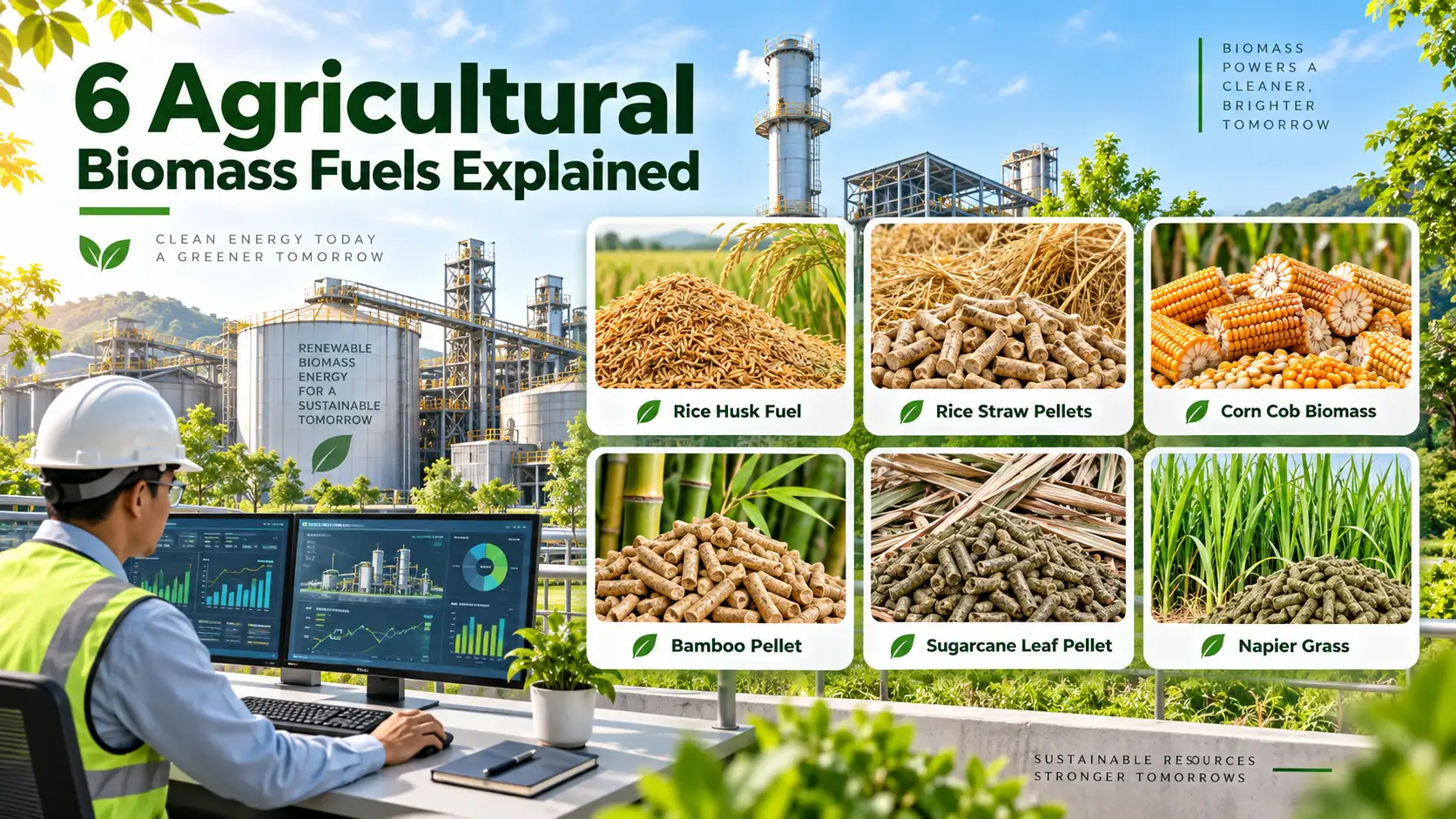
6 Agricultural Biomass Fuels Explained: From Field Residue to Factory Heat

This guide breaks down six of the most widely used agricultural biomass fuels — rice husk, rice straw pellets, corn cob, bamboo pellets, sugarcane leaf pellets, and Napier grass — and explains which boiler types and handling systems suit each one. If you’re evaluating fuel switching or diversifying your current supply, this is the practical reference to work from before you talk specifications with a supplier.

SCG Global procurement services

How Global Procurement Solutions Support B2B Buyers

Global supply chains have grown more complex. Buyers now manage multi-country sourcing, shifting tariffs, compliance requirements, and lead-time volatility at the same time, often across several product categories at once. Without a structured approach, this complexity tends to surface as inconsistent quality,

I’m Here To Assist You

Contact us today

Please read Terms and Conditions, Privacy Notice, Cookies Notice, and I
I acknowledge that I can withdraw the given consent at any time, and I have understood the terms and conditions and how my personal data is processed.