Search

A Green Product Is Not Enough: What U.S. Buyers Should Expect from a Sustainable Materials Supplier

Share this post :

Facebook
LinkedIn
green building materials supplier

Key takeaways

"Green" isn't a differentiator anymore — verified paperwork is.

A CO₂ claim without a third-party Type III EPD can't enter an LCA tool, a CALGreen check, or a Buy Clean report.

Four West Coast states, four different bars.

California is strictest (AB 262, SB 596, CALGreen 5.409); Washington gates bids on EPD coverage; Oregon is ramping via ODOT; Hawaii's import dependence makes supply reliability a compliance issue.

Demand seven proofs:

verified EPD, ASTM C595/Type IL compliance, manufacturing control, batch consistency, port logistics, complete submittal package, transparent landed cost. Missing one means you're buying a claim, not a material.

Manufacturer control enables the rest.

Only a kiln owner can tune clinker factor to a GWP target, issue facility-specific EPD data, and fix deviations at source. Traders can't.

SCG's case rests on a shipping record, not a promise.

Up to 20% lower CO₂, EPD under ISO 14025, top-10 global dry-bulk network — and Hawaiian Cement mill certificates naming SCG Bangkok as source mill for Type IL cement.

A green product alone does not make a supplier credible. U.S. buyers in California, Oregon, Washington and Hawaii should expect seven things from a green building materials supplier : a third-party verified Environmental Product Declaration (EPD), compliance with ASTM or AASHTO performance standards, direct manufacturing control, documented batch consistency, reliable ocean-freight and port logistics, a complete submittal package for permitting and bidding, and transparent commercial terms. Any supplier missing one of these seven items is selling a claim, not a material.

The "green label" problem in U.S. construction procurement

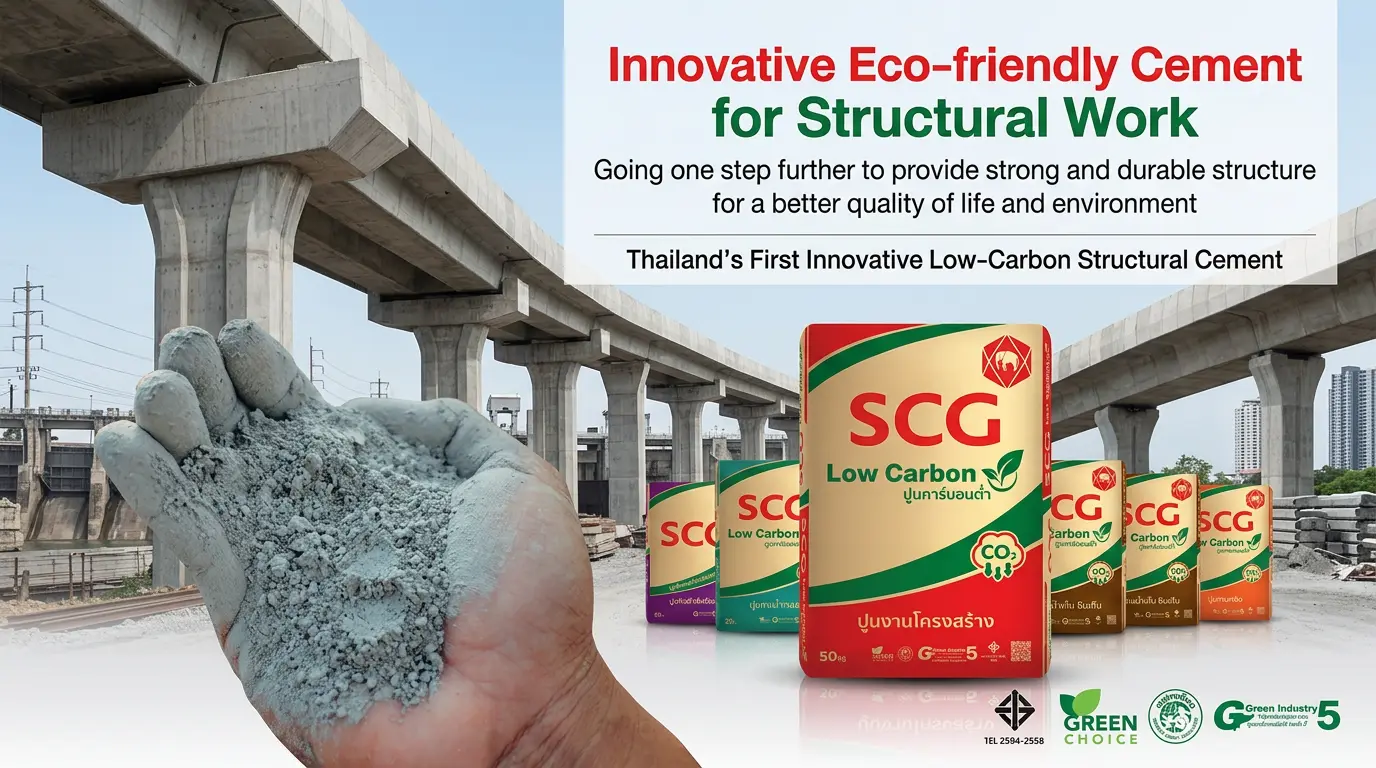
SCG Low carbon cement for Structural work

Ten years ago, “eco-friendly” was a differentiator. In 2026 it is table stakes — and increasingly unhelpful on its own. Specifiers on the West Coast are no longer asking whether a material is green. They are asking a harder question: can you prove it in a format my permit reviewer, my LEED consultant and my public-agency bid package will accept?

That shift changes what buyers should look for in a construction material supplier. A drum of low-carbon cement with a leaf on the bag is worthless to a Los Angeles general contractor if there is no Type III EPD attached. A 20% CO₂ reduction claim is worthless to a Honolulu ready-mix producer if the shipment arrives three weeks late and off-spec.

Below is the checklist buyers should apply — and why each item matters more in California, Oregon, Washington and Hawaii than almost anywhere else in the United States.

Why the West Coast raises the bar for sustainable material sourcing

Four states have built the strictest embodied-carbon procurement environment in North America. Understanding these rules is the difference between smooth low carbon product sourcing and a rejected submittal. On the West Coast, four states have built the strictest embodied-carbon procurement environment in North America — and each one raises a slightly different bar for your supplier.

California is the toughest. The Buy Clean California Act (AB 262) requires facility-specific Type III EPDs for eligible materials on state public works, measured against maximum Global Warming Potential (GWP) limits set by DGS. Senate Bill 596 goes further, directing CARB to cut the GHG intensity of cement used in California by 40% from 2019 levels by 2035 and reach net-zero by 2045. On top of that, CALGreen Section 5.409 has required embodied-carbon compliance for projects of 100,000 sq ft or more since July 1, 2024 — either a whole-building LCA demonstrating a 10% GWP reduction, or a prescriptive path where each listed product carries a Type III EPD and stays under a stated maximum GWP. The practical implication is simple: your supplier must hand you a verified EPD with a defensible GWP figure, not a marketing PDF.

Washington shifts the emphasis from carbon performance to paperwork. Its Buy Clean and Buy Fair law requires state agencies and public universities to collect and publish EPDs covering structural concrete, structural steel, reinforcing steel and engineered wood on qualifying capital projects — typically buildings over 50,000 sq ft, with EPDs for 90% of covered material cost. Here, documentation completeness often decides bid eligibility before price is even discussed.

Oregon is earlier in the curve but moving the same direction. The state’s Buy Clean direction tasks ODOT with building an embodied-carbon program, Oregon runs its own concrete EPD program, and it participates in the multi-state Federal-State Buy Clean Partnership. Expect EPD requests to become standard on Portland-area public and institutional work.

Hawaii joined that same Federal-State Buy Clean Partnership alongside California, Oregon and Washington — but the islands face a distinct constraint. Because Hawaii imports the overwhelming majority of its cementitious materials, supply reliability becomes a compliance issue in itself. Your supplier needs to be a proven ocean-freight exporter.

The pattern across all four states is clear: on the West Coast, sustainable material sourcing is a documentation discipline as much as an environmental one.

The 7 proofs buyers should demand from a green building materials supplier

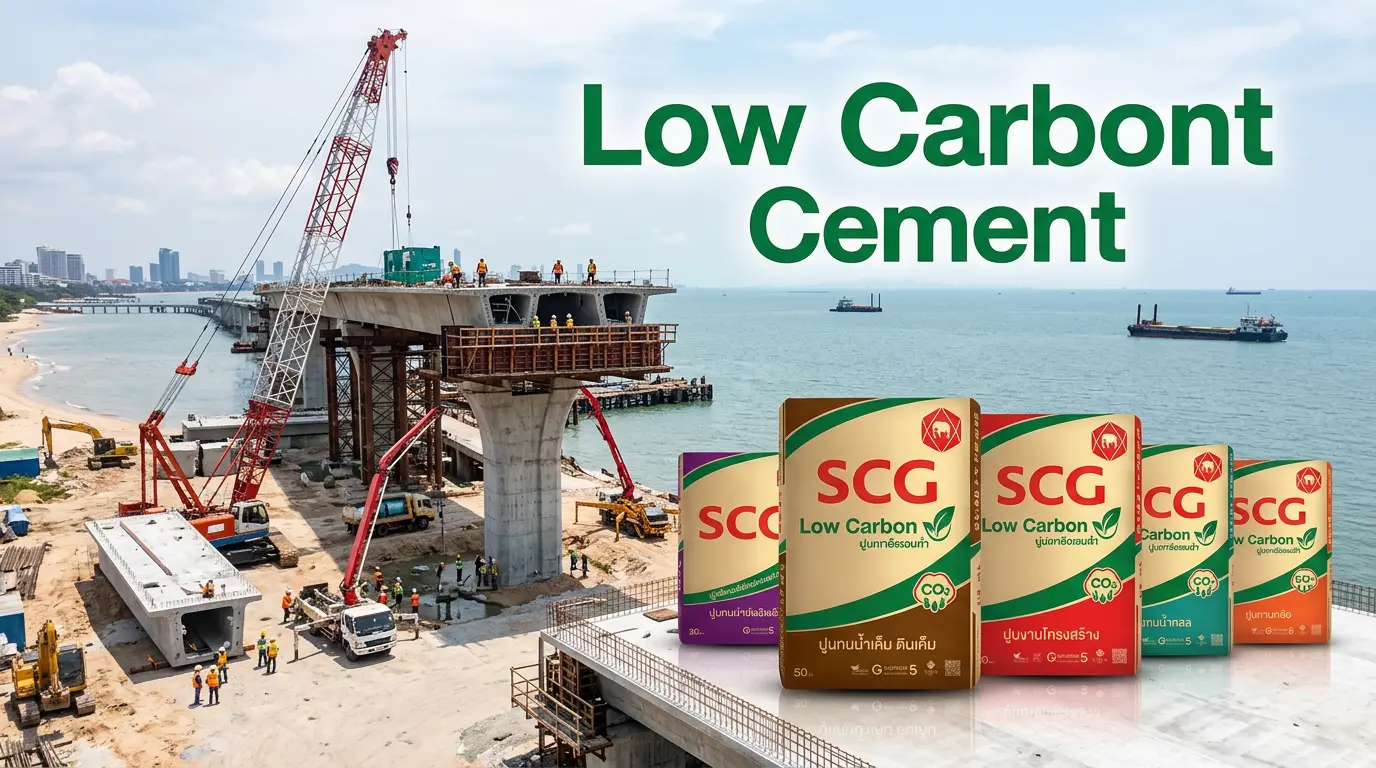
SCG Low carbon cement for Bridge Construction

Proof 1 — A third-party verified EPD, not a self-declared claim

An Environmental Product Declaration prepared under ISO 14025, and consistent with EN 15804 and ISO 21930, is the only carbon claim that most U.S. specifiers can actually use. A self-published “carbon reduction” number cannot be entered into a whole-building LCA tool, cannot be checked against a CALGreen Table 5.409.3 GWP limit, and cannot be filed in a Washington Buy Clean report.

SCG Low Carbon Structural Cement carries an EPD under ISO 14025 and meets ASTM, EN 15804 and ISO 21930 standards — the exact documentation set West Coast reviewers expect. See the full standards and specification details on the SCG Low Carbon Cement page.

Proof 2 — Performance compliance, proven to U.S. standards

Sustainability never overrides structural performance. In practice this means the cement must be specifiable under the standards your engineer already writes into the spec — principally ASTM C595 / AASHTO M 240 Type IL for portland-limestone cement, the workhorse low-carbon cement now on most state DOT approved-product lists.

This is where a genuine low carbon cement supplier separates itself from a broker. Hawaiian Cement’s published mill certificates for ASTM C595/C595M Type IL portland-limestone cement identify SCG, Thailand as the source mill — a documented, verifiable record of SCG cement already performing inside the U.S. market under American standards. That is not a promise of future capability; it is a shipping history.

Proof 3 — Manufacturing control, not trading margin

There is a meaningful difference between a trader who resells whatever is available and a manufacturer that controls the kiln. Only a manufacturer can:

– change the clinker factor and formulation to hit a specific GWP target

– issue facility-specific EPD data rather than industry-average figures

– correct a quality deviation at source instead of passing it downstream

SCG Low Carbon Cement reduces CO₂ emissions by up to 20% versus general structural cement through an advanced formulation with a lower clinker factor and optimized raw material usage. That figure exists because SCG manufactures the product — an important distinction when evaluating any green building materials supplier.

Proof 4 — Documented batch-to-batch consistency

Ready-mix producers in Seattle, Tacoma and Portland live and die by mix predictability. A cement that varies in fineness, setting time or early strength forces mix redesign, wastes admixture and risks slab failures.

Ask for: mill test certificates, rolling statistical data on compressive strength and fineness. A good construction material supplier can provides these data.

Proof 5 — Logistics that actually reach your port

This is the item buyers most often underestimate — and the one that most often breaks a project.

For West Coast and island projects, ask specifically about: Incoterms offered, container versus bulk capability, typical transit time to Long Beach, Oakland, Seattle, Portland and Honolulu, documentation handling (bill of lading, certificate of origin, customs paperwork), and buffer inventory strategy during peak season.

SCG International operates as one of the top 10 global distributors in dry bulk commodities, with an established global network and decades of export experience. For buyers in Hawaii in particular — where every ton of cement arrives by sea — that logistics depth is not a nice-to-have. SCG maintains a dedicated Low Carbon Cement in Hawaii capability precisely because island supply requires its own planning.

Proof 6 — A complete submittal package

Green materials fail on paperwork more often than on performance. Before you place a purchase order, confirm your supplier can deliver, in one bundle:

  1. Type III EPD (current, in-scope PCR)
  2. ASTM / AASHTO conformance certificate
  3. Mill test certificate template
  4. Safety data sheet (SDS) in U.S. format
  5. Green certification documentation (for SCG: SCG Green Choice)
  6. Technical data sheet with mix design guidance
  7. Documentation supporting LEED.

If assembling this takes a supplier several weeks, that delay will repeat on every project.

Proof 7 — Transparent commercial terms

Sustainable does not have to mean expensive, and buyers should refuse that trade-off. SCG’s optimized formulation is designed to supporting environmentally responsible construction — helping projects hit sustainability targets without inflating the budget.

Ask for: landed cost by port, price validity windows, volume tiering, and whether the quoted CO₂ reduction is verified or estimated.
Applying the checklist by state and city

California — Los Angeles, San Francisco, San Diego, Sacramento. The strictest environment in the country. CALGreen Section 5.409 plus Buy Clean California means every large project needs product-level EPD data with GWP under a stated ceiling. With SB 596 pushing a 40% cement GHG-intensity cut by 2035, specifiers are locking in low-carbon cement supply chains now. Prioritize verified EPDs and ASTM C595 conformance above all else.

Oregon — Portland, Salem, Eugene. Oregon’s concrete EPD program and ODOT embodied-carbon work mean EPD requests are becoming routine on public and institutional projects. Portland’s dense mid-rise and mass-timber-hybrid pipeline creates steady demand for structural cement with documented carbon performance.

Washington — Seattle, Tacoma, Spokane, Bellevue. Buy Clean and Buy Fair makes documentation coverage — EPDs for 90% of covered material cost — a gating item. Suppliers that deliver complete paperwork win here even before price is discussed.

Hawaii — Honolulu and the neighbor islands. Nearly all cementitious material is imported, so freight reliability and consistency dominate. Hawaiian Cement’s Type IL mill certificates sourcing SCG Bangkok cement demonstrate that this supply route is already operational — a meaningful risk reduction for island buyers evaluating a low carbon cement supplier.

How SCG International meets the seven-proof standard

SCG International supplies SCG Low Carbon Structural Cement, a high-strength green cement engineered for large-scale U.S. construction:

– Up to 20% lower CO₂ than general structural cement, via lower clinker factor and optimized raw materials

– EPD under ISO 14025, aligned with EN 15804 and ISO 21930

– ASTM-compliant, with documented Type IL supply already entering the U.S. market

– SCG Green Choice certified for eco-friendly production

– Proven across applications — infrastructure (bridges, highways, dams), commercial developments, residential and public-sector buildings such as schools and hospitals

– Backed by a top-10 global dry-bulk distribution network and decades of export experience

As a manufacturer rather than an intermediary, SCG can align formulation, certification and delivery to a specific project’s carbon and performance targets — the definition of a credible green building materials supplier.

Frequently Asked Questions (FAQ)​ about Low Carbon Cement

Look for seven things: a third-party verified Type III EPD, ASTM or AASHTO performance compliance, direct manufacturing control, documented batch consistency, proven logistics to your port, a complete submittal package, and transparent landed-cost pricing. minimizes seams via precise interlocks, and relies on headlap, hidden water-courses, sarking, and a steeper pitch for watertight performance.

No. Buy Clean programs in California and Washington are documentation-based. They require facility-specific or product-specific EPDs, not general environmental claims, so the material must arrive with verified paperwork.

Low carbon cement reduces embodied carbon by lowering the clinker factor and optimizing raw materials. SCG Low Carbon Structural Cement cuts CO₂ emissions by up to 20% compared with general structural cement while maintaining strength and durability.

Yes. Low carbon cements are commonly specified under ASTM C595 / AASHTO M 240 Type IL, and most state DOTs list portland-limestone cement on their approved-product lists. SCG cement meets ASTM standards and holds an EPD under ISO 14025.

Yes. SCG International supplies U.S. West Coast and Hawaii buyers through its global export network, with dedicated capability for Hawaii, where nearly all cement is imported.

Related Posts

Thai Instant Noodle Supplier for Saudi Arabia Guide

Thai Instant Noodle Supplier for Saudi Arabia Guide

Finding a Thai instant noodle supplier Saudi Arabia is not only about brand choice or carton price. For supermarket chains, distributors, and category teams, the optimal selection is the one that aligns with the product type, flavor mix, MOQ, shelf life, terms, and necessary import documents for the Saudi market.

Siam Signature by SCG International links buyers with food and drink products from Thailand and Asia. For thai instant noodles for supermarkets, buyers can review brands and formats through one source, including FF, Thai Chef, and Jub Jub. Instead of starting with one fixed brand, Siam Signature can use your brief to find products that fit your range and needs.

Thai food and beverage sourcing partner connecting Thai products to global markets

Asian Food Sourcing for Global Markets : How Siam Signature by SCG International Connects Thai F&B Brands to Retailers Worldwide

Siam Signature by SCG International helps bring the best of Thai food and drinks to retailers, distributors, importers, and buyers around the world. We are more than a simple go-between. We act as a food and beverage distribution partner that connects strong Thai F&B brands with buyers who need dependable sourcing, honest trading support, and products that truly stand out on the shelf.

If you are looking for asian food sourcing for global markets, we can help. We work as a bridge between Thailand’s lively food industry and international stores. This covers everyday pantry items as well as specialty foods, snacks, drinks, sauces, seasonings, and newer lifestyle products. Siam Signature supports every step of the journey and focuses on reliability, market fit, and long-term partnership.

If your business needs a food and beverage trading company Thailand buyers can trust, Siam Signature is built to make sourcing simple — from finding the right product to getting it onto shelves worldwide.

Explore Thai F&B opportunities with Siam Signature and start building a sourcing pipeline that is ready for global demand.

expand Thai food brand overseas by Siam Signature

How to Expand Your Thai Food Brand Overseas : A Step-by-Step Guide

To expand a Thai food brand overseas, a producer needs export-ready certifications, a partner who can validate factory standards, compliant packaging and labeling for the destination market, consolidated logistics, and an in-market distribution network. Siam Signature by SCG International provides all of this as one connected process — turning a local Thai product into an internationally distributed brand without managing a dozen separate vendors.

Thai food sourcing partner for Saudi Arabia Siam Signature

Thai Food Sourcing Partner for Saudi Arabia: How Siam Signature Delivers End-to-End F&B Supply from ASEAN to KSA

Saudi Arabia’s food and beverage import market is expanding quickly, driven by a young, diverse population, a fast-growing modern retail sector, and the broader economic diversification goals of Vision 2030. Demand for imported Asian flavors — from instant noodles and curry pastes to coconut-based beverages and premium snacks — has grown alongside a maturing foodservice and hospitality sector that increasingly looks beyond traditional suppliers for variety and quality.

I’m Here To Assist You

Contact us today

Please read Terms and Conditions, Privacy Notice, Cookies Notice, and I
I acknowledge that I can withdraw the given consent at any time, and I have understood the terms and conditions and how my personal data is processed.